
St. George is a vibrant, rapidly evolving community in East Baton Rouge Parish, distinguished by its unique blend of suburban tranquility and commercial growth. Known for its strong civic identity, the area has attracted significant attention for its push to become an independent city, reflecting residents’ desire for localized governance and community-focused development. The region features a mix of established neighborhoods, modern developments, and thriving local businesses that cater to families looking for a high quality of life just outside the hustle of the capital city.
Geographically, St. George shares the lush, semi-tropical landscape typical of southern Louisiana, characterized by rich, flat terrain. The area is home to numerous parks and green spaces that showcase the region’s natural beauty, making it a desirable location for homeowners who value outdoor living. From the bustling corridors along Airline Highway to the quiet cul-de-sacs of residential subdivisions, St. George represents a modern Southern community where preserving property value and outdoor aesthetics is a top priority for residents.
Reclaim Your Yard with Landscape Drainage Solutions in St. George, LA
Imagine stepping off your patio after a summer storm, only to have your foot sink ankle-deep into a muddy, waterlogged mess that was once your lawn. Effective water management is the key to reclaiming your outdoor sanctuary and protecting your home’s structural integrity. All Seasons Landscaping & Lawn Care delivers specialized landscape drainage solutions in St. George, LA, and surrounding areas to transform soggy yards into usable, thriving landscapes. By addressing water runoff issues immediately, homeowners can prevent costly foundation repairs, eliminate health hazards like mosquito breeding grounds, and increase their property value. A dry, stable lawn provides peace of mind and creates a safe environment for children and pets to play, regardless of the season.
Navigating the Unique Topography of St. George
The flat terrain and heavy rainfall characteristic of East Baton Rouge Parish present unique challenges for property owners. Without natural slopes to guide water away, St. George properties often suffer from soil saturation that lasts for days after a rain event. This stagnant water chokes plant roots, leading to yellowing grass and dying landscape beds. Professional intervention is required to manipulate the landscape subtly, ensuring water moves efficiently away from the property rather than pooling in low spots.
Understanding the local soil composition is equally critical when designing a functional system. The clay-rich soil in this region creates a barrier that slows absorption, causing surface water to accumulate quickly. Generic solutions often fail because they do not account for these specific geological factors. A tailored approach assesses the specific elevation changes and soil density of the property to implement a system that harmonizes with the local environment.
Protecting Your Property Investment with Professional Drainage
Water is a silent destroyer when left unchecked near a home’s foundation. Excess moisture accumulation creates hydrostatic pressure against concrete slabs and crawl spaces, which can eventually lead to cracks, shifting, and significant structural failures. According to the National Foundation Repair Association, poor drainage is a cited factor in a majority of residential foundation issues, costing homeowners thousands of dollars in preventable repairs. Diverting water away from the home’s perimeter is an essential preventive measure that helps preserve the structure.
Things to Consider Before Installation:
- Identify Water Sources: Determine whether the water is coming from your roof, a neighbor’s yard, or a high water table.
- Topography Checks: Look for natural low points where water settles hours after rain stops.
- Existing Utilities: Always consider the location of underground gas, water, and electric lines.
Implementing robust yard drainage systems protects more than just the house; it preserves hardscaping elements like patios, walkways, and retaining walls. When soil erodes or swells due to water cycles, it causes pavers to heave and concrete to crack. Investing in proper water management ensures that driveways remain level and outdoor living spaces remain safe and accessible year-round.
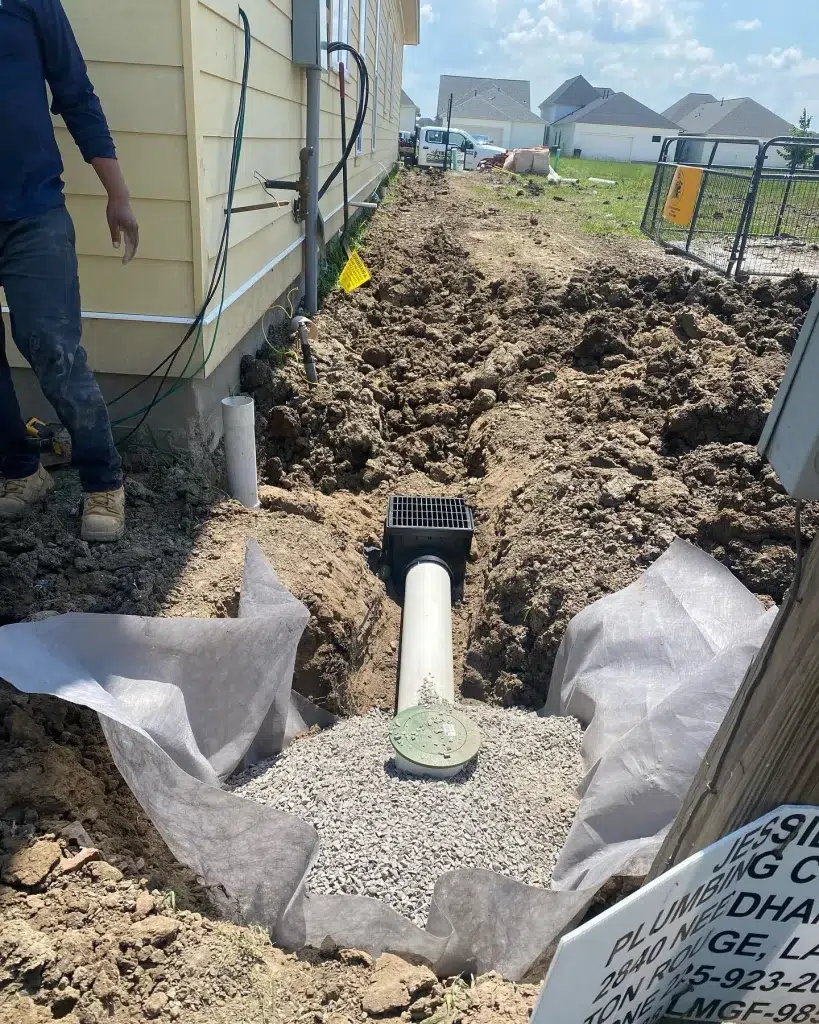
Comprehensive Landscape Drainage Solutions in St. George, LA
Selecting the proper drainage method depends entirely on the property’s specific layout and needs. For areas where surface water is the primary issue, catch basins and channel drains offer an immediate intake solution, rapidly moving large volumes of water into an underground piping system. These systems are particularly effective near driveways, patios, and beneath downspouts where concentrated water flow occurs.
For yards with subsurface saturation, French drain installation is often the preferred choice. This method involves a perforated pipe surrounded by gravel and filter fabric, buried underground to collect and redirect water that seeps through the soil. This system lowers the water table in the immediate area, allowing the surface to dry out faster.
Comparison of Common Drainage Systems
Drainage Type | Best Application | Primary Benefit | Maintenance Level |
|---|---|---|---|
French Drain | Saturated lawns & soggy soil | Lowers the water table underground | Low |
Catch Basin | Low spots & under downspouts | Rapid removal of surface water | Medium (Cleanout needed) |
Channel Drain | Driveways, pools & patios | Prevents water from entering structures | Medium (Great cleaning) |
Dry Well | Areas with no outlet option | Disperses water slowly back into the soil | Low |
Eliminating Standing Water and Erosion Risks
Standing water is more than just an eyesore; it is a biological hazard. Stagnant pools in a yard become prime breeding grounds for mosquitoes and other pests, limiting the time families can comfortably spend outside. Furthermore, constant dampness encourages the growth of mold and mildew on exterior walls and fences. Removing these moisture pockets creates a healthier environment and restores the backyard’s functionality for entertaining and recreation.
Erosion control is another critical aspect of water management. Uncontrolled runoff can wash away expensive mulch, topsoil, and fertilizers, effectively flushing landscaping investments down the drain. Over time, this erosion exposes tree roots and destabilizes the ground. By controlling the velocity and direction of water flow, the landscape retains its nutrients and aesthetic appeal, ensuring that grass and plants have the stable environment they need to flourish.
Custom Grading and Downspout Integration
Mechanical systems like pipes and basins are only part of the equation; proper land grading is the foundation of effective water management. Grading involves reshaping the land to create a subtle slope that naturally guides water away from the home and toward designated drainage areas or municipal storm drains. This process corrects negative grades where water flows back toward the foundation, a common issue in settling homes.
Integrating downspout extensions with the grading plan is vital for a complete system. Roof runoff accounts for a massive volume of water during Louisiana storms. If this water is dumped directly at the base of the house, it negates other drainage efforts. Connecting downspouts directly to underground solid PVC pipes ensures this water is transported far away from the home, preventing saturation at the most critical points of the property.
Local Focus: Addressing Louisiana Rainfall Patterns
St. George experiences intense seasonal rainfall that can overwhelm standard residential lawns. The tropical climate means that storms can drop several inches of water in a matter of hours. Drainage solutions designed for drier climates simply do not perform well under these conditions. Systems installed here must be high-capacity and durable enough to handle the sheer volume of water typical of the Gulf Coast region.
Local knowledge plays a huge role in the success of a drainage project. Understanding the municipal discharge regulations in St. George ensures that water is moved legally and responsibly, without causing issues for neighboring properties or local infrastructure. Every installation accounts for the region’s specific environmental stressors, ensuring a long-lasting solution that withstands the elements.
MINI CASE STUDY: ST. GEORGE SUBDIVISION DRAINAGE OVERHAUL
A homeowner in a newly developed St. George subdivision faced persistent water pooling against their foundation due to the area’s flat topography and non-absorbent clay soil. All Seasons Landscaping installed a targeted French drain system, combined with solid PVC downspout extensions, to effectively redirect storm runoff 30 feet away from the structure. This custom solution eliminated the standing water issues within 24 hours of the next heavy rainfall, safeguarding the home’s foundation and reclaiming the backyard for family use.
Get Your Yard Back Today
Don’t let the next rainstorm turn your property into a swamp. Secure your home’s foundation and reclaim your outdoor living space with professional water management strategies. Contact All Seasons Landscaping & Lawn Care at 225-276-8658 or email [email protected] to schedule a consultation.
Frequently Asked Questions
How do I know if I need a drainage system?
You likely need a system if you see standing water 24 hours after rain, have a muddy dog run, notice soil washing away, or spot cracks in your foundation or exterior brickwork.
What is the difference between a French drain and a surface drain?
A French drain collects subsurface water from soggy soil through a buried perforated pipe, while a surface drain uses a grate to catch visible water pooling on the ground surface.
Will installing drainage ruin my existing grass?
The installation involves trenching, which temporarily disturbs the grass, but the area is backfilled and can be resodded or seeded immediately to restore the lawn’s appearance.
Can drainage solutions help with mosquitoes?
Yes, by eliminating standing water and drying out soggy areas, you remove the primary breeding habitat for mosquitoes, significantly reducing their population in your yard.
How long does a typical drainage installation take?
Most residential drainage projects are completed in 1 to 3 days, depending on the system’s complexity and the property’s size.