Artificial turf has moved far beyond its early reputation as a stiff, plastic-looking substitute for a real lawn. What used to be an obvious compromise has become one of the most talked-about categories in landscaping, driven largely by sustainable artificial turf materials and a wave of newer engineering that has changed what synthetic grass can actually do. Homeowners, sports facilities, and commercial property managers are watching this shift closely because the technology behind synthetic grass looks, drains, and performs differently than it did even a few years ago.
This change goes beyond appearances. It touches how turf handles water, what it’s made from, how long it lasts, and how it feels underfoot. What follows breaks down the innovations reshaping the industry, drawing on real installation experience across residential and commercial properties, and why they matter if you’re weighing a switch to synthetic grass.
TL;DR
- Sustainable artificial turf materials now include recycled plastics and plant-based polymers, cutting the environmental footprint of production.
- Newer drainage and infill designs solve the two biggest historical complaints: pooling water and heat retention.
- Artificial turf trends point toward more realistic textures, cooling infill, and turf built specifically for commercial and multi-sport use.
- Well-installed synthetic lawns can last 15–25 years with minimal upkeep once these newer materials and backing systems are used.
What’s Driving Today’s Turf Trends
The biggest shifts in the industry right now center on realism. Early turf products had flat, uniform color and a texture that didn’t hold up to close inspection. Manufacturers have since introduced multi-tone blade coloring, varied blade shapes, and softer fiber blends that mimic the natural variation found in a real lawn, including subtle seasonal color shifts.
Texture has improved just as much as color. Softer, more flexible fibers have replaced the coarse materials used in older systems, so the finished lawn holds up to everyday use without feeling like a product. For anyone comparing leading turf options for professional landscapers, this realism is often the first thing that stands out during a site visit.
Sustainable Artificial Turf Materials Leading the Industry
Sustainability has become a central focus in turf manufacturing, and it shows in what the product is actually made from. Rather than relying solely on virgin petroleum-based plastics, manufacturers are increasingly turning to recycled plastics, plant-based polymers, and other renewable inputs to produce lower-impact turf.
This matters for two reasons. First, it reduces the environmental footprint of production itself. Second, it appeals to property owners who want the water savings of artificial turf without feeling like they’re trading one environmental concern for another. According to the Synthetic Turf Council, the industry’s trade association, ongoing material research continues to push manufacturers toward lower-impact production methods. These newer materials also tend to resist UV degradation better than older formulations, helping color stay consistent instead of fading out after a few summers.
Innovation Behind the Scenes
Behind the scenes, turf engineering has changed how the product itself is built. Fiber shapes have moved from simple flat blades to diamond and W-shaped profiles that stand more upright and resist matting under foot traffic. Backing systems now combine multiple layers instead of a single sheet, which improves both drainage and dimensional stability, so the turf doesn’t stretch or shrink with temperature swings.
This kind of production-level progress is also what’s answering questions landscape architects are asking about the latest modern turf innovations for large-scale or commercial installs, where consistency across thousands of square feet matters as much as how the turf looks up close.
Advanced Drainage and Water Savings
Drainage has historically been one of the biggest complaints about artificial turf. Older systems relied on basic perforated backing that clogged over time, leading to pooling water and unpleasant odors, especially in areas with heavy rainfall or pets.
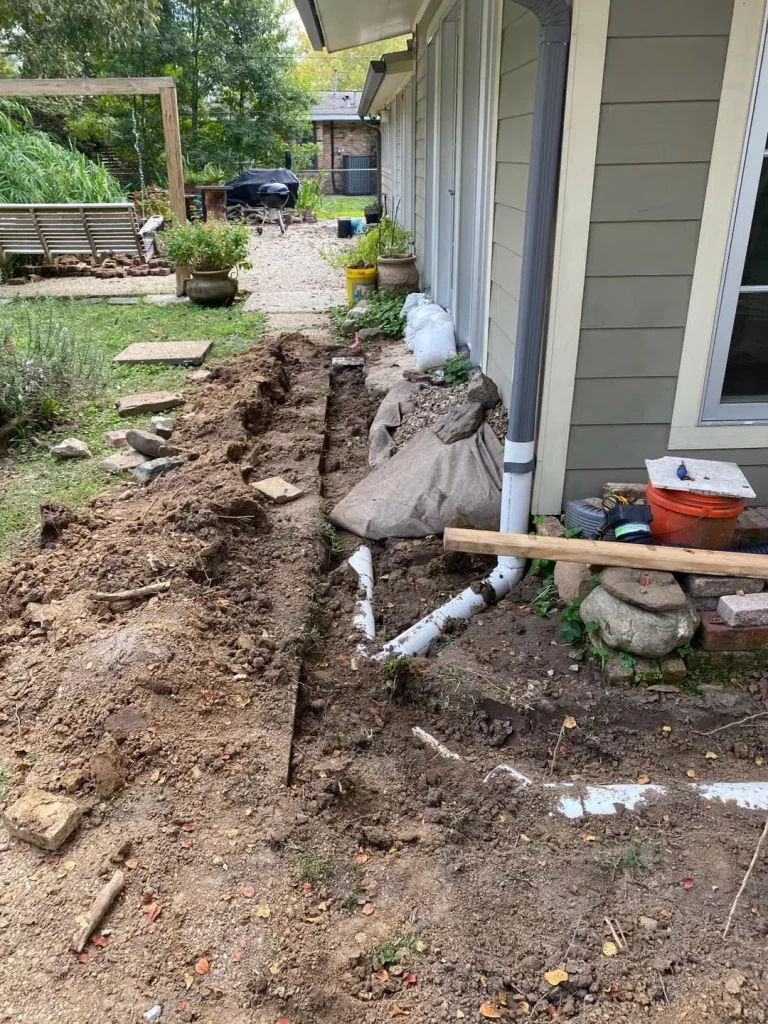
Newer backing designs use multi-layered, permeable underlays that let water pass through quickly and evenly, and some products now include a dedicated moisture-absorption layer beneath the turf itself. For properties dealing with slope, drainage problems, or unpredictable weather, it’s worth pairing turf choice with how drainage systems are designed for flood-prone properties, since grading and turf performance are closely connected on tougher sites.
On top of solving pooling issues, this is where artificial turf water savings become measurable at the commercial level. A synthetic lawn needs no irrigation once installed, and programs like the EPA’s WaterSense initiative highlight just how much outdoor water use can be reduced when landscapes are designed around low-water or no-water surfaces.
Astroturf Infill Technology
Infill is the material placed between turf fibers to keep them upright and add cushioning, and it’s seen some of the most significant innovation in the industry. Traditional rubber infill works, but it’s drawn criticism for retaining heat and, in some cases, raising environmental concerns.
Newer astroturf infill technology includes organic infill made from materials like cork and coconut fiber, along with cooling infill blends engineered to lower surface temperature on hot days. These changes directly address the two concerns homeowners bring up most about synthetic grass: heat and long-term upkeep. Infill also plays a role in shock absorption, which matters most for turf used in play areas and sports fields.
Durability Built for Everyday and Commercial Use
Durability remains one of turf’s core strengths, and recent advances have only reinforced it. Improved polymer blends extend fiber lifespan, while reinforced backing helps turf hold up under heavy foot traffic, pets, and outdoor furniture without flattening.
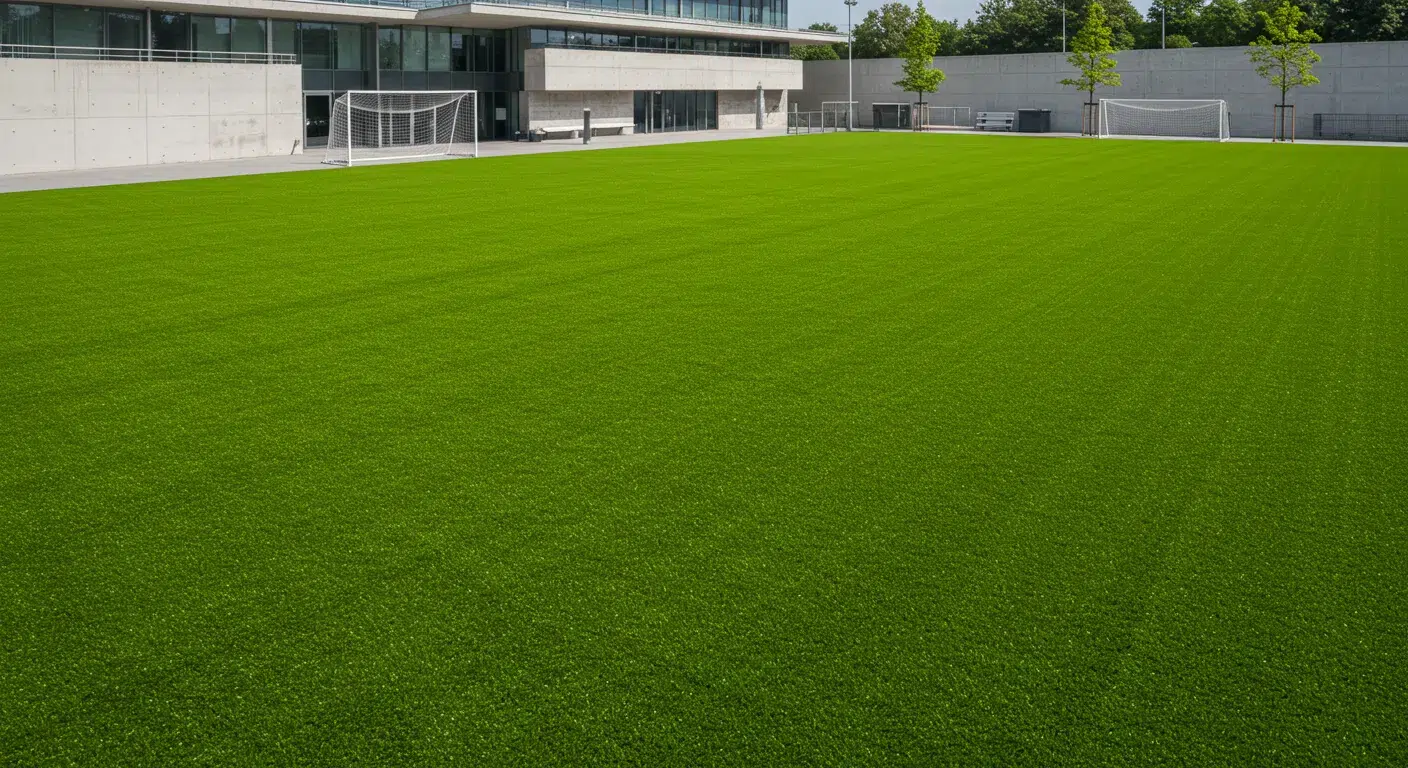
That durability is part of why sports fields, from soccer pitches to multi-use courts, continue to rely on synthetic grass, and it’s the same reasoning behind many of the options professional landscapers now install for busy households and commercial properties that need a lawn to look good with minimal upkeep. Understanding how these material and drainage choices are typically evaluated for a property makes it easier to compare options for a residential or commercial job.
How to Choose the Right Turf for Your Property
- Start with your use case. A backyard, a pet run, and a multi-sport field each call for different fiber height, density, and infill.
- Prioritize drainage first. Check that any product you’re considering uses a multi-layered, permeable backing, especially if your property sits on a slope or holds water.
- Compare infill options. Weigh traditional rubber against organic or cooling infill blends based on climate and how the space will be used.
- Ask about material sourcing. Recycled or plant-based content in the turf itself lowers long-term environmental impact.
- Confirm the warranty and expected lifespan. Reputable products with reinforced backing typically carry warranties reflecting a 15 to 25 year lifespan.
- Get a site-specific quote. Soil type, sun exposure, and drainage needs vary enough that a general estimate rarely fits every yard.
Why Homeowners Are Making the Switch
Beyond the technical improvements, the appeal of artificial turf often comes down to convenience. A well-installed synthetic lawn needs no mowing, no fertilizing, and dramatically less water than natural grass, while still delivering a consistent green look year-round.
As artificial turf trends continue moving toward more realistic textures, better drainage, and lower-impact materials, the gap between synthetic and natural grass keeps narrowing. Understanding these changes makes it easier to choose a solution that fits both your lifestyle and your property, whether that’s a small residential yard or a commercial site that needs to perform under heavy use.
Frequently Asked Questions
What are the biggest artificial turf trends right now?
The biggest shifts are toward more realistic textures and coloring, better drainage systems, lower-impact materials, and improved infill technology that reduces heat and adds cushioning.
What innovative technologies are being used in turf production?
Production has moved toward multi-shaped fibers that resist matting, multi-layered permeable backing for better drainage, and recycled or plant-based materials that reduce the environmental footprint of manufacturing.
Are sustainable artificial turf materials actually better for the environment?
Yes, in several ways. Many turf products now use recycled plastics or plant-based polymers instead of virgin materials, which lowers production impact while still delivering the water savings that come with moving away from natural grass.
Does modern artificial turf help with water savings for commercial properties?
Yes. Because turf needs no irrigation once installed, commercial properties can cut outdoor water use significantly, which is part of why efforts like the EPA’s WaterSense program point to turf and other low-water landscaping as a real cost-saving measure at scale.
What is astroturf infill technology and why does it matter?
Infill is the material spread between turf fibers to keep blades upright and add cushioning. Newer infill options, including organic materials and cooling blends, help lower surface temperature and reduce maintenance compared to older rubber infill.
How long does modern artificial turf typically last?
With improved polymer blends and reinforced backing, well-maintained artificial turf commonly lasts between fifteen and twenty-five years, depending on foot traffic, climate, and installation quality.
What should professional landscapers look for in leading turf options?
Landscapers typically prioritize drainage performance, fiber durability under heavy traffic, infill type, and material sourcing, since these factors determine how the turf performs over years rather than just how it looks on install day.