Living in Baywood, LA, you deal with more than your fair share of heavy rainfall and the drainage headaches that come with it. East Baton Rouge Parish receives roughly 60 inches of rain per year on average, making it one of the wettest areas in the United States, and properties here sit on dense clay soils that drain slowly on their own. When your yard cannot handle that volume of water, the damage compounds fast: foundations weaken, lawns die off, and standing water creates health hazards. The right drainage solution depends on your property’s specific layout, soil composition, and how water moves across your lot. Below, we break down the clear warning signs, the drainage approaches that work best for Baywood properties, and how to know when it is time to bring in professional help. For a more detailed overview, explore our drainage services guide.
TL;DR
- Louisiana’s average annual rainfall of approximately 60 inches far exceeds the national average, putting constant pressure on residential drainage systems
- Standing water that lingers more than 24 hours after rain is the most visible sign your property lacks adequate drainage
- Water pooling near your foundation, soggy lawns, soil erosion, and mosquito infestations all point to drainage failure
- Common drainage solutions for Baywood properties include surface grading, French drains, catch basins, and channel drains
- Poor drainage does not just damage your yard; it threatens your home’s foundation, promotes mold, and reduces property value
- Impervious surfaces like driveways and patios accelerate runoff and worsen existing drainage problems
- Acting early on drainage issues prevents compounding damage that becomes far more expensive to fix later
Why Baywood Properties Face Unique Drainage Pressure
Baywood sits within East Baton Rouge Parish, an area with a well-documented history of flood events and seasonal heavy rain. According to the City of Baton Rouge’s Flood Information portal, the parish maintains detailed flood hazard maps, stormwater models, and drainage systems designed for the entire community, but individual property drainage remains the homeowner’s responsibility. The dense clay soils common across the region hold water like a sponge, and the flat topography of many Baywood lots means water has little natural slope to follow off the property.
The National Weather Service New Orleans/Baton Rouge office warns that heavy rainfall can easily overwhelm local drainage capacity, causing water to pond in low spots, overflow storm drains and retention ponds, and flood streets and yards. During tropical systems and severe thunderstorms, which frequently impact this region, even moderate rainfall can become a problem when your property has no proper drainage infrastructure in place.
The EPA’s stormwater program notes that impervious surfaces like driveways, patios, and rooftops prevent rain from soaking into the ground, forcing it to run off rapidly. On a property without functional drainage, that runoff has nowhere safe to go, which leads directly to the warning signs we cover next.
The Warning Signs: How to Spot Drainage Problems Early
1. Standing Water That Lingers After Rain
Puddles that stick around for more than 24 hours after a storm are the clearest indicator of drainage failure. In Baywood’s heavy clay soil, water naturally moves more slowly than in sandy or loamy ground, but it should still drain within a day under normal conditions. When puddles persist for days, your soil has reached saturation and the surface has no slope or channel to move water away. Common trouble spots include low points in the yard, areas adjacent to driveways or walkways, and sections near the home’s foundation. These conditions often indicate the need for subsurface drainage for standing water to move excess moisture away from the affected areas.
2. Water Pooling Near Your Foundation
Water that collects around the perimeter of your house is more than a nuisance; it is a direct threat to your foundation. As water saturates the soil near the slab or footing, it creates hydrostatic pressure that can push against foundation walls, cause cracking, and force moisture through basement or crawl space walls. After a heavy rain, walk the perimeter of your home and look for damp spots, water stains on exterior walls, or areas where the soil stays visibly wet long after other parts of the yard have dried.
3. Soil Erosion and Washout Patterns
If you notice bare dirt patches, ruts in your lawn, or channels carved into flowerbeds, water is moving across your property with too much force and volume in the wrong places. Erosion often follows the same paths repeatedly, cutting deeper each time it rains. Mulch that washes out of beds, gravel displaced from pathways, and grass dying in streak patterns are all signs that water is carving its own routes because your property lacks controlled drainage.
4. Soggy, Spongy Lawn That Never Dries
A lawn that feels soft or spongy underfoot, especially in areas away from obvious low spots, indicates that the soil profile beneath your grass is holding water at or near the surface. This creates anaerobic conditions in which grass roots cannot access oxygen, leading to yellowing, thinning, and eventually dead patches. If you consistently have sections of lawn that stay damp while surrounding areas dry normally, the problem is almost certainly poor subsurface drainage. Once the drainage issue is resolved, lawn care services in Baywood, LA can help restore healthy, even turf growth.
5. Mosquito and Insect Infestations
Standing water is a breeding ground for mosquitoes, and even small, persistent puddles can support mosquito larvae. If you notice a sudden increase in mosquito activity around your yard, especially after rain events, poor drainage is likely contributing. The same standing water also encourages fungus gnats and other pests that thrive in damp conditions.
6. Water Stains, Mildew, or Musty Odors Indoors
Dampness that makes its way to your foundation can eventually seep into crawl spaces, basements, or ground-floor interiors. If you see water stains on baseboards, notice a persistent musty smell, or find mildew growing on walls or ceilings near the floor, water is getting where it should not be. This is often a late-stage sign of drainage problems that have been developing for some time.
7. Cracking or Settling in Hardscapes
Driveways, patios, walkways, and retaining walls that crack, tilt, or sink are often victims of poor drainage. Water that pools beneath or around these structures washes away supporting soil, creates voids, and causes uneven settling. If your concrete or paver surfaces are shifting, drainage issues beneath them are a likely contributor.
How Drainage Solutions Compare for Baywood Properties
Not every property needs the same approach. The right solution depends on your lot’s layout, the source of the water problem, and your budget. Here is how the most common drainage options stack up:
| Drainage Solution | Best For | How It Works | Ideal Conditions |
|---|---|---|---|
| Surface Grading | Yards with mild slope issues and water that pools near the foundation | Re-contours the ground so water flows away from structures on a gentle slope | Properties with enough yard space to redirect flow without affecting neighbors |
| French Drain | Persistent wet areas, saturated lawns, and subsurface water problems | A gravel-filled trench with a perforated pipe collects and redirects groundwater | Yards where water seeps up from below or moves laterally through soil |
| Catch Basin | Low points in the yard, driveway edges, and areas where water concentrates | A surface inlet collects pooling water and channels it through underground pipes to discharge | Any property with defined low spots that regularly collect runoff |
| Channel Drain | Driveways, patios, and hardscaped areas where water sheets across surfaces | A linear trench drain installed at the surface captures water before it spreads | Properties with large impervious surfaces adjacent to structures |
| Dry Well | Roof runoff and areas where connecting to storm drains is not practical | An underground chamber collects water and lets it slowly percolate into the soil | Lots with well-draining subsoils and enough space away from foundations |
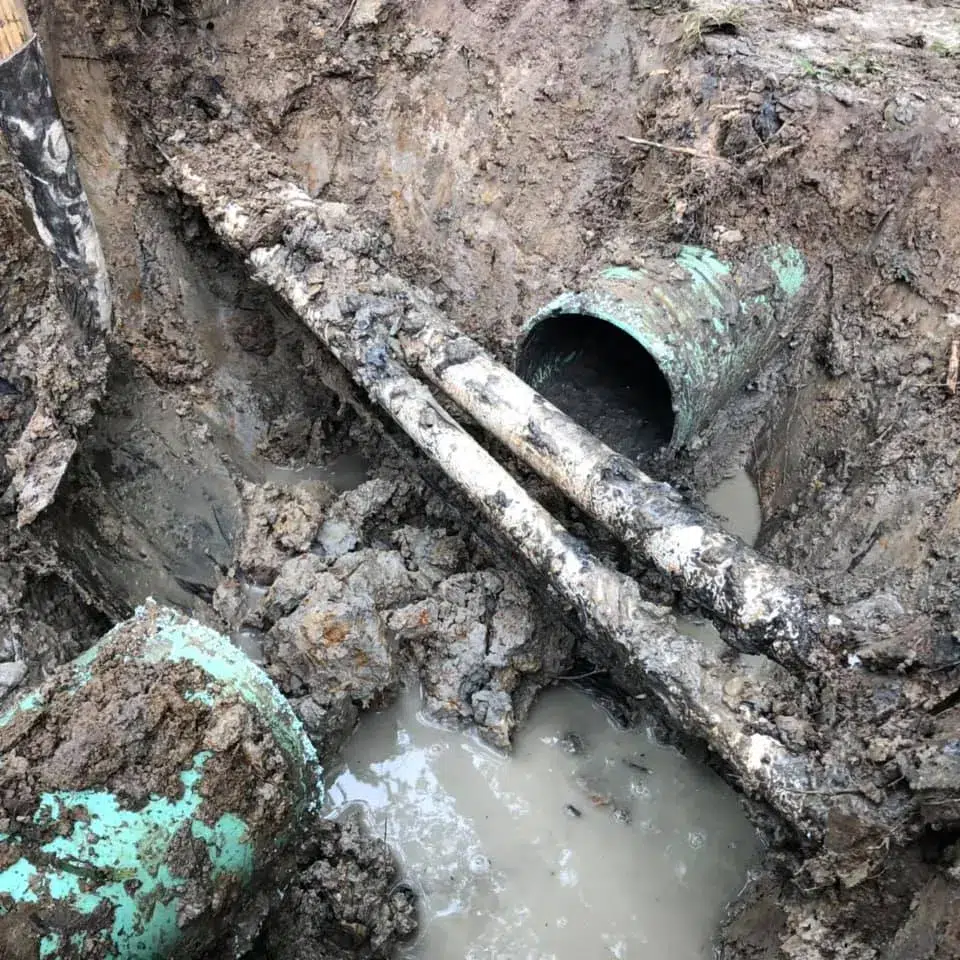
The EPA’s National Menu of Best Management Practices for Stormwater emphasizes that effective drainage often requires a combination of these approaches working together rather than relying on a single solution. A catch basin that feeds a subsurface pipe connected to a pop-up emitter, combined with proper grading around the home, will outperform any one method used in isolation.
What Drains Your Budget Fast: Ignoring the Problem
Putting off drainage work is one of the most expensive decisions a Baywood homeowner can make. Water that sits against your foundation can cause structural movement that costs significantly more to correct than any drainage installation. Mold remediation, foundation repair, and landscape replacement are all downstream costs that stem directly from unresolved drainage issues.
Beyond structural damage, poor drainage reduces your property’s curb appeal and marketability. Dead lawn patches, eroded beds, and water-stained foundations signal neglect to potential buyers and can lower your home’s perceived value. Acting on drainage problems early, before visible damage spreads, is always the more affordable path.
Signs You Have Found the Right Drainage Contractor
Choosing who handles your drainage project matters as much as choosing the right system. Look for a team that does the following:
- Walks your property during or shortly after rain to observe exactly where water collects and flows
- Explains the problem using clear, plain language rather than pushing a one-size-fits-all product
- Provides a detailed plan that accounts for grading, water sources, soil type, and discharge points
- Offers a realistic timeline and communicates proactively throughout the project
- Stands behind their work with clear warranties and follow-up inspections
A solid drainage contractor will ask more questions about your property than you ask them, because understanding your specific water patterns is the only way to design a system that actually works long term.
Recommendations by Property Type
| Property Type | Recommended Approach | Key Considerations |
|---|---|---|
| Older Baywood homes | Foundation grading + French drain system | Settling over decades often reversed the original slope away from the house; perimeter drainage is usually essential |
| Newer construction | Catch basins + channel drains at hardscape edges | Newer lots often have compacted soils from construction and more impervious surface area from driveways and patios |
| Properties with large lawns | Surface regrading + dry wells | More yard space allows for longer drainage runs and natural infiltration areas |
| Corner lots or lots adjacent to drainage easements | Coordination with parish stormwater systems + catch basins | These properties often receive additional runoff from adjacent properties and streets |
Get Your Baywood Property Assessed Today
At All Seasons Landscaping, our team specializes in diagnosing and resolving drainage problems for properties across Baywood and the greater Baton Rouge area. We evaluate how water moves across your property, identify the specific causes of pooling and erosion, and design drainage systems built to handle Louisiana’s heavy rainfall season after season. Call us at 225-276-8658 or email [email protected] to request a quote, or schedule a professional drainage assessment so we can walk your property together and build the right plan.
Frequently Asked Questions
How long should water take to drain from my yard after rain?
In well-drained yards, standing water should disappear within 24 hours. If puddles persist beyond a day, your property likely has a drainage issue that needs attention.
Can poor drainage really damage my home’s foundation?
Yes. Water that pools and saturates soil near your foundation creates hydrostatic pressure that can cause cracks, settlement, and moisture intrusion into crawl spaces or basements.
Will adding more soil to low spots fix my drainage problem?
Filling low spots can help temporarily, but unless the underlying water flow is redirected, water will eventually find a new path and pool again. A proper solution addresses where the water comes from and where it needs to go.
Do I need a permit to install a drainage system on my Baywood property?
It depends on the scope of the project. Connecting to parish storm drains or making significant grading changes may require permits through East Baton Rouge Parish. Our team handles permitting when required.
What time of year is best to address drainage problems?
Spring and summer are ideal because you can observe how water moves during actual rain events, making it easier to diagnose problem areas accurately before installation begins.
Sources
- City of Baton Rouge – Flood Information – Official parish resource with flood hazard maps, stormwater design information, drainage models, and flood zone determination tools for East Baton Rouge Parish properties.
- NWS New Orleans/Baton Rouge – Hurricane Flooding Rain Threats and Impacts – National Weather Service resource detailing how heavy rainfall overwhelms local drainage capacity with specific impact descriptions for the Baton Rouge region.
- EPA National Menu of Best Management Practices for Stormwater – EPA guide covering stormwater control practices and the importance of using holistic, combined approaches for effective drainage management.
- EPA NPDES Stormwater Program – EPA overview of stormwater runoff from impervious surfaces, its environmental effects, and the role of property-level stormwater controls.
- LSU AgCenter – Precipitation Patterns Over the Bayou State – Research from LSU’s climatologist documenting Louisiana’s 60-inch annual average rainfall, seasonal patterns, flood risks, and the variability that challenges drainage planning.

- How Can Professional Drainage Services in Central, LA Protect Your Property From Water Damage? - September 11, 2026
- Which Areas of Your Property Benefit Most From Outdoor Lighting for Safety and Curb Appeal? - September 11, 2026
- How Does Professional Outdoor Lighting Transform Your Landscape at Night in Baton Rouge, LA? - September 9, 2026