Installing an irrigation system in St. George, LA is one of the most impactful upgrades you can make for your property, but the right system depends on your lawn size, soil composition, sun exposure, and long-term water efficiency goals. Before making any decisions, homeowners in this area should understand the local climate demands, the difference between sprinkler and drip systems, code requirements like backflow prevention, and the advantages of smart controllers. Each of these factors plays a role in whether your investment delivers a healthy lawn or creates ongoing headaches. Learn more about efficient lawn irrigation planning.
TL;DR
- Louisiana receives an average of 57.2 inches of rainfall per year, but rainfall is highly variable from season to season, making supplemental irrigation necessary during dry stretches.
- As much as 50% of outdoor water is wasted through inefficient irrigation methods and overwatering, according to the EPA.
- WaterSense labeled smart controllers can save a typical home up to 15,000 gallons of water annually by adjusting schedules based on weather and soil conditions.
- A backflow preventer is required by plumbing code on all irrigation connections to protect your home’s potable water supply from contamination.
- Cycle-and-soak watering is especially important in areas with clay-heavy soils common in Louisiana, where surface pooling can occur if water is applied too quickly.
- Grouping plants by water needs into irrigation zones (hydrozones) prevents overwatering some areas while underwatering others.
- Hiring an irrigation contractor who is certified in water-efficient practices can reduce your annual outdoor water use by nearly 8,800 gallons.
Understanding St. George’s Climate and What It Means for Irrigation
St. George sits in southeastern East Baton Rouge Parish, within Louisiana’s humid subtropical climate zone. This region experiences relatively short, mild winters, hot summers, and precipitation distributed throughout the year, with a long-term statewide average of approximately 57.2 inches. That might sound like plenty of water for any lawn, but the reality is more complicated.
Rainfall in this part of Louisiana fluctuates significantly from year to year and season to season. A spring or summer dry spell can quickly stress turf and landscape plantings, while periods of heavy rainfall can make irrigation unnecessary for weeks. Louisiana is also vulnerable to drought; since 2000, the state has experienced at least moderate drought conditions for roughly 17% of the time. The combination of high summer temperatures and intermittent dry spells means your lawn will need consistent supplemental watering to stay healthy, and professional irrigation installation in St. George, LA ensures your landscape receives reliable watering even when you are not thinking about it.
The soils in the St. George area are typically fine-textured silts and clays, common throughout the river valleys and floodplains of southeastern Louisiana. These soils retain moisture well but drain slowly, which means irrigation must be applied carefully to avoid surface runoff and pooling. Understanding your specific soil profile is essential before designing any system.
Types of Irrigation Systems: Which One Fits Your Property?
Most residential properties in St. George will use one or a combination of the following irrigation methods:
| System Type | Best For | Water Efficiency | Key Considerations |
|---|---|---|---|
| Spray Sprinklers | Turf grass lawns, large open areas | Moderate | Heads must be adjusted to avoid spraying pavement; pressure regulation improves uniformity |
| Rotor Sprinklers | Larger lawns (over 30 ft spacing) | Moderate to High | Lower precipitation rate reduces runoff on clay soils; good for full-sun turf zones |
| Drip/Microirrigation | Landscape beds, shrubs, trees, gardens | High | Delivers water directly to root zones; minimizes evaporation and runoff |
| Soaker Hoses | Perimeter beds, foundation plantings | High | Simple and low-cost but less precise than drip; best for uniform, narrow areas |
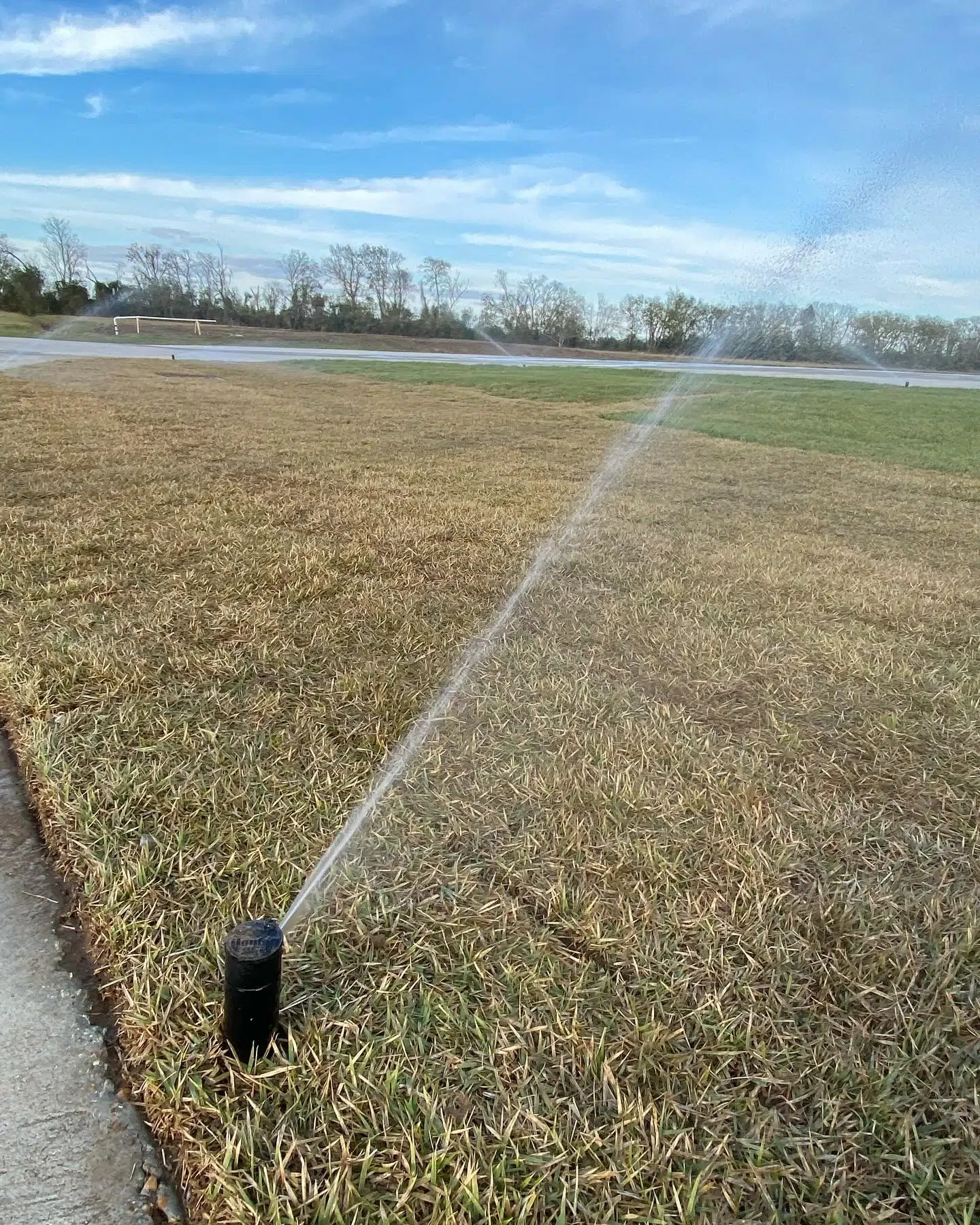
The EPA recommends using microirrigation for gardens, trees, and shrubs, since it applies water slowly and directly to plant root zones where the moisture is needed most. For turf areas, spray or rotor heads are still the standard, but upgrading to high-efficiency nozzles and pressure-regulated sprinkler bodies makes a measurable difference in how evenly and efficiently water is distributed.
Many properties benefit from a hybrid approach: sprinklers for the lawn and drip lines for landscape beds, trees, and foundation plantings. This strategy matches the delivery method to the plant type and reduces overall water consumption.
Backflow Prevention: A Code Requirement You Cannot Skip
Every irrigation system connected to your home’s potable water supply requires a backflow prevention device. This is not optional. Under the International Plumbing Code and International Residential Code, which Louisiana has adopted, irrigation systems present a recognized cross-connection risk, meaning contaminated water from your lawn could flow backward into your drinking water supply. ICC CodeNotes: Backflow Preventers.
The acceptable backflow prevention assemblies for residential irrigation include:
- Atmospheric vacuum breakers (AVBs): Protect against back-siphonage only; cannot be under continuous pressure
- Pressure vacuum breakers (PVBs): Protect against back-siphonage; can be under continuous pressure; must be installed above the highest downstream point
- Reduced pressure principle assemblies (RP): Protect against both back-siphonage and back-pressure; the most comprehensive option
Annual inspection of backflow prevention assemblies is required by code to verify they remain operable. This is a detail many homeowners overlook after installation, and it can lead to code violations or, worse, contaminated water. Make sure your installer discusses backflow options during the design phase and provides guidance on ongoing testing.
Water Efficiency and Smart Controller Technology
One of the most consequential choices you will make is what type of controller operates your irrigation system. Traditional clock-timer controllers run on a fixed schedule regardless of weather, soil moisture, or seasonal changes. According to the EPA, experts estimate that as much as 50% of water used for landscape irrigation is wasted due to inefficiencies in irrigation methods and systems.
WaterSense labeled smart controllers address this problem in two ways:
- Weather-based irrigation controllers use local weather data and landscape conditions to automatically adjust watering schedules
- Soil moisture-based controllers measure the actual moisture level in the soil and trigger irrigation only when plants need water
Replacing a standard clock-based controller with a WaterSense labeled model can save an average home up to 15,000 gallons of water per year. If every home with an automatic sprinkler system in the United States used one, the collective savings would reach roughly 390 billion gallons of water annually.
For St. George homeowners, this technology is especially valuable given the wide swings between wet and dry periods. A smart controller will skip watering cycles after heavy rain and increase frequency during dry spells without any manual adjustment.
Zoning, Scheduling, and Maintenance Best Practices
Beyond the equipment itself, how your system is designed and managed determines its long-term performance. The Department of Energy identifies several practices that make the biggest difference:
- Hydrozone grouping: Zone your system, so plants with similar water needs are watered together. Turf, shade plants, and sun-exposed beds should each have their own zone.
- Cycle-and-soak scheduling: Instead of one long watering session, split irrigation into shorter cycles with breaks in between. This prevents water from pooling or running off on clay-heavy soils.
- Early morning watering: Schedule irrigation for the early morning hours when temperatures are cooler and winds are calmer. Midday watering results in significant evaporation losses.
- Seasonal adjustments: Your irrigation schedule should change with the seasons. Many homeowners set a schedule once and never adjust it, which leads to overwatering for months at a time.
- Monthly inspections: Check for broken heads, leaks, and misaligned sprayers regularly. A single broken head can waste thousands of gallons over the course of a summer.
The DOE notes that overwatering can actually cause more damage to plant materials than underwatering, and can harm paving, curbs, and building foundations. Getting the schedule right protects both your landscape and your property.
Signs You Have Found the Right Irrigation Contractor
The EPA’s WaterSense program recommends looking for irrigation professionals who hold certifications through WaterSense-labeled programs. Here are the qualities that separate a strong contractor from an inexperienced one:
- They ask about your soil and landscape before recommending equipment. A thorough installer will evaluate your property’s soil type, slope, sun exposure, and plant types before designing the system.
- They explain backflow prevention and local code requirements. If a contractor does not mention backflow preventers, that is a red flag. It means they may cut corners on compliance.
- They recommend water-efficient technology. A knowledgeable contractor will suggest WaterSense labeled controllers, high-efficiency nozzles, drip zones where appropriate, and rain or soil moisture sensors.
- They provide a written seasonal schedule. Your installer should leave you with a clear watering schedule and explain how to adjust it through the year.
- They offer ongoing maintenance. Regular audits and maintenance catch problems early and keep your system running at peak efficiency. The DOE recommends a full irrigation audit every three years.
Recommendations by Property Type
| Property Type | Recommended Approach | Key Notes |
|---|---|---|
| Small lawn (under 5,000 sq ft) | Hybrid sprinkler + drip | Fewer zones needed; smart controller still worthwhile for efficiency |
| Large lawn (5,000+ sq ft) | Rotor heads + drip for beds | Prioritize distribution uniformity; cycle-and-soak scheduling essential |
| New construction | Full system design upfront | Easier to zone properly before landscaping is finalized; plan for mature plant sizes |
| Retrofit / existing landscape | Audit first, then upgrade | Start with a professional audit to identify inefficiencies; phased upgrades spread cost |
| Heavy clay soil | Cycle-and-soak mandatory | Shorter run times, multiple cycles; drip irrigation for non-turf areas |
Ready to Get Started?
All Seasons Landscaping & Lawn Care has been helping St. George, LA homeowners design, install, and maintain irrigation systems that are built for Louisiana’s climate and soil conditions. Our team handles everything from initial property assessment and system design to smart controller programming and seasonal maintenance, so your lawn gets the right amount of water at the right time, all year long.
Call us at 225-276-8658 or email [email protected] to discuss your property and get started with a plan that protects your lawn, your foundation, and your water bill.
Frequently Asked Questions
Do I really need an irrigation system if Louisiana gets so much rain?
Annual rainfall averages around 57 inches statewide, but dry spells during summer months can stress your lawn quickly. An automated system ensures consistent moisture even during gaps between rain events, which is when turf damage happens fastest.
What is a backflow preventer and why does my irrigation system need one?
A backflow preventer stops irrigation water from flowing backward into your home’s drinking water supply. It is required by the International Plumbing Code for all irrigation connections and must be inspected annually.
How often should I adjust my irrigation schedule?
Your schedule should be adjusted with every season. A smart controller handles this automatically using weather or soil moisture data, but if you use a manual timer, plan to update it at least four times per year.
Is drip irrigation better than sprinklers for my property?
It depends on what you are watering. Drip excels for landscape beds, shrubs, and trees by delivering water directly to roots. Sprinklers remain the standard for turf grass. Many properties benefit from a combination of both.
How long does a typical irrigation system installation take?
Most residential installations are completed within one to three days, depending on property size, soil conditions, and system complexity. New construction allows for easier trenching, while retrofits in established lawns may take slightly longer.
Sources
- EPA WaterSense Watering Tips – Best practices for outdoor watering including timing, cycle-and-soak methods, smart controller guidance, and monthly system inspection recommendations.
- EPA WaterSense Labeled Controllers – Data on smart controller types (weather-based and soil moisture-based) and water savings potential, including the estimate of up to 15,000 gallons saved per home annually.
- EPA WaterSense: Irrigation with a Pro – Guidance on hiring certified irrigation professionals, questions to ask contractors, and the 8,800-gallon annual savings figure from proper irrigation management.
- DOE Best Management Practice #5: Water-Efficient Irrigation – Federal guidelines on irrigation system design, operations, maintenance, retrofit options, and the importance of distribution uniformity and seasonal scheduling.
- Louisiana State Climate Summary 2022 – NCICS/NOAA NCEI – Comprehensive climate data for Louisiana including the 57.2-inch annual precipitation average, drought frequency, and seasonal variability patterns.

- The Complete Guide to Hedge Trimming, Care, Maintenance, and Healthy Growth - October 6, 2026
- How Can Professional Drainage Services in Central, LA Protect Your Property From Water Damage? - September 11, 2026
- Which Areas of Your Property Benefit Most From Outdoor Lighting for Safety and Curb Appeal? - September 11, 2026