Property owners in St. George, Louisiana, considering an irrigation system need to think beyond just turning on a sprinkler and watching grass grow. The right system depends on your soil composition, water pressure, Louisiana’s licensing requirements for contractors, and a clear understanding of how much water your landscape actually needs during our long, humid summers. With irrigation accounting for a significant portion of residential outdoor water use nationwide, and an estimated 50 percent of that water wasted due to inefficiencies, getting the details right before installation saves water, money, and your landscape investment for years to come. Following a guide to irrigation systems helps ensure long-term efficiency and performance.
TL;DR
- Louisiana requires landscape irrigation contractors to hold a license issued by the Louisiana Department of Agriculture and Forestry before designing, installing, or maintaining irrigation systems
- St. George sits within the Southern Mississippi Valley Silty Uplands, where soils are predominantly loamy or clayey and poorly to somewhat poorly drained, which directly affects how water infiltrates your lawn
- Irrigation should follow the “right time, right place, right amount” approach, watering between 2 a.m. and 8 a.m. to minimize evaporation losses
- Turfgrass in full sun needs no more than 1.5 inches of water per week during the hottest part of the year, split across two to three applications
- Pressurized irrigation systems, including sprinkler and drip methods, are generally more water-use efficient than gravity-based approaches because less water is lost to evaporation and runoff. Understanding the differences between automatic and manual irrigation can help property owners choose the most efficient system for their landscape.
- A properly designed system uses head-to-head sprinkler coverage to ensure uniform water distribution across every zone
- Smart controllers carrying the EPA WaterSense label can reduce overwatering by using weather data or soil moisture readings to adjust schedules automatically
- Regular maintenance, including checking for leaks, realigning sprinkler heads, and calibrating output, prevents the most common cause of wasted irrigation water
Understanding St. George Soil Conditions
The soil beneath your St. George property has a direct and lasting impact on how any irrigation system performs. According to Louisiana soil classification data, the area falls within the Southern Mississippi Valley Silty Uplands (MLRA 134), where soils are described as “very deep, dominantly poorly drained and somewhat poorly drained, and dominantly loamy or clayey”.
What this means for property owners is straightforward: heavy clay and loam soils common in this region absorb water more slowly than sandy soils. Water applied too quickly will pool on the surface or run off before reaching the root zone. This matters because your irrigation system must be designed to apply water at a rate your soil can actually absorb, a concept the LSU AgCenter refers to as matching application rate to soil infiltration capacity.
Soil testing through the AgCenter Soil Testing and Plant Analysis Lab gives you specific data on texture, pH, and nutrient content. With more than 300 soil types across Louisiana, a one-size-fits-all irrigation approach will not perform well.
| Soil Characteristic | Impact on Irrigation | Recommended Approach |
|---|---|---|
| Heavy clay (common in the St. George area) | Slow infiltration, water pools or runs off if applied too fast | Shorter, more frequent watering cycles with drip or low-output spray heads |
| Silt loam | Moderate infiltration, good water retention | Standard sprinkler zones with proper pressure regulation |
| Poorly drained areas | Standing water, root rot risk if overwatered | Separate zones with adjustable scheduling, consider drainage correction first |
| Slightly acidic pH (typical for LA) | Generally favorable for most landscape plants | No pH-specific irrigation adjustment needed, but monitor nutrient leaching |
Louisiana Irrigation Licensing Requirements
Not every contractor is legally permitted to install an irrigation system on your property. Louisiana law is clear on this point: the Louisiana Department of Agriculture and Forestry requires landscape irrigation contractors to hold a valid state license before they may design, install, or maintain irrigation systems within the state.
As a property owner, you should request a list of qualifications from any contractor providing a quote and verify their license status through the Louisiana Department of Agriculture and Forestry. Hiring an unlicensed installer may expose you to substandard work, voided warranties, and potential code violations. The LSU AgCenter also recommends asking whether the contractor encourages or requires continuing education and certification for their technicians, as this reflects a stronger commitment to quality and up-to-date practices.
Irrigation System Types: What Works Best in St. George
Choosing the right system type depends on your landscape layout, plant types, and how much you value water efficiency. The two main categories for residential and small commercial properties are spray sprinkler systems and drip irrigation systems.
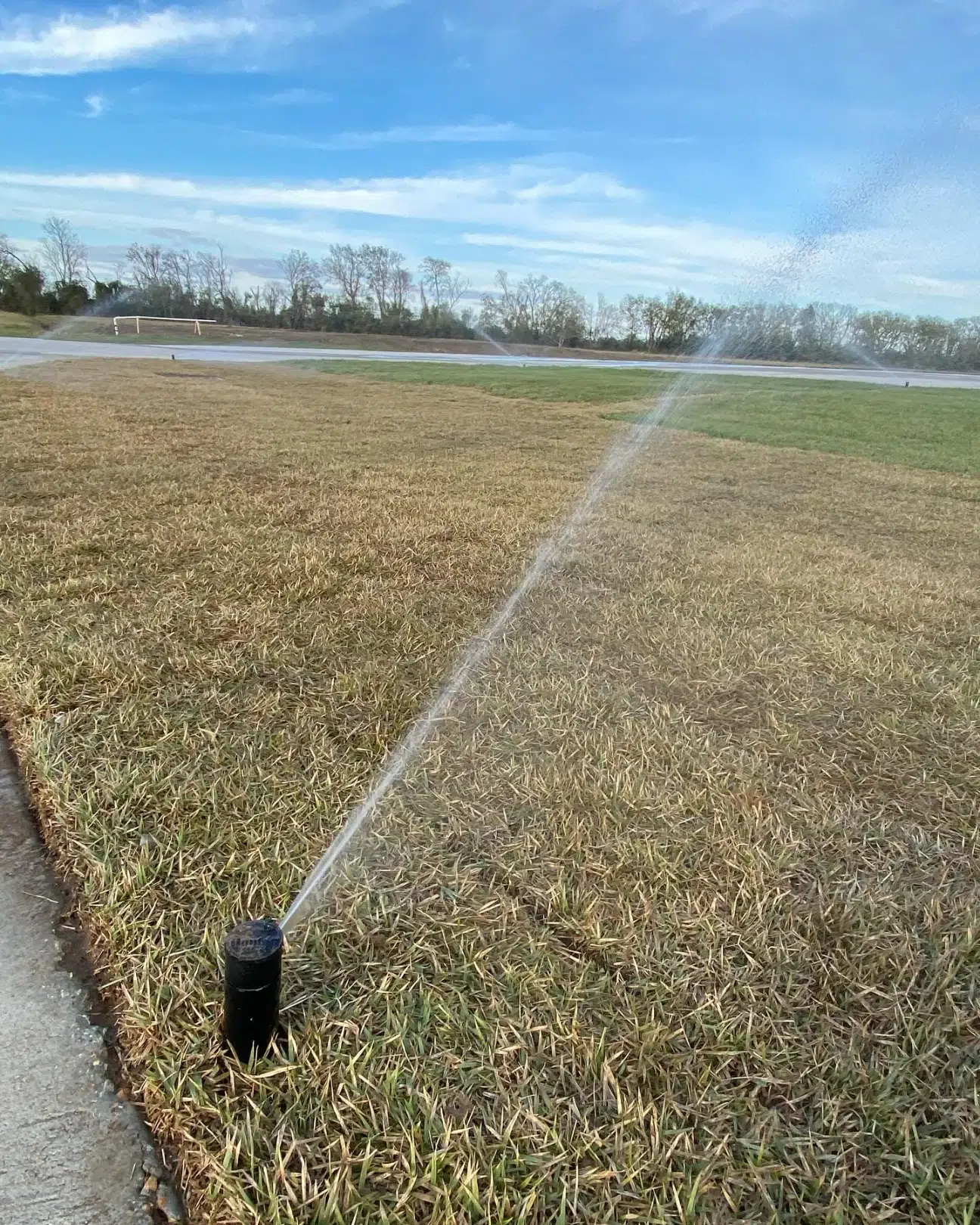
Sprinkler systems use pop-up or rotor heads that distribute water over a broad area. They work well for turfgrass and large open zones where uniform coverage is the goal. The LSU AgCenter recommends head-to-head coverage, where the edge of one sprinkler’s spray pattern reaches the base of the adjacent sprinkler. Systems designed with fewer sprinklers spaced farther apart save on upfront costs but create uneven distribution, leading to dry patches and stressed plants over time.
Drip irrigation delivers water directly to the root zone through a network of tubing and emitters. It is well-suited for garden beds, shrubs, and foundation plantings. Because water is applied at or below the soil surface, losses to evaporation and wind drift are minimal, making drip systems particularly effective during St. George’s hot summer months when evaporation rates are highest.
| System Type | Best Application | Water Efficiency | Maintenance Level |
|---|---|---|---|
| Pop-up spray heads | Turfgrass, small to medium lawn areas | Moderate, some evaporation loss | Regular head alignment and nozzle cleaning |
| Rotor heads | Large lawn areas, commercial turf | Moderate to high, larger droplets resist wind | Less frequent clogging, check the gear drive annually |
| Drip irrigation | Garden beds, shrubs, foundation planting | High, minimal evaporation and runoff | Filter cleaning, emitter inspection for clogs |
| Smart controller (Weather-based) | Any system upgrade | Reduces overwatering up to 50% | Annual sensor calibration and weather source check |
| Smart controller (Soil moisture) | Any system, especially in heavy soils | Bypasses irrigation when the soil is adequately wet | Sensor placement in the representative zone, battery checks |
Timing and Scheduling: Getting It Right
The LSU AgCenter’s irrigation guidance for Louisiana follows a straightforward motto: “right time, right place, right amount”.
Right time. The optimal watering window in St. George is between 2 a.m. and 8 a.m. Watering during these early morning hours allows time for water to infiltrate the soil before daytime heat causes evaporation. Watering after 8 a.m. wastes a measurable portion of each irrigation cycle to evaporation. Evening watering, while better than midday, extends the time that leaf blades remain moist, which increases disease pressure. The ideal zone is midnight through early morning, when the water reaches the roots, and the rising sun dries the foliage. This watering practice is a key part of proper lawn care maintenance.
Right amount. A turfgrass lawn in full sun during the peak of a Louisiana summer needs no more than 1.5 inches of water per week. Most soils in our area cannot absorb that much in a single application, so the LSU AgCenter recommends splitting irrigation across two to three sessions per week and skipping scheduled runs when rainfall has been adequate.
Right place. This is where proper system design earns its keep. Hydrozoning, the practice of grouping plants with similar water needs into the same irrigation zone, prevents overwatering drought-tolerant shrubs just to keep nearby turfgrass alive. A sun-drenched lawn area should never share a zone with a shaded foundation bed planted with established ornamentals.
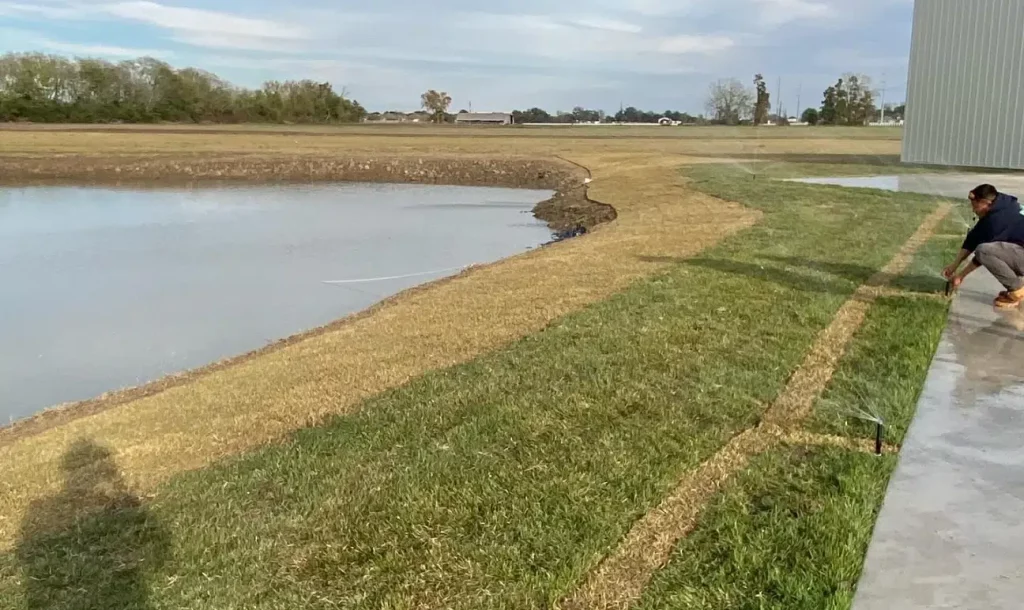
Water Conservation and Louisiana’s Aquifers
Irrigation efficiency is not just about your water bill. Louisiana’s 11 major aquifers supply drinking water for 61 percent of the state’s residents, and water consumption is on the rise, placing measurable stress on available supplies. As the state works to establish best management practices for water protection, property owners who irrigate responsibly contribute to a more sustainable water future for the entire St. George community.
The EPA’s WaterSense program estimates that residential outdoor water use accounts for nearly 8 billion gallons per day nationwide, with as much as 50 percent wasted due to inefficient irrigation methods and systems. Replacing a standard clock-based controller with a WaterSense-labeled smart controller can save an average home up to 15,000 gallons of water annually. These controllers use local weather data or soil moisture readings to automatically skip irrigation when plants do not need it, removing the guesswork from scheduling.
Ongoing Maintenance Keeps Systems Efficient
An irrigation system is only as good as its last tune-up. The University of Florida IFAS Extension recommends testing and repairing your system periodically, unclogging or replacing malfunctioning heads, adjusting head alignment after lawnmower contact, and recalibrating the controller with seasonal changes.
For St. George property owners, this means running the system during the day at least once a month to check for leaks, clogs, or misaligned heads. Sprinkler heads that water sidewalks, driveways, or streets waste water with every cycle and can be corrected by a simple twist of the nozzle. Keeping heads at right angles to the soil surface ensures even distribution, and raising heads that have settled below the turf canopy restores proper spray patterns.
Signs You Have Found the Right Irrigation Contractor
Before hiring anyone to design and install your system, look for these indicators:
- Licensed and verifiable. The contractor holds a current Louisiana landscape irrigation contractor license, and you confirmed it with the Louisiana Department of Agriculture and Forestry
- Detailed zone plan. The proposal includes a written layout showing separate zones based on sun exposure, plant type, and soil conditions, rather than a single blanket approach
- Pressure analysis. The contractor evaluated your water pressure and designed the system to operate within it, avoiding the common mistake of overloading zones
- Hydrozoning is built in. Turf, shrubs, and garden beds are assigned to separate zones with independent scheduling
- Smart controller recommendation. The contractor offers weather-based or soil moisture-based controller options rather than only a basic timer
- Maintenance plan offered. Seasonal inspections, winterization, and spring startup services are available beyond the initial installation
- Clear warranty terms. Coverage on parts and labor is documented in writing with defined service windows
Ready to Invest in a Smarter Irrigation System?
All Seasons Landscaping & Lawn Care has the licensed expertise and local experience to design, install, and maintain irrigation systems built for St. George’s unique soil and climate conditions. Our team uses hydrozoning principles, proper head-to-head coverage, and smart controller technology to keep your landscape healthy without wasting water. We take the time to evaluate your property’s specific needs before recommending a single component, and we stand behind every system we install.
Call us at (225) 276-8658 or email [email protected] to get started. Your lawn deserves more than guesswork.
Frequently Asked Questions
Does Louisiana require a special permit or license to install an irrigation system?
Yes, the Louisiana Department of Agriculture and Forestry requires irrigation contractors to hold a state license before designing, installing, or maintaining irrigation systems. Always verify your contractor’s license status before work begins.
What time of day should I water my lawn in St. George, Louisiana?
The LSU AgCenter recommends watering between 2 a.m. and 8 a.m. Early morning watering minimizes evaporation losses and allows sunlight to dry leaf blades, reducing disease risk. Avoid watering after 8 a.m. or in the evening.
How much water does my lawn actually need during summer?
Turfgrass in full sun needs no more than 1.5 inches of water per week during the hottest months. Split this into two to three shorter applications and skip irrigation when adequate rainfall occurs.
Are smart irrigation controllers worth the upgrade?
The EPA’s WaterSense program reports that smart controllers can save an average home up to 15,000 gallons of water annually by adjusting schedules based on weather or soil moisture data rather than running on a fixed timer.
How often should my irrigation system be inspected and maintained?
Run a visual check at least once a month by turning the system on during the day to look for leaks, misaligned heads, and clogs. Schedule a professional inspection in spring and fall, ideally when activating or shutting down the system for the season.
Sources
- Introduction to Landscape Irrigation in Louisiana – LSU AgCenter – Comprehensive guide covering irrigation timing, scheduling, soil-water balance, hydrozoning, and Louisiana licensing requirements for irrigation contractors.
- An Overview of Louisiana Soils – LSU AgCenter – Detailed overview of Louisiana’s 300+ soil types, soil textures, pH characteristics, and MLRA regions relevant to irrigation planning.
- WaterSense Labeled Controllers – U.S. EPA – Federal data on residential outdoor water waste, smart controller efficiency, and estimated water savings from WaterSense labeled irrigation technology.
- Ground Water Use Facts – Louisiana Department of Conservation and Energy – Louisiana-specific groundwater data covering the state’s 11 major aquifers, aquifer stress concerns, and water conservation recommendations.
- Irrigation System Maintenance – UF/IFAS Gardening Solutions – Practical maintenance guide covering sprinkler head alignment, controller calibration, and seasonal inspection schedules applicable to Louisiana’s similar climate zone.

- How Does Regular Hedge Trimming Improve Your Landscape’s Overall Appearance? - October 12, 2026
- The Complete Guide to Hedge Trimming, Care, Maintenance, and Healthy Growth - October 6, 2026
- How Can Professional Drainage Services in Central, LA Protect Your Property From Water Damage? - September 11, 2026