Automatic irrigation vs manual watering for business owners and property managers, because it guarantees consistent moisture levels, cuts labor costs, and reduces water waste. Manual watering only requires a hose and a staff member’s time, so the upfront cost is close to zero. But this approach carries high long-term labor expense and often leads to inconsistent plant health from human error.
A manual irrigation system, in its simplest form, is exactly that: hoses, watering cans, or portable sprinklers moved by hand, with no controller or timer involved. An automated system instead requires a larger upfront investment to install pipes, valves, and smart controllers. Despite that initial cost, it typically pays for itself by lowering monthly water bills and freeing up staff time for higher-value work. If you want a deeper breakdown of how these systems are designed and zoned, our complete irrigation system guide walks through the components in detail.
TL;DR
- Upfront costs: Automatic irrigation systems typically run $3,000 to $15,000+, depending on property size. Manual watering setups cost under $200 for commercial-grade hoses and portable sprinklers.
- Labor efficiency: Automated systems eliminate the 5 to 15 hours per week commonly spent on manual watering for a mid-sized commercial property.
- Water conservation: Smart irrigation controllers can cut water use by up to 30% by adjusting schedules to local weather and soil moisture.
- Long-term ROI: The break-even point for a commercial automatic system is usually 1.5 to 3 years.
- Hand watering, defined: Hand watering (or manual watering) means applying water to plants directly with a hose, can, or portable sprinkler, with no automated scheduling.
- Control vs. ownership: Manual watering depends on staff reliability. Automatic systems give owners centralized, app-based control from anywhere.
What Is Hand Watering?
Hand watering is the practice of manually applying water to plants, turf, or garden beds using a hose, watering can, or a portable sprinkler that a person moves and monitors themselves. There’s no timer, controller, or sensor involved. It’s the original watering method, and it’s still common on small properties, temporary job sites, and anywhere an owner wants zero equipment cost. The tradeoff is that hand watering is only as consistent as the person doing it: skip a day during a heatwave, and plants suffer; leave the hose running too long, and you waste water and money.
The Hidden Costs of Manual Watering
Many business owners default to manual watering because the barrier to entry is close to nonexistent. You buy a hose, attach a sprinkler, and assign someone to move it around the property. But the hidden costs of this approach add up quickly.
Manual watering depends heavily on human memory and availability. If an employee forgets to water during a heatwave, thousands of dollars in commercial landscaping can die within days. On the flip side, employees often leave sprinklers running too long, which leads to runoff, higher water bills, and root rot. According to the EPA WaterSense program, outdoor water use makes up close to 30% of total daily water use, and up to half of that is wasted through inefficient watering and runoff.
Paying a groundskeeper to stand with a hose or move a portable sprinkler is also a poor use of labor. In an era of staffing shortages, assigning a person to a task that’s easily automated lowers your overall operational efficiency.
Smart Irrigation Systems Compared to Traditional Manual Watering Approaches
For organizations comparing vendors, the real difference between a smart irrigation system and traditional manual watering comes down to control, data, and accountability. A traditional manual approach relies on a person’s judgment each day. A smart system uses weather data, soil moisture sensors, and zoned scheduling to make that decision automatically, and it logs exactly what happened, so there’s a record to compare against your water bill.
When you’re evaluating vendors, look for these differentiators:
- Zoned control: Can the system water turf, shrubs, and flower beds on separate schedules?
- Weather integration: Does the controller pull local weather data to skip watering after rain?
- Remote access: Can you adjust schedules from a phone, or does someone need to be on site?
- Reporting: Does the vendor provide usage data you can compare month to month?
- Maintenance plan: Is spring start-up and fall winterization included, or billed separately?
Traditional manual watering can’t offer any of the above. It’s a valid choice for very small or temporary sites, but for any property with real square footage, it’s a labor cost with no data trail.
How Automatic Irrigation Systems Drive ROI
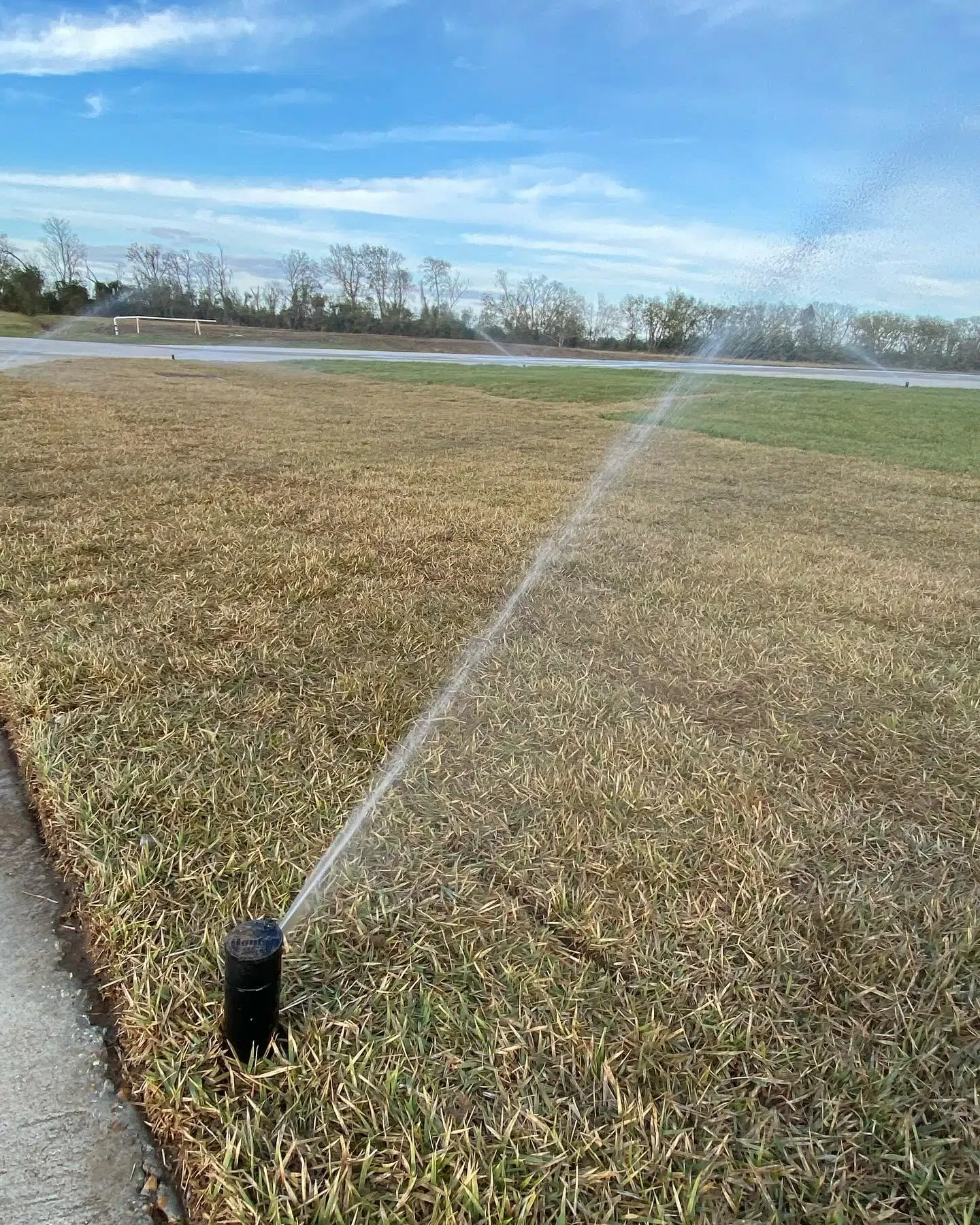
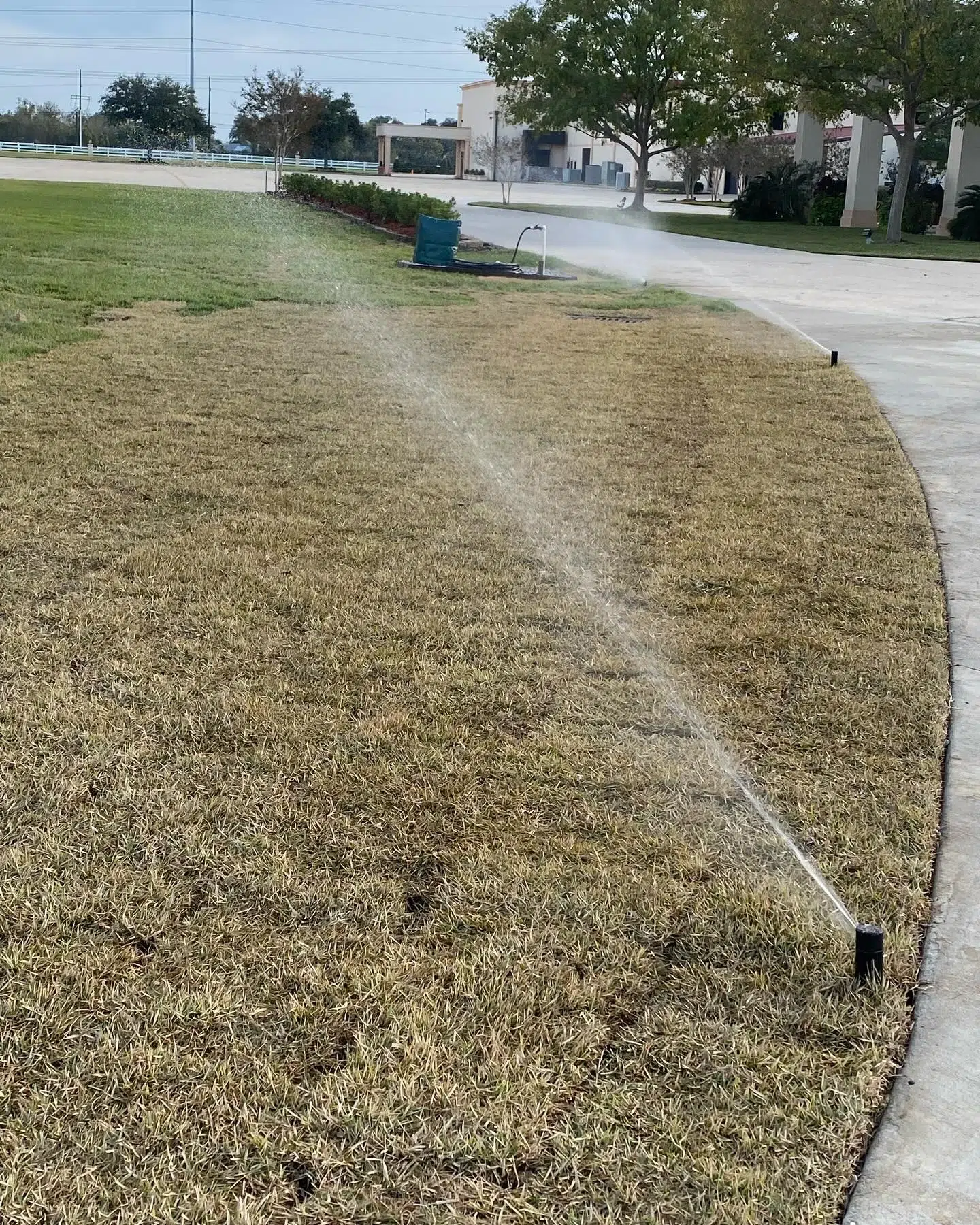
Modern automatic irrigation systems are no longer simple clock timers that run regardless of the weather. Today’s commercial setups use drip lines and weather-based controllers to deliver precise water directly to the root zones of turf and plants.
Installing a smart system means watering happens at the optimal time of day, typically between 4:00 and 6:00 a.m. That early-morning window reduces evaporation from the sun and cuts down on wind drift, which improves absorption. Guidelines from the Texas A&M AgriLife Extension note that separating a landscape into distinct watering zones prevents overwatering drought-tolerant plants while making sure thirsty turf still gets what it needs.
Advantages of Automatic Timer Irrigation Over Manual Watering
- Consistency: A timer never forgets a scheduled cycle, unlike a staff member managing a dozen other tasks.
- Water savings: Weather-based shutoffs stop watering before, during, and after rain, something a manual approach rarely accounts for in real time.
- Labor reallocation: Staff previously assigned to hose duty can be redirected to higher-value groundskeeping work.
- Compliance: Many municipalities restrict watering to specific hours. Automated timers comply automatically, where manual watering relies on someone remembering the rules.
- Property value: A well-maintained, automatically irrigated landscape reads as more professional to tenants, buyers, and visitors.
Comparing Cost, Performance, and Strategy
| Factor | Automatic Irrigation System | Manual Watering |
| Upfront equipment cost | High ($3,000 to $15,000+) | Low (under $200) |
| Labor costs | Minimal (seasonal maintenance) | High (daily or weekly hourly wages) |
| Water efficiency | High (smart controllers cut runoff and waste) | Low (prone to overwatering and evaporation) |
| Strategic value | Maximizes curb appeal and property value | Reactive, vulnerable to human error |
| Maintenance needs | Annual inspection, winterization | Frequent hose replacement, ongoing labor management |
Automatic Sprinkler System vs Manual Hose Watering: Real-World Scenarios
| Scenario | Property Type | Recommended Option | Estimated Cost |
| Small storefront with 2 planters | Boutique retail | Manual watering or simple hose timer | $50 to $150 |
| 1-acre office park with turf and shrubs | Corporate office | Automatic smart irrigation system | $6,000 to $12,000 |
| High-traffic multi-family housing | Apartment complex | Automatic system with drip zones | $10,000 to $25,000 |
| Temporary construction site | Commercial build | Manual watering or water truck | $500 to $2,000/mo |
Factors That Influence the Decision
- Property size: Anything larger than a small storefront planter generally needs automation to stay cost-effective.
- Local climate and drought restrictions: Drought-prone areas often have strict watering windows. Smart controllers comply with these automatically and help you avoid municipal fines.
- Labor availability: If your maintenance staff is already stretched thin, adding manual watering to their list usually means neglected landscapes.
- Plant complexity: Diverse landscaping needs precise water delivery. Drip irrigation, a core part of automated systems, delivers water straight to the soil and prevents the foliar disease that overhead manual watering can cause.
Who Each Style Is Best For
Modern Landscaping Is Ideal For
- Owners of contemporary, modern, or mid-century homes
- Homeowners who want low-maintenance outdoor spaces
- Properties where indoor-outdoor flow is a priority
- Urban or small-lot settings where clean lines create visual expansion
Modern Landscaping Is NOT Ideal For
- Historic or traditionally styled homes
- Homeowners who enjoy gardening as a hobby
- Budgets under $15,000 for a full yard transformation
Classic Landscape Design Is Ideal For
- Owners of older, colonial, Victorian, craftsman, or Tudor homes
- Homeowners who enjoy hands-on yard care
- Large properties where layered plantings have room to mature
- Buyers who want a timeless look that holds property value across decades
Classic Landscape Design Is NOT Ideal For
- Newly built contemporary or modern homes
- Homeowners who travel frequently and cannot maintain dense plantings
- Small urban lots where heavy planting feels cramped
- Drought-prone regions where water-intensive gardens are impractical
Ready to Choose the Right Landscape Design for Your Home
Whether you’re drawn to the clean simplicity of modern landscaping or the timeless charm of classic landscape design, our team will evaluate your property, walk through your goals, and recommend the approach that fits your home and lifestyle. We handle every detail from design through installation, so you’re never left guessing whether the result will match your vision. Reach out for a free landscaping consultation to get started.
Related reading: Modern Landscaping Trends to Watch
FAQs
What is hand watering?
Hand watering means manually applying water to plants using a hose, watering can, or portable sprinkler, with no timer or automated controller involved. It’s the original watering method and still works fine for small or temporary properties.
Will an automatic irrigation system actually lower my water bill?
Yes. Smart controllers and rain sensors water only when necessary and at the right time of day, which prevents the overwatering and evaporation common with manual methods.
How long does a commercial irrigation installation take?
Most small to mid-sized commercial properties are done in 3 to 7 days. Trenching is done efficiently to minimize disruption to daily business.
What are the advantages of automatic timer irrigation over manual watering?
Automatic timers deliver consistent scheduling, weather-based shutoffs, and municipal watering-hour compliance, none of which manual watering can guarantee on its own.
Can an automatic system handle both grass and delicate flower beds?
Yes. Modern systems use separate zones. Turf gets overhead spray, while delicate beds and shrubs get gentle, targeted drip irrigation.
What kind of maintenance does an automatic system require?
A spring start-up inspection for broken heads or leaks, routine controller adjustments, and a fall winterization to prevent frozen pipes.
Sources
- EPA WaterSense — Outdoor Water Use
- Texas A&M AgriLife Extension — Efficient Use of Water in the Garden and Landscape

- The Complete Guide to Hedge Trimming, Care, Maintenance, and Healthy Growth - October 6, 2026
- How Can Professional Drainage Services in Central, LA Protect Your Property From Water Damage? - September 11, 2026
- Which Areas of Your Property Benefit Most From Outdoor Lighting for Safety and Curb Appeal? - September 11, 2026