The ideal drainage solution for flood-prone properties in Brownfield, LA, is a combined system that pairs subsurface drainage infrastructure, such as French drains and dry wells, with green infrastructure elements, such as bioswales, rain gardens, and graded yard surfaces. Brownfield sits within East Baton Rouge Parish along the Comite River floodplain, making it naturally susceptible to river overflow, flash flooding, and heavy tropical rainfall. Louisiana’s alluvial soils, which include heavy clay deposits, compound the problem by absorbing water slowly and holding it near the surface for extended periods. A single drainage method rarely solves flooding in this environment. Instead, the most effective approach layers multiple complementary systems that intercept, redirect, slow, and absorb stormwater before it reaches your foundation or stands in your yard. For a more in-depth explanation, read our Louisiana drainage services guide.
TL;DR
- Brownfield is located in East Baton Rouge Parish, bordered by the Comite River, placing it in a naturally flood-prone corridor
- Louisiana’s heavy clay soils (vertisols) swell when wet and drain poorly, making traditional surface-only drainage insufficient
- A combined approach using French drains, bioswales, dry wells, and rain gardens delivers the most reliable flood protection
- Proper grading and gutter-to-drain connections are the foundation of any effective property drainage system
- Native Louisiana plants in rain gardens and bioswales improve water absorption while reducing erosion
- Regular maintenance of drainage infrastructure prevents clogs and system failures during heavy storms
- FEMA and the Louisiana Watershed Initiative emphasize watershed-based, data-driven flood risk reduction as the standard approach statewide
Why Brownfield, LA Properties Are Especially Vulnerable to Flooding
Brownfield is an unincorporated community in East Baton Rouge Parish with a population of roughly 5,000 residents. The Comite River forms its eastern boundary with the city of Central, and this proximity to a south-flowing tributary of the Amite River places much of the area within naturally low-lying terrain at an elevation of just 62 feet. Brownfield, Louisiana – Wikipedia. When heavy rainfall pushes the Comite and Amite rivers above their banks, surface water has nowhere to go but into surrounding neighborhoods.
Louisiana as a whole faces some of the highest flood exposure in the nation. The National Weather Service classifies the state as vulnerable to multiple flood types: river flooding from overflow, flash flooding from intense thunderstorms, coastal flooding from tropical systems, and debris jam flooding when waterways become blocked National Weather Service – Flooding in Louisiana. Brownfield is primarily exposed to river and flash flooding, both of which can overwhelm under-designed residential drainage in a matter of hours.
Soil conditions make the situation worse. According to the LSU AgCenter, Louisiana’s soils include heavy clay varieties known as vertisols that are “highly influenced by moisture.” These clays “tend to swell when moist, and then crack open when dry, making building foundations, roads and pipelines difficult,” LSU AgCenter – An Overview of Louisiana Soils. In Brownfield, these dense alluvial clay soils prevent rapid water infiltration, meaning rainfall lingers on the surface longer than it would in sandy or loamy terrain.
Comparing Drainage Solutions for Louisiana’s Clay Soils
Not every drainage method works well in heavy clay. Some systems rely on fast infiltration into surrounding soil, which is exactly what clay prevents. The table below compares how the most common drainage solutions perform in Brownfield’s typical conditions.
| Drainage Method | How It Works | Effectiveness in Heavy Clay | Best Application in Brownfield |
|---|---|---|---|
| French Drain | Perforated pipe in gravel trench redirects subsurface water away from structure | Moderate, needs proper outlet to storm drain or lower ground | Foundation protection, yard perimeter |
| Bioswale | Vegetated channel slows and filters surface runoff | High, vegetation helps absorb and transpire water | Front yard, side property lines |
| Rain Garden | Depressed garden area collects and infiltrates runoff | High with amended soil, requires drainage rate testing | Low yard areas, 10+ feet from foundation |
| Dry Well | Underground basin collects and slowly releases water into soil | Low to Moderate, depends on percolation rate | End of French drain system, only if soil drains adequately |
| Surface Grading | Reshaping yard slope to direct water away from structure | Essential baseline for all other methods | Every property, first step before adding systems |
| Catch Basin | Surface drain inlet connected to underground pipe network | High, moves water quickly off property | Driveways, paved areas, yard low points |
| Gutter Extension | Redirects roof runoff away from foundation to pervious area | Essential, prevents concentrated water near foundation | Every property, combined with French drain or rain garden |
The Most Effective Combined Drainage Systems for Brownfield Properties
For properties in Brownfield and the broader Baton Rouge metropolitan area, the best results come from combining systems that handle water at different stages, from the moment it hits your roof to the point where it leaves your property. Landscaping solutions for water pooling in Brownfield, LA can help manage runoff more effectively while protecting your yard and foundation.
Surface Grading and Gutter Management
The starting point for any drainage project is ensuring your property has the correct slope, and that roof runoff is controlled. The East Baton Rouge Parish Stormwater Master Plan identifies house gutters as a primary tool for “diverting stormwater away from the house and your foundation.” When gutters outlet onto pervious surfaces, they “capture and slow the rain from entering the drainage system at a rapid pace,” East Baton Rouge Stormwater Master Plan.
Our team assesses your existing grade using laser levels and determines whether regrading is needed. We also evaluate gutter conditions and recommend extensions that direct water at least 10 feet from your foundation, ideally toward a French drain or bioswale rather than onto a neighboring property.
French Drains and Dry Wells
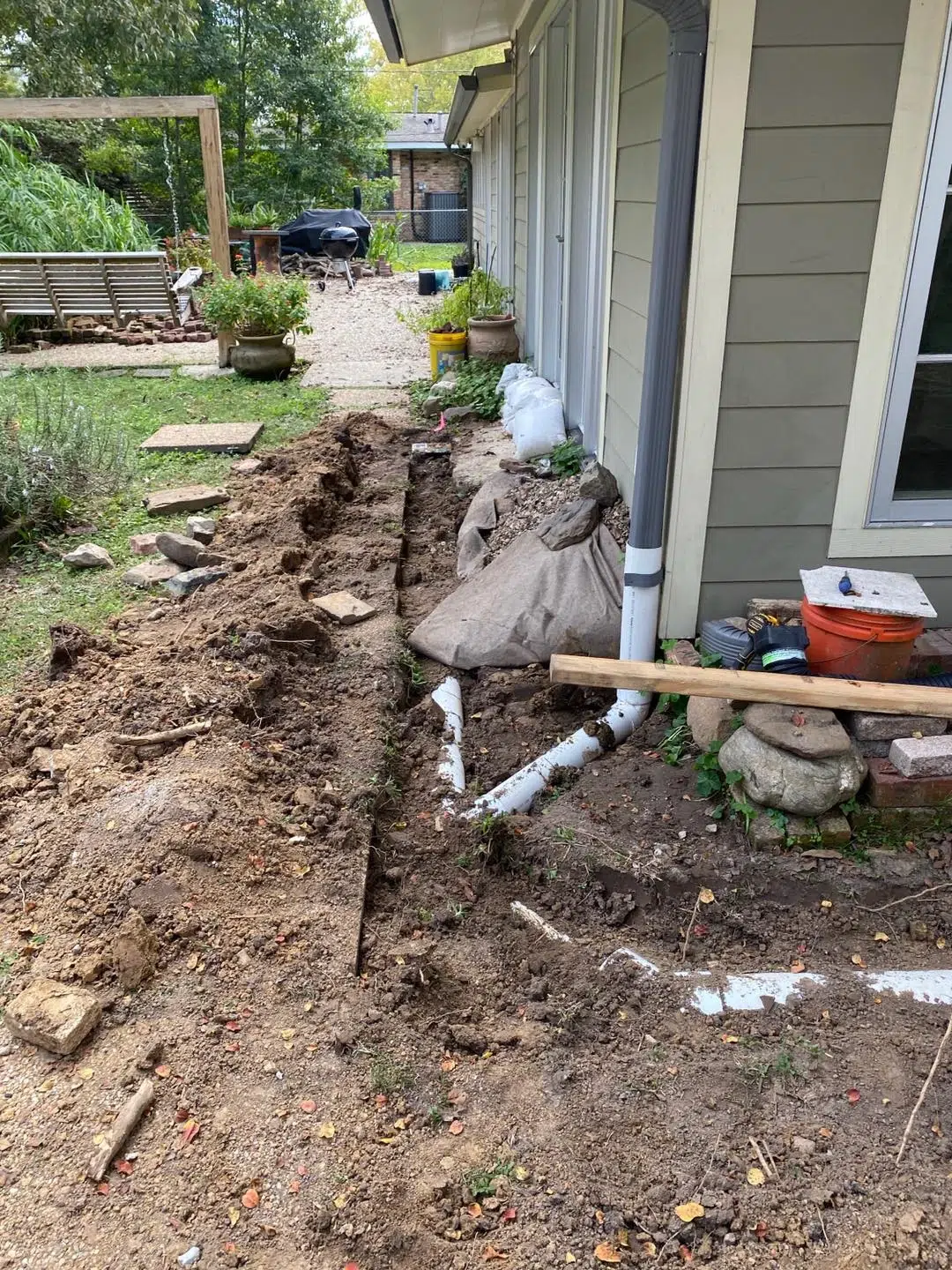
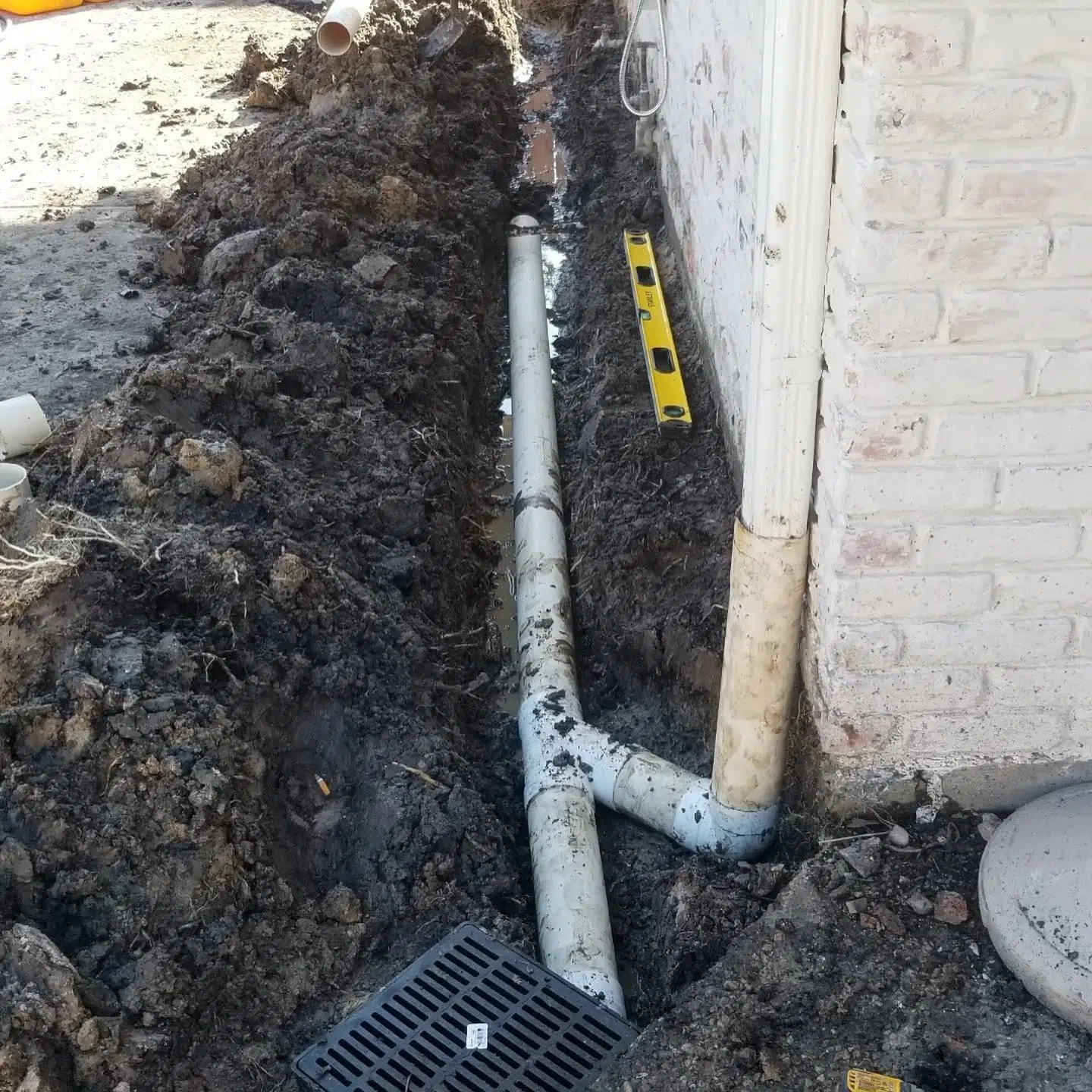
French drains are among the most effective subsurface tools for properties along the Comite River corridor. The East Baton Rouge Stormwater Master Plan notes that “French drain systems are effective because, unlike typical surface drains, they collect water over the entire length of the drain as opposed to one dedicated area.” In Brownfield’s clay soils, French drains need to be properly sloped with a clear outlet point, such as a street-level storm drain or a lower-elevation area of the yard. After drainage improvements are complete, landscaping and lawn care services in Brownfield, LA help restore the property’s appearance and promote healthy turf growth.
Dry wells complement French drains by collecting water at the end of the line and releasing it slowly into surrounding soil. However, the LSU AgCenter warns that “if your soil does not drain well, a dry well will not be very helpful,” making the soil percolation test a mandatory step before we recommend one, according to the LSU AgCenter.
Bioswales and Rain Gardens
Green infrastructure is gaining recognition from federal and state agencies as a proven approach to stormwater management. The EPA defines bioswales as “open channels that use vegetation or mulch to slow, filter, and treat stormwater as it flows through a shallow channel or trench” EPA – Types of Green Infrastructure. Rain gardens, which the EPA describes as “small, shallow, sunken areas with plants that collect stormwater runoff and filter it through a mixture of soil, sand, or gravel,” provide similar benefits in a more compact footprint.
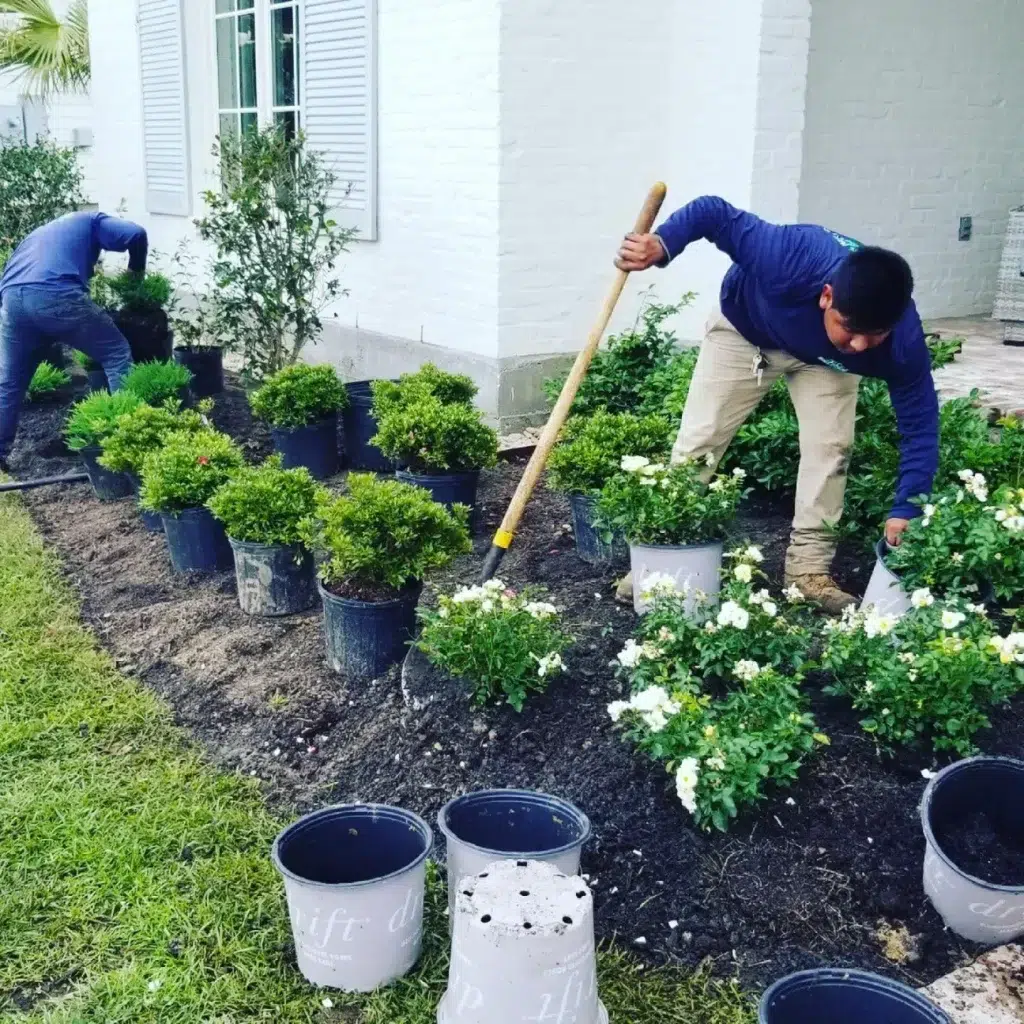
In Brownfield, we install bioswales along property boundaries and rain gardens in low-lying yard areas. The LSU AgCenter recommends specific native plants for Louisiana rain gardens, including bald cypress, river birch, Louisiana iris, buttonbush, and Virginia willow. These plants tolerate periodic standing water while their root systems improve soil structure and increase infiltration rates over time LSU AgCenter.
Real-World Drainage Scenarios in the Brownfield Area
| Scenario | Property Type | Problem | Solution Installed | Outcome |
|---|---|---|---|---|
| Comite River adjacent home | Single-family residence, 1970s construction | Yard flooding during spring rains, standing water 48+ hours near foundation | Surface regrading, French drain along foundation, extended gutters to bioswale | Water diverted away from foundation, yard drains within 6 hours of rainfall |
| Low-lying lot near Baker border | Ranch-style home on flat lot | Entire backyard becomes pond after 2+ inches of rain, breeding mosquitoes | Rain garden with amended soil, native plants, and overflow connection to street storm drain | Backyard holds water only during storms, fully drains within 12 hours |
| Subdivision property near Central | Newer construction with poor original grading | Water pooling in driveway and garage after heavy storms | Catch basins in driveway, underground piping to French drain, gravel channel along property edge | Driveway and garage stay dry, runoff moves to street-level drain |
| Property with heavy clay subsoil | Raised slab home, clay-dominated lot | Previous French drain clogged with silt, system stopped working | Replacement French drain with fabric filter, proper aggregate, and dry well with amended backfill | System flows freely, dry well releases water gradually into amended soil |
| Corner lot with street runoff | Home at intersection of two streets | Stormwater from both streets flows into yard during floods | Curbing diversion, bioswale along front property line, rain barrel system on downspouts | Street water redirected, roof capture reduces total runoff volume by 30% |
Actionable Steps Homeowners Can Take Now
- Map your drainage patterns. After the next heavy rain, walk your property and photograph every area where water pools, flows toward your foundation, or stands for more than a few hours. Note the depth and how long it takes to drain.
- Test your soil percolation rate. Dig a hole 2 feet deep, fill it with 8 to 12 inches of water, and measure how long it takes to drain. The LSU AgCenter recommends a target rate of 0.5 inches per hour or greater for effective rain garden installation. If your rate falls below 0.1 inches per hour, you will need soil amendments or an engineered drainage system rather than a simple rain garden. LSU AgCenter – Rain, Rain Go Away.
- Clean and extend your gutters. Clear all debris from gutters and downspouts. Add extensions that carry roof runoff at least 10 feet from your foundation and onto a pervious surface. Never direct gutter discharge toward a neighbor’s property.
- Keep drainage infrastructure clear. The East Baton Rouge Stormwater Master Plan emphasizes that litter, leaves, and grass clippings clog storm drains and cause water to back up into streets and yards. Bag your yard waste and keep drainage ditches, swales, and catch basins free of debris, according to the East Baton Rouge Stormwater Master Plan.
- Get a professional site assessment. A thorough evaluation by an experienced drainage contractor identifies problems that are not visible during a casual walk-through, including underground water flow, soil layering, and connection points to municipal storm systems.
Factors That Affect Drainage Performance in Brownfield
Several variables determine whether a drainage system will perform reliably during the heavy storms that Brownfield regularly experiences.
Soil composition and layering. Heavy clay dominates much of East Baton Rouge Parish. These vertisols expand when saturated and contract when dry, creating cracks that can actually channel water unpredictably underground. Understanding your specific soil profile, including whether there are sandy or loamy layers beneath the clay, is essential for designing French drains and dry wells that work.
Property elevation relative to the Comite River and Amite River. Homes at lower elevations face a higher water table and receive backflow pressure when rivers rise. In these locations, drainage systems need check valves or elevated outlet points to prevent river water from flowing backward through underground pipes.
Rainfall intensity and duration. Louisiana regularly experiences single-day rainfall events exceeding 10 inches, as seen during historic floods in 1995, 2011, and 2016. Systems sized for moderate rainfall will fail during extreme events. Our designs account for the worst-case storms that Brownfield has experienced historically.
Maintenance frequency. French drains clog with sediment. Bioswales accumulate debris. Gutters fill with leaves. A drainage system is only as reliable as the maintenance it receives. We provide maintenance schedules with every installation and offer ongoing service contracts to keep systems functioning at full capacity.
Municipal storm system capacity. Even a well-designed property drainage system will struggle if the street-level storm drains are overwhelmed or blocked. Understanding where your property connects to the parish system and whether those connections can handle peak flows is part of our assessment process.
Get Expert Drainage Solutions for Your Brownfield Property
All Seasons Landscaping has extensive experience designing and installing drainage systems for properties throughout East Baton Rouge Parish, including Brownfield and surrounding communities near the Comite River corridor. Our team evaluates your property’s unique soil conditions, elevation, and flood exposure to recommend the right combination of subsurface drainage and green infrastructure.
Reach us at [email protected] or call 225-276-8658 to discuss your drainage concerns with our team today. We take the time to understand your property’s specific challenges before recommending any solution, so you get lasting protection instead of a temporary fix.
Frequently Asked Questions
What type of drainage system works best for heavy clay soil in Brownfield?
French drains combined with surface grading and bioswales work best. Heavy clay slows infiltration, so systems that redirect water to a proper outlet point are more reliable than systems that rely on rapid soil absorption alone. Soil amendments can improve performance of rain gardens in clay conditions.
How close to my foundation can I install a French drain?
French drains should be installed at least 2 to 3 feet from your foundation wall to avoid undermining the footing. The trench must slope consistently downward toward the outlet, with a minimum drop of 1 inch per 8 to 10 feet of run.
Will a rain garden attract mosquitoes?
Properly designed rain gardens drain within 24 to 48 hours, which is not long enough for mosquito larvae to develop. Using native Louisiana plants that thrive in wet conditions also supports natural predators that help control pest populations.
Do I need a permit for drainage work on my property in East Baton Rouge Parish?
Permit requirements vary depending on the scope of work, connection to municipal storm systems, and whether the project alters existing grading near property lines or public right-of-ways. Our team handles permit research as part of every project assessment.
How often should a French drain system be cleaned or inspected?
French drains should be inspected at least once a year, ideally before the spring rainy season. In areas with heavy clay or significant sediment, flushing the system every 6 to 12 months prevents clogs and maintains full flow capacity.
Sources
- Brownfields, Louisiana – Wikipedia – Geographic and demographic profile of Brownfield, LA, including its location along the Comite River in East Baton Rouge Parish.
- National Weather Service – Flooding in Louisiana – Comprehensive overview of flood hazards, types, and historical flood events across the state of Louisiana.
- LSU AgCenter – An Overview of Louisiana Soils – Detailed examination of Louisiana’s soil types, including heavy clay vertisols and alluvial deposits that affect drainage performance.
- EPA – Types of Green Infrastructure – Federal guide to green infrastructure practices including bioswales, rain gardens, permeable pavement, and constructed wetlands for stormwater management.
- East Baton Rouge Stormwater Master Plan – How Can I Help – Parish-level guidance on residential stormwater management tools including French drains, gutters, rain barrels, and proper maintenance practices.

- How Can Professional Drainage Services in Central, LA Protect Your Property From Water Damage? - September 11, 2026
- Which Areas of Your Property Benefit Most From Outdoor Lighting for Safety and Curb Appeal? - September 11, 2026
- How Does Professional Outdoor Lighting Transform Your Landscape at Night in Baton Rouge, LA? - September 9, 2026