Proper landscaping fixes water pooling by physically altering the terrain to redirect surface runoff and utilizing specific soil and plant combinations to absorb excess ground moisture. Techniques like yard grading establish a functional slope that guides water safely away from building foundations. Installed systems like French drains, bioswales, and catch basins capture standing water and channel it into designated drainage zones. Combined with deep-root planting and soil aeration, these professional landscaping strategies prevent soil erosion, eliminate stagnant water, and protect your property from long-term structural damage.
TL;DR
- Grading corrections require a minimum slope of two percent away from home foundations to effectively prevent hydrostatic pressure buildup.
- French drains manage subsurface water pooling by funneling trapped groundwater through perforated pipes wrapped in durable landscaping fabric.
- Rain gardens utilizing deep-rooted native plants process up to thirty percent more surface water than standard turfgrass lawns.
- Core soil aeration breaks up compacted clay barriers to significantly increase the natural percolation rate of residential soils.
- Permeable hardscaping materials allow surface water to filter directly into the ground rather than overwhelming local municipal storm drains.
- Strategic downspout extensions paired with dry creek beds eliminate concentrated localized flooding near building perimeters.
The Science of Water Pooling and Runoff
Understanding why water accumulates in your yard is the first step toward implementing a permanent solution. When heavy rainfall occurs, water naturally seeks the lowest point of elevation. In undeveloped natural environments, healthy soil and deep-rooted vegetation absorb a massive portion of this moisture. However, residential development fundamentally alters this dynamic. Heavy machinery compacts the soil during construction, and the addition of roofs, driveways, and patios drastically increases the volume of surface water runoff. According to the United States Geological Survey (USGS), runoff occurs when the ground is fully saturated or when the rainfall rate exceeds the soil infiltration capacity. Landscaping drainage services resolve this imbalance by combining mechanical water redirection with biological absorption strategies.
Hardscape Drainage Systems: Directing the Flow
When surface water volumes exceed what the soil can naturally absorb, landscapers install hardscape drainage solutions to physically move the water to a safer location.
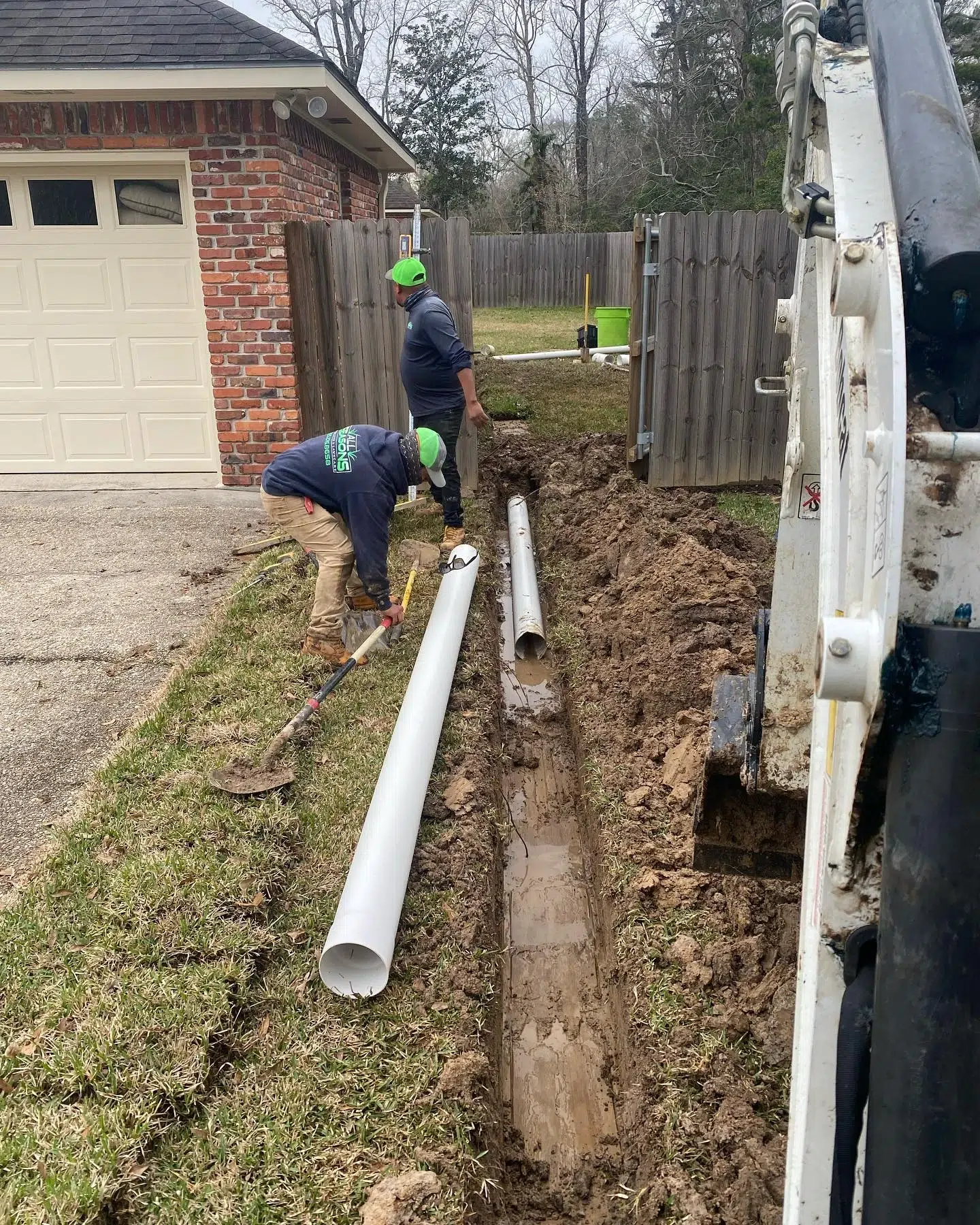
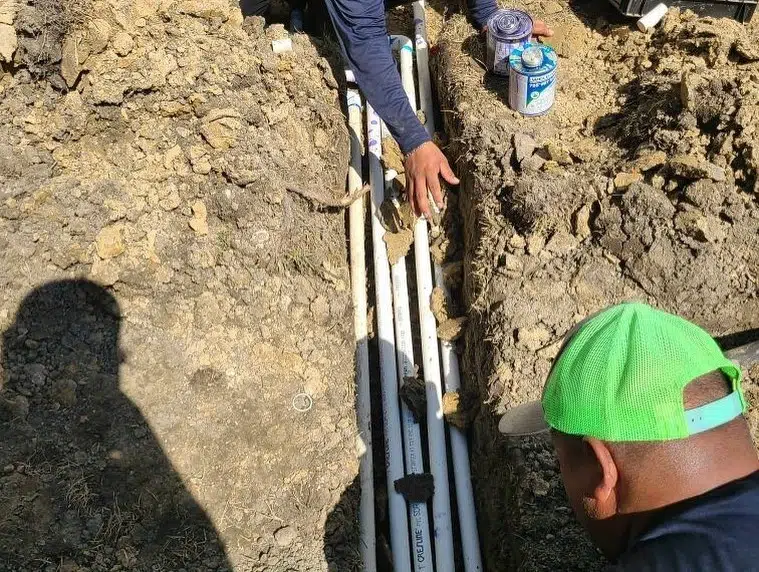
French Drains A French drain is the industry standard for resolving subsurface water issues. If your yard remains spongy days after a storm, groundwater is likely trapped above a compacted layer of subsoil. Installing a French drain involves excavating a trench, lining it with non-woven geotextile fabric, and laying down a perforated pipe surrounded by washed drainage gravel. This system collects seeping groundwater and relies on gravity to carry it to an exit point.
Catch Basins and Channel Drains. For massive volumes of fast-moving surface water, catch basins are the preferred solution. Installed in the lowest depressions of a yard, these grated boxes act as a funnel. They capture pooling water before it can turn into a swamp and route it through solid underground PVC pipes. Channel drains operate on the same principle but feature a long, linear design. These are typically installed at the edges of concrete patios or driveways to intercept sheets of runoff water. Proper installation of these systems aligns closely with guidelines from the Federal Emergency Management Agency (FEMA), which emphasizes the importance of managing localized runoff to protect residential structures from flood damage.
Softscape Drainage Solutions: Absorbing the Excess
While pipes and trenches move water away, softscape solutions utilize nature to absorb and manage excess moisture right where it falls. This approach is highly effective for moderate pooling issues and significantly improves the aesthetic appeal of a property.
Rain Gardens and Bioswales A rain garden is a purposefully excavated shallow depression planted with water-tolerant native species. By directing downspouts or natural yard runoff into a rain garden, landscapers create a dedicated catchment area where water can pool safely and percolate back into the earth over 24 to 48 hours. Research published by Penn State Extension highlights that properly designed rain gardens filter out pollutants and allow natural water infiltration. Bioswales are similar but take the form of a gently sloping vegetated channel, designed to slow water down and filter it as it moves across the landscape.
Soil Aeration and Conditioning. Often, water pooling is not a grading issue but a soil structure problem. Heavy clay soils have microscopic particles that bind tightly together, leaving virtually no pore space for water to penetrate. Routine mechanical core aeration removes small plugs of soil from the lawn, instantly creating thousands of micro-drainage holes. When landscapers follow aeration by top-dressing with organic compost, it fundamentally alters the soil structure, drastically improving its permeability over time.
Performance Comparisons of Drainage Solutions
| Solution Type | Core Mechanism | Moisture Management | Best For |
|---|---|---|---|
| Grading | Gravity redirection | Surface water | Foundation protection, reversing negative slopes |
| French Drain | Subsurface collection | Groundwater | Spongy lawns, retaining wall pressure relief |
| Catch Basin | Surface water funneling | Rapid runoff | Low-lying yard depressions, downspout pooling |
| Rain Garden | Biological absorption | Surface runoff | Eco-friendly drainage, minor yard pooling |
| Dry Creek Bed | Channeling | Surface water | Guiding heavy runoff away from critical zones |
Visual Suggestions for Drainage Planning
- Bar Chart Suggestion: A chart comparing the water absorption rates measured in gallons per hour between compacted clay soil, mechanically aerated soil, and a fully established rain garden.
- Diagram Suggestion: A cross-section of a properly installed French drain showing the soil surface, geotextile fabric wrap, washed gravel layer, and the internal perforated PVC pipe.
Real-World Landscaping Drainage Scenarios
| Scenario | Property Type | Problem | Solution | Outcome |
|---|---|---|---|---|
| The Foundation Threat | Single-Family Home | Soil pitched toward the house, causing basement moisture. | Regrading the perimeter to a 5 percent slope for the first 10 feet. | Water naturally flows away from the home, eliminating foundation leaks. |
| The Swampy Lawn | Suburban Estate | Heavy clay soil leaves the lawn unusable for days after rain. | Core aeration, compost top-dressing, and a 50-foot French drain system. | Groundwater is successfully evacuated, leaving firm, healthy turf. |
| The Patio Washout | Townhouse | Driveway runoff is flooding the lower backyard patio. | Linear channel drain installed across the pavement edge. | Runoff is intercepted and piped to the municipal storm drain. |
| The Gutter Dump | Rural Property | Downspouts are discharging massive water volumes directly into garden beds. | Catch basins attached to downspouts route water to a bioswale. | Garden beds are saved from erosion, and water is naturally filtered. |
Actionable Strategies for Immediate Drainage Improvement
Whether you are a property manager diagnosing a flooded lawn or a homeowner looking for practical fixes, implementing structured landscaping strategies makes a profound difference. Here are the steps professionals take to manage landscape drainage.
- Map the Natural Topography During a Storm. The best time to plan a drainage system is during a heavy downpour. Put on rain gear and observe exactly where the water originates, the path it takes, and where it ultimately stalls. Mark these low-lying zones with landscaping flags. Identifying the exact catchment areas dictates whether you need a surface solution like a catch basin or a subsurface solution like a French drain.
- Analyze and Amend Soil Composition. Before digging costly trenches, evaluate the earth itself. You can reference the USDA Web Soil Survey to understand the baseline soil characteristics in your region. If your yard consists primarily of heavy clay, start by scheduling a professional core aeration service. Incorporating organic matter like compost into the topsoil will break up clay bonds and significantly increase natural water percolation rates.
- Upgrade Hardscaping to Permeable Materials If you are planning a new patio, walkway, or driveway, opt for permeable pavers instead of solid poured concrete. Permeable paving systems utilize specialized joints that allow rainwater to pass directly through the surface into an engineered stone base below. As detailed on Wikipedia’s Permeable Paving index, this significantly reduces the volume of surface runoff that your yard has to process.
- Extend and Bury Downspouts. A single inch of rainfall on a standard residential roof produces hundreds of gallons of water. If your downspouts empty directly at the base of your house, pooling is inevitable. Connect downspouts to solid corrugated PVC pipes and bury them in a shallow trench, routing the water at least ten feet away from the foundation. You can terminate the pipe in a dry well or a daylight exit point lower on the property.
Factors That Affect Landscaping Drainage Performance
Several critical variables dictate how effectively a landscaping drainage system will perform. Professionals must evaluate these elements before installing any pipes, drains, or plant material.
Soil Permeability and Texture The natural infiltration rate of your soil dictates how long water will sit on the surface. Sandy soils drain rapidly, while clay-heavy soils act like a ceramic bowl, holding water indefinitely. Proper drainage design must account for the soil type to determine if mechanical intervention is necessary.
Total Impervious Surface Ratio: The amount of concrete, asphalt, and roofing on your property directly correlates to the volume of water your lawn must handle. Properties with a high ratio of impervious surfaces generate massive amounts of fast-moving runoff. Mitigating this often requires integrating Green Infrastructure concepts championed by the EPA, such as replacing standard concrete with porous alternatives to restore the natural water cycle.
Elevation and Micro-Topography: Even slight elevation changes dictate water flow. A yard with a negative slope pitched toward a building will constantly battle hydrostatic pressure against the foundation. Furthermore, landscaping choices like raised garden beds or thick edging borders can inadvertently act as dams, trapping water and creating artificial swamps. A professional landscaping team will always shoot the grades with a laser level to ensure all water management solutions rely on steady, gravity-fed slopes. The Department of Energy (DOE) emphasizes that strategic landscaping not only manages excess water but drastically improves overall property energy efficiency and structural longevity.
Achieve Perfect Landscape Drainage Today
Introducing All Seasons Landscaping & Lawn Care as the expert solution for Louisiana homeowners and property managers dealing with severe water pooling. Our team specializes in diagnosing complex drainage failures and implementing high-performance grading, trenching, and softscaping strategies that protect your property and restore your lawn.
Company: All Seasons Landscaping & Lawn Care
Phone: 225-276-8658
Email: [email protected]
Frequently Asked Questions
What is the difference between a French drain and a catch basin?
A French drain uses a perforated pipe to collect subsurface groundwater slowly seeping through the soil. A catch basin is a surface-level, grated box designed to funnel large volumes of rapidly moving above-ground runoff into a solid pipe.
How much slope is needed to keep water away from a house foundation?
Industry standards require a minimum slope of two percent. This equates to the ground dropping roughly six inches over the first ten feet, extending outward away from your foundation walls.
Can native plants really help with a soggy yard?
Yes. Deep-rooted native plants and specialized rain garden species absorb vast amounts of water and physically break up compacted soil. This drastically improves the natural percolation and evaporation rates of your landscape.
How long does a professionally installed French drain last?
When installed correctly with high-quality non-woven geotextile fabric and washed gravel, a French drain can easily last decades. The fabric prevents silt and root intrusion, which are the primary causes of premature system failure.
Is DIY yard grading a good idea for fixing water pooling?
Minor low spots can be filled manually, but structural grading requires heavy machinery and laser leveling. Improper DIY grading can inadvertently direct water toward your home, causing catastrophic foundation damage.
Sources
- United States Geological Survey (USGS) – Runoff: Surface and Overland Water Runoff
- Federal Emergency Management Agency (FEMA) – Protecting Homes
- Penn State Extension – Rain Gardens: The Basics
- Wikipedia – Permeable Paving
- Department of Energy (DOE) – Landscaping for Water Conservation

- How Does Regular Hedge Trimming Improve Your Landscape’s Overall Appearance? - October 12, 2026
- The Complete Guide to Hedge Trimming, Care, Maintenance, and Healthy Growth - October 6, 2026
- How Can Professional Drainage Services in Central, LA Protect Your Property From Water Damage? - September 11, 2026