Baton Rouge homeowners face a unique set of lawn care challenges that stem directly from our hot, humid climate, heavy seasonal rainfall, and clay-heavy soils. The most frequent lawn care mistakes we see in the Baton Rouge area are overwatering, mowing too short, overfertilizing, ignoring soil health, and choosing the wrong grass type for the specific conditions of a property. Following effective lawn care strategies can help prevent these common issues and promote healthier turf year-round. Each of these errors compounds over time, weakening turf roots, inviting disease, and creating conditions where weeds thrive. The good news is that every one of these problems is preventable with the right knowledge and a consistent seasonal approach.
TL;DR:
- Overwatering is the single most damaging lawn care mistake in Baton Rouge, causing shallow roots and fungal disease outbreaks
- Each grass species common to Baton Rouge has a specific optimal mowing height, and cutting below it stresses the plant
- Overfertilizing with nitrogen during summer creates rapid, weak growth that cannot survive Louisiana heat stress
- A soil test through the LSU AgCenter should be the starting point for any lawn care plan, not a guess
- Outdoor water use accounts for more than 30 percent of total household water use nationally, and as much as 50 percent of irrigation water is wasted due to inefficient practices
- Deep, infrequent watering (about 1 inch per week including rainfall) outperforms daily shallow watering
- Warm-season grasses like St. Augustinegrass, bermudagrass, centipedegrass, and zoysia are the only appropriate choices for Baton Rouge lawns
- Sharp mower blades, proper timing, and the one-third rule prevent the ragged cuts that invite pests and disease
Why Baton Rouge Lawns Are Especially Vulnerable
Our climate in Baton Rouge sits squarely in USDA Hardiness Zone 9a, with long, intense summers, high humidity, and frequent afternoon thunderstorms from spring through early fall. These conditions are ideal for warm-season grasses, but they are also ideal for fungal pathogens, weed germination, and soil compaction. The LSU AgCenter specifically warns that many of the lawn problems encountered during Louisiana summers are caused not by the environment alone, but by well-intentioned management practices that make things worse. Three Common Lawncare Mistakes to Avoid this Summer – LSU AgCenter.
Our warm-season grasses, including bermudagrass, centipedegrass, St. Augustinegrass, and zoysia, are adapted to handle this climate, but only when managed correctly. When homeowners apply practices better suited for cooler, drier regions, the results are predictable: thin turf, persistent weeds, and constant frustration.
Mistake 1: Overwatering and Watering at the Wrong Time
Overwatering is by far the most common and most damaging mistake homeowners make in Baton Rouge. The instinct to water every day during a July heat wave is understandable, but it is exactly the wrong approach. Daily, shallow watering encourages short, weak root systems and creates constantly wet conditions that promote fungal diseases like brown patch and gray leaf spot. Professional lawn care services in Baton Rouge, LA can help establish the right watering schedule and seasonal maintenance plan for healthier turf. It also creates ideal conditions for dollarweed, doveweed, and nutsedge, three of the most persistent weeds in Louisiana lawns.
The LSU AgCenter recommends applying about 1 inch of water per week, including rainfall, spread across no more than two or three irrigation events. Three Common Lawncare Mistakes to Avoid this Summer – LSU AgCenter. This “deep and infrequent” method forces roots to grow deeper in search of moisture, producing a more drought-tolerant and resilient lawn.
The timing of watering matters just as much as the amount. Watering in the evening keeps grass blades wet overnight, which significantly increases disease risk. Early morning irrigation, ideally before 9 a.m., allows the turf to absorb moisture while giving the leaf surface time to dry during the day. The EPA notes that as much as 50 percent of water used for outdoor irrigation is wasted due to evaporation, wind, and runoff caused by inefficient practices. Outdoor Water Use in the United States – EPA WaterSense.
Signs you are overwatering:
- A constantly damp or spongy feel underfoot
- Persistent dollarweed or nutsedge despite treatment
- Recurring fungal disease patches
- Footprints that do not remain in the grass (indicating the turf is not under any drought stress)
Mistake 2: Mowing Too Short
Scalping the lawn is one of the fastest ways to weaken turf in Baton Rouge. When grass is cut below its optimal height, it loses the leaf area needed for photosynthesis, which reduces energy production and leaves the plant unable to handle heat stress. The result is a thin, stressed lawn that invites weeds and declines rapidly during peak summer temperatures.
Each grass species common to our area has a specific mowing height range:
| Grass Type | Optimal Mowing Height | Notes |
|---|---|---|
| St. Augustinegrass | 3 to 4 inches | Most common Baton Rouge lawn grass |
| Bermudagrass | 1.5 to 2.5 inches | Higher end preferred for home lawns |
| Zoysia | 1.5 to 2.5 inches | Slower growing, requires sharp blades |
| Centipedegrass | 1.5 to 2 inches | Low maintenance, avoid overfertilizing |
Source: Louisiana Lawns Best Management Practices – LSU AgCenter
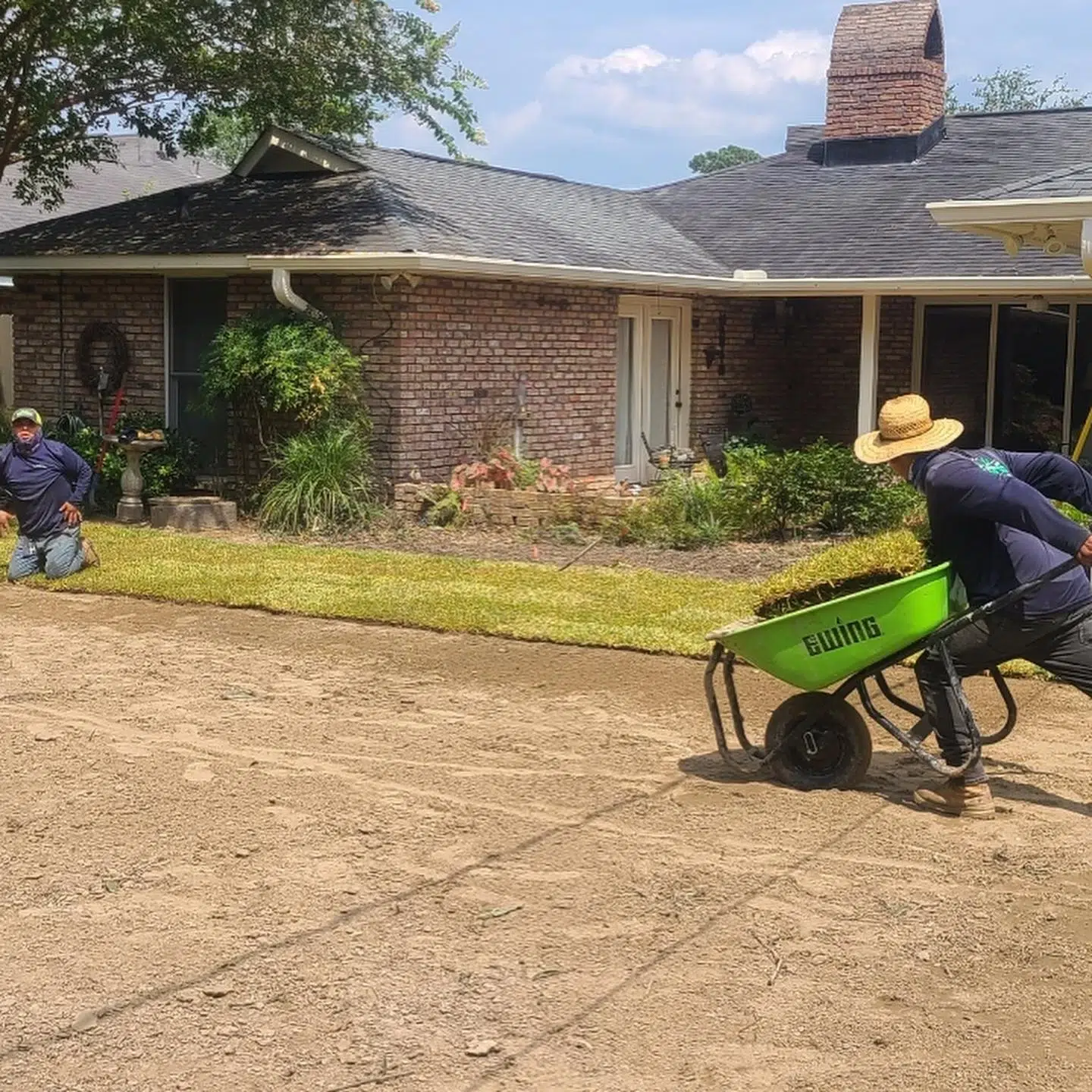
The National Association of Landscape Professionals (NALP) reinforces that most grasses do best when trimmed to 2.5 to 3 inches, and that you should never remove more than one-third of the grass height in a single mowing. The 5 Most Common Lawn Care Mistakes – Love Your Landscape. When maintained at the proper height, taller grass shades the soil surface, conserves moisture, reduces soil temperatures, and competes more effectively against weeds.
Dull mower blades are an overlooked but serious problem. Tearing rather than cutting the grass creates ragged leaf tips that increase water loss and disease susceptibility. Blades should be sharpened multiple times during the growing season.
Mistake 3: Overfertilizing, Especially During Summer
The belief that more fertilizer produces a greener, healthier lawn is one of the most costly misconceptions for Baton Rouge homeowners. Applying too much nitrogen during the summer creates rapid, succulent growth that the plant cannot sustain under elevated temperatures and environmental stress. This type of growth is far more vulnerable to disease, increases mowing frequency, and contributes to thatch buildup over time. The 5 Most Common Lawn Care Mistakes – Love Your Landscape.
Excess nitrogen also has environmental consequences. During heavy rainfall events, nitrogen can move off-site through runoff or leach below the root zone, contributing to water quality issues in local waterways.
Annual nitrogen recommendations for Baton Rouge lawn grasses are lower than most homeowners expect:
| Grass Type | Annual Nitrogen (lbs per 1,000 sq ft) |
|---|---|
| Bermudagrass | Up to 3 lbs |
| St. Augustinegrass | Up to 3 lbs |
| Zoysia | Up to 2 lbs |
| Centipedegrass | Up to 2 lbs |
For centipedegrass specifically, exceeding 2 pounds of nitrogen per 1,000 square feet per year can actually cause decline or death of the grass. This is a low-maintenance species that many homeowners inadvertently damage by treating it like bermudagrass.
Mistake 4: Ignoring Soil Health and Skipping Soil Tests
Many homeowners in Baton Rouge fertilize, water, and mow without ever knowing what is actually happening beneath the surface. Soil pH, nutrient levels, and compaction all vary significantly from one property to the next, and guessing at what your lawn needs is a recipe for ongoing problems.
The LSU AgCenter’s Best Management Practices guide identifies soil testing as the essential first step before any fertilization program Louisiana Lawn Maintenance – LSU AgCenter. A proper soil test reveals pH levels, phosphorus, potassium, and other fertility factors. This is especially important because many Baton Rouge soils are acidic, and applying lime or adjusting nutrient levels without test data can cause more harm than good.
Continual fertilization with a generic complete fertilizer like 8-8-8 or 13-13-13 can result in excessive phosphorus accumulation, which is particularly harmful to centipedegrass. The LSU AgCenter recommends retesting soil every two to three years, since soil chemistry changes over time.
Mistake 5: Choosing the Wrong Grass for the Conditions
Planting a grass type that is not suited to the specific conditions of your property is a mistake that is difficult and expensive to correct. The NALP points out that grasses are generally full-sun plants with limited ability to adapt to shade, and trying to force grass to grow where it is not meant to thrive leads to wasted time and resources. The 5 Most Common Lawn Care Mistakes – Love Your Landscape.
In Baton Rouge, the decision should be based on sunlight, foot traffic, and soil conditions:
- St. Augustinegrass performs best in areas with partial shade and is the most common choice for established neighborhoods with mature trees
- Bermudagrass thrives in full sun and handles heavy foot traffic, making it ideal for active families
- Centipedegrass is a low-maintenance option that performs well in acidic soils common throughout the Baton Rouge area
- Zoysia offers a dense, slow-growing turf that handles both sun and moderate shade
Signs You Have the Right Lawn Care Approach
A properly managed Baton Rouge lawn shows clear, measurable indicators of health. The turf springs back quickly after foot traffic, has a consistent color across the yard, and resists weed encroachment even during stressful summer months. Water bills remain stable without spikes from excessive irrigation. Disease pressure stays minimal because watering is deep and infrequent, and mowing heights are appropriate for the grass species. Soil test results guide all fertilization decisions, and clippings are left on the lawn to recycle nutrients naturally. When these elements align, the lawn requires fewer inputs over time and delivers reliable results season after season.
Get Professional Lawn Care in Baton Rouge
All Seasons Landscaping & Lawn Care has the local expertise and seasonal knowledge to keep your Baton Rouge lawn healthy through every month of the year. Our team understands the specific grass types, soil conditions, and climate challenges that make lawn care in this region unique, and we build every treatment plan around proven practices rather than guesswork.
Call us at 225-276-8658 or email [email protected] to get started with a customized plan for your property.
FAQs
How often should I water my lawn in Baton Rouge during summer?
Aim for 1 inch of water per week, including rainfall, applied in two or three deep watering sessions rather than daily shallow watering. Early morning is the best time to irrigate.
What is the best grass type for a shady Baton Rouge yard?
St. Augustinegrass is the most shade-tolerant warm-season option for our area, performing well in yards with mature tree canopy. Zoysia can also handle moderate shade.
How do I know if I am overfertilizing my lawn?
Signs include rapid, lush growth that requires constant mowing, increased disease pressure, thatch buildup, and fertilizer burn. A soil test from the LSU AgCenter can confirm nutrient levels before problems escalate.
Why does my lawn keep getting brown patch every summer?
Brown patch thrives in warm, wet conditions. Overwatering, evening irrigation, high nitrogen levels, and excessive thatch all contribute to recurring outbreaks. Correcting these cultural practices is the first step to controlling it.
Should I bag my grass clippings or leave them on the lawn?
Leave clippings on the lawn whenever possible. They decompose quickly in warm weather, recycling nutrients back into the soil and reducing the need for additional nitrogen fertilizer. Remove clippings only if they form clumps on the surface.
Sources
- Three Common Lawncare Mistakes to Avoid this Summer – LSU AgCenter – LSU AgCenter horticulture specialists outline the top three summer lawn care mistakes in Louisiana: overwatering, mowing too low, and overfertilizing, with species-specific recommendations for Baton Rouge-area grasses.
- Louisiana Lawns Best Management Practices (BMPs) – LSU AgCenter – Comprehensive guide covering fertilization schedules, mowing heights, watering practices, thatch control, and pest management for all warm-season turf species grown in Louisiana.
- Louisiana Lawn Maintenance – LSU AgCenter – Detailed publication with nitrogen fertilization tables, mowing height ranges by grass type, and seasonal maintenance schedules specific to Louisiana lawns.
- The 5 Most Common Lawn Care Mistakes Homeowners Make – Love Your Landscape (NALP) – National Association of Landscape Professionals identifies common homeowner errors including wrong grass selection, improper watering, mowing too short, and incorrect fertilizer use.
- Outdoor Water Use in the United States – EPA WaterSense – EPA data on outdoor water consumption, irrigation waste, and WaterSense program recommendations for efficient residential landscape watering practices.

- The Complete Guide to Hedge Trimming, Care, Maintenance, and Healthy Growth - October 6, 2026
- How Can Professional Drainage Services in Central, LA Protect Your Property From Water Damage? - September 11, 2026
- Which Areas of Your Property Benefit Most From Outdoor Lighting for Safety and Curb Appeal? - September 11, 2026