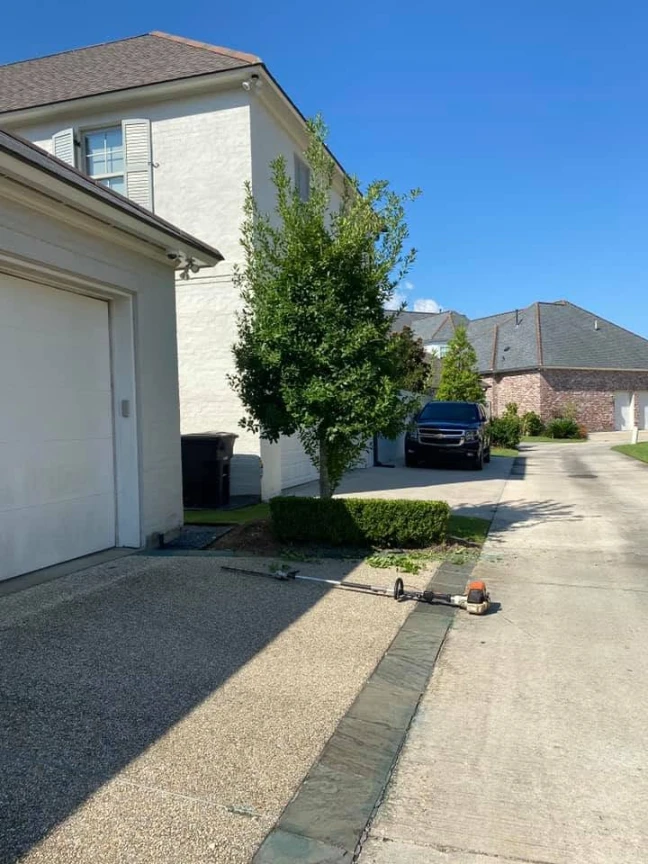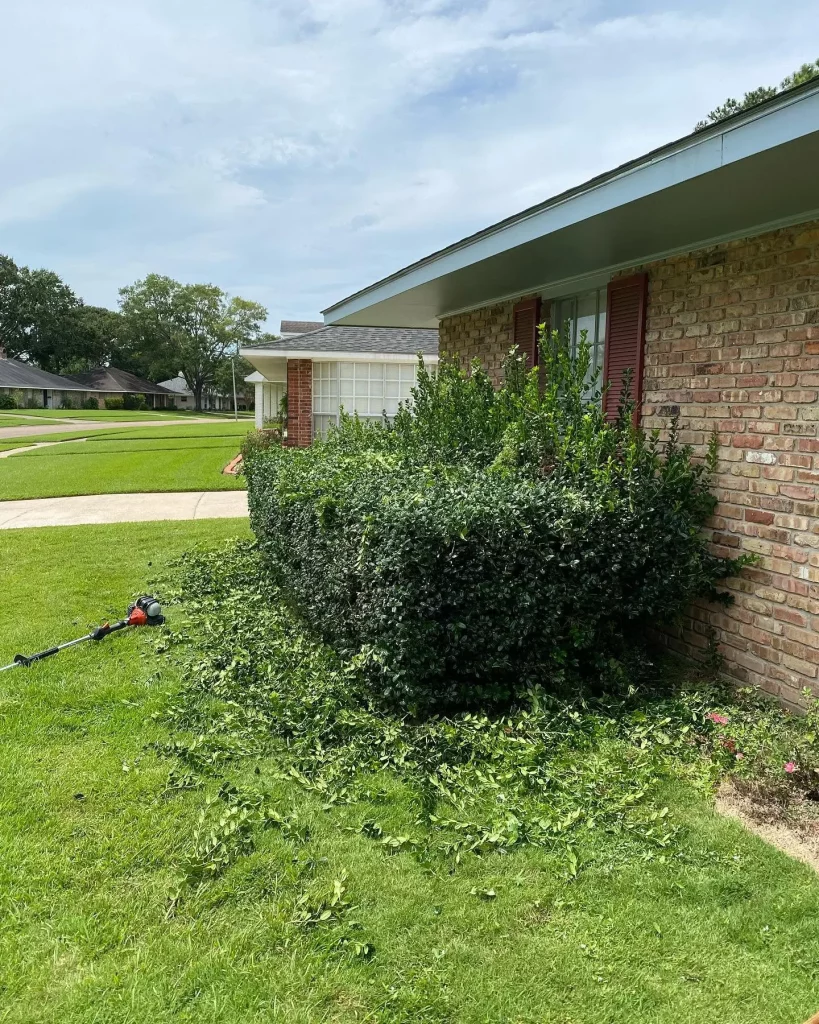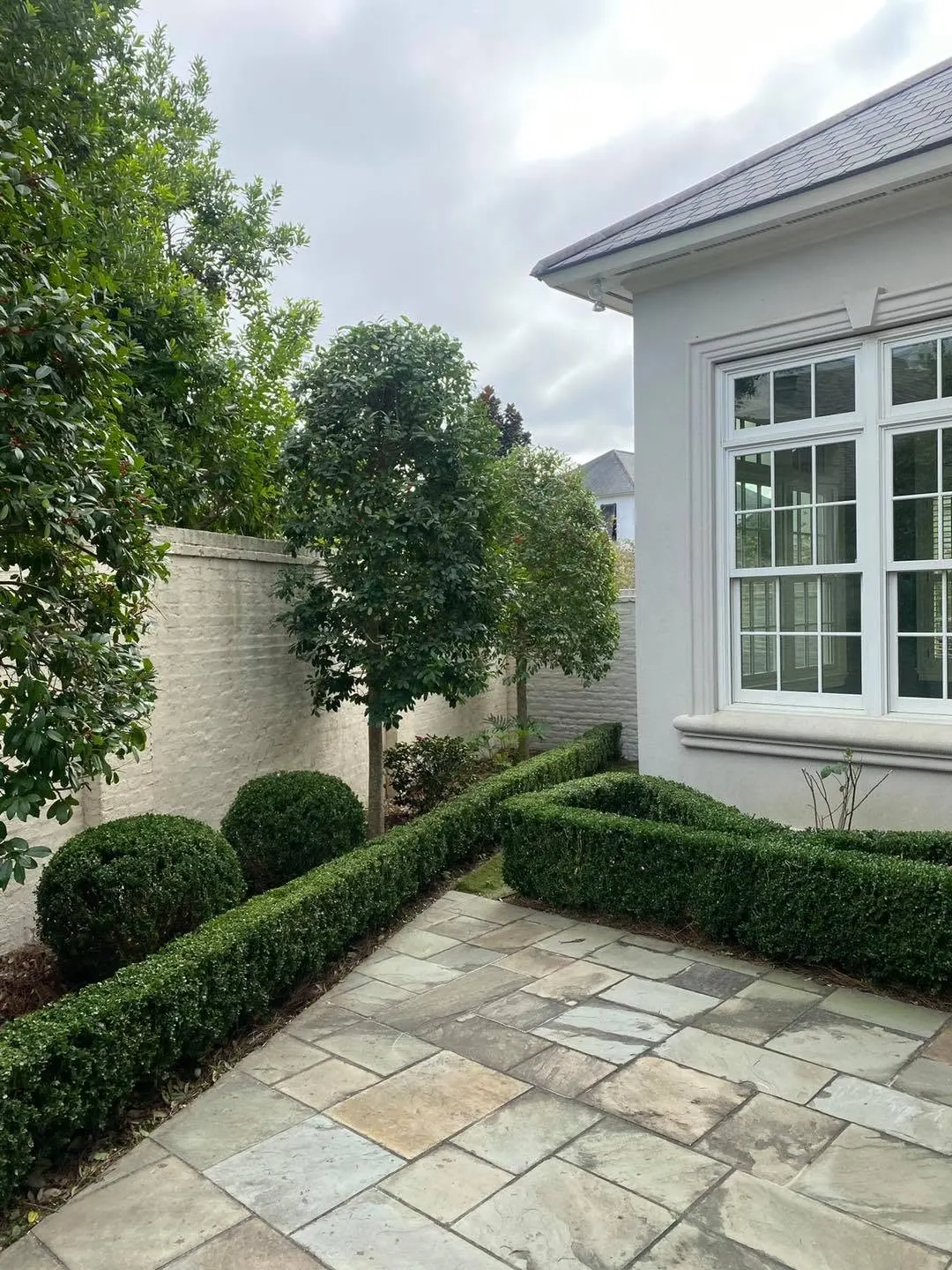
Regular Hedge Maintenance keeps branches off your walkways by cutting growth back before it spreads into the path. Trim a few times a year, take small amounts each visit, and consider residential hedge trimming services to keep the top narrower than the base so light reaches the lower branches. Clear the cuttings and re-cut the edges, and your path stays open.
TL;DR
- Overgrowth narrows paths and creates trip and injury risks.
- Light, frequent trims beat one heavy cut.
- Shape hedges wider at the base.
- Clean edges and clear cuttings finish the job.
Why Branches Creep Into Walkways
Hedges push out the most new growth where light is strongest, and that is usually the side facing your path. A few extra inches each month adds up fast.
Overgrown branches rarely block a path overnight. They narrow it slowly, so you stop noticing until someone catches a sleeve or a face on a twig.
Good Walkway Clearance matters more than most people expect. The USDA Forest Service lists 36 inches as the minimum clear width for an outdoor access route, wide enough for a wheelchair, and names leaning trunks and branches as common protruding objects. Your home path isn’t covered by that guide, but it’s a handy benchmark for how much room people need.
Here’s what a blocked path costs you:
- Safety: Low branches scratch faces and catch clothing, and wet leaves make footing slick.
- Access: Strollers, wheelchairs, wheelbarrows, and delivery carts all need room to pass.
- Visibility: Thick growth can hide steps, curbs, and people near a driveway.
- Plant Health: Crowded hedges block light and airflow inside the plant, which leaves thin, weak growth.
How Often Should You Trim Hedges Along a Path?
Most hedges need a path-side trim a few times a year, but the right timing depends on the plant. Flowering shrubs need different treatment than plain evergreens.
Overgrown Branch Trimming works best as a quick pass along the walkway side, not a big cutback after months of neglect. Following hedge maintenance and pruning tips can help keep cuts small and encourage faster healing while maintaining the hedge’s natural appearance.
Timing also matters for the plant itself. The LSU AgCenter advises against pruning shrubs and hedges between September and December, because the new growth won’t harden off before freezes. Dead growth can come out any time.
| Hedge Type | Best Timing | Reason |
|---|---|---|
| Evergreen, not grown for flowers | Winter or early spring | Plants recover quickly before spring growth |
| Spring-flowering shrubs | Right after blooms fade | Earlier cuts remove flower buds |
| Formal, clipped hedges | Two to three light trims a year | Tight shapes lose their lines fast |
| Any hedge, path side only | Quick touch-up in summer | Keeps shoots from reaching the walk |
Shape Hedges So They Stay Off the Path
How you cut matters as much as when you cut. A hedge shaped the wrong way grows bare at the bottom and pushes untidy shoots outward.
Smart Shrub Pruning and Shaping starts with the outline. STIHL recommends a trapezoid, wide at the bottom and narrow at the top, so light reaches every branch, and the lower ones don’t go bald.
Follow these steps:
- Look First: Check for nests and trip hazards before you start.
- Cut Bottom Up: Work the sides from the base upward and leave the top for last.
- Hold the Slope: Keep the base wider than the top.
- Cut Lightly: Take off small amounts and step back often to check your lines.
- Stay in the Leaves: Some evergreens, including many conifers, won’t regrow from bare old wood, so cut into leafy growth only.
Overhead growth needs attention too. Keep branches above head height along the walk so tall visitors don’t duck.
Keep Borders and Edges Under Control
Hedges aren’t the only thing that spills onto paths. Groundcover, vines, mulch, and roots can all push into the walking surface.
Landscape Border Maintenance covers the bed edge as well as the hedge. Re-cut the edge line, pull runners that crawl across the surface, and keep mulch from drifting onto the walk where it gets slippery.
Pathway Obstruction Prevention starts at planting time. Set new shrubs far enough back that their mature width stays off the walkway, and you won’t be fighting them every season.
Seasonal Checklist for Open Walkways
A simple schedule keeps the work small. Here’s a pattern that fits most yards:
- Late Winter: Do the main shaping before spring growth starts.
- Late Spring: Trim path-side shoots and cut flowering shrubs once blooms fade.
- Summer: Take off fresh shoots reaching the walk and re-cut the bed edge.
- Fall: Remove dead growth only, and skip shaping cuts.
- After Storms: Check for broken limbs or leaning branches across paths.
Clean up as you go. Rake cuttings off the walk right away, since they’re slippery when wet, and don’t leave piles on the lawn.
When Hedge Work Gets Too Big for a Weekend
Tall hedges, thorny shrubs, and thick branches are slower and riskier than they look. Trimmers throw twigs, so wear eye protection, gloves, and long sleeves. If you need a ladder to reach the top, that’s usually the point to hand the job off.
Hedges that have been ignored for years also need a plan. Cutting everything back in one go can stress the plant, so spread heavy reductions across seasons.
Talk to Us About Your Walkways
If branches are already crowding your walkway, we’re happy to talk through what it needs. Reach out to All Seasons Landscaping & Lawn Care, and our team will help you get the path open and keep it that way.
Phone: 225-276-8658
Email: [email protected]
Frequently Asked Questions About Keeping Walkways Clear
Can I trim hedges in summer?
Light trims along the path side are usually fine. Save heavy shaping for the right season, and cut flowering shrubs only after they bloom.
Will a hedge grow back if I cut it hard?
It depends on the plant. Many broadleaf evergreens bounce back, but some conifers won’t regrow from bare old wood, so reduce size gradually.
How high should branches be above a walkway?
Keep them above head height. A common headroom benchmark is about 80 inches.
Should I use hand shears or a power trimmer?
Hand shears suit small hedges and detail work. A power trimmer saves time on long runs, and sharp blades give cleaner cuts either way.
What should I do with hedge clippings?
Rake them off the walkway right away and haul them off. Leaving cuttings on the lawn can inhibit grass growth and cause bare patches.
Sources
- USDA Forest Service – 36-inch minimum clear width and branches as protruding objects.
- LSU AgCenter – Pruning timing and avoiding September to December cuts.
- STIHL – Wide-base hedge shape and cuttings advice.

- How Can Regular Hedge Maintenance Prevent Branches From Blocking Walkways? - November 13, 2026
- What Should You Expect From a Professional Hedge Trimming Service in St. George, LA? - November 4, 2026
- What Types of Hedges Benefit Most From Professional Trimming in Baton Rouge, LA? - November 4, 2026