In Baton Rouge, the hedges that benefit most from professional trimming are rapid-growing privacy screens like Waxleaf Ligustrum and Sweet Viburnum, alongside disease-prone evergreen shrubs such as Boxwood, Loropetalum, Dwarf Yaupon Holly, and Podocarpus. Our humid subtropical climate causes fast overgrowth, making a complete guide to hedge trimming useful for understanding proper care, while improper shearing spreads regional pathogens and starves the lower limbs of sunlight.
TL;DR
- Fast-growing screening plants need heavy structural heading cuts to stay within bounds.
- Dense ornamentals require hand-thinning and sanitized shears to prevent blights.
- Tapering the sides keeps lower branches green and stops hedges from becoming leggy.
- Timing cuts around the Baton Rouge freeze calendar prevents winter cold damage.
The 6 Types of Hedges That Benefit Most From Professional Trimming
Different shrubs respond to shears in completely different ways, so a single cutting technique does not work across an entire property. We focus our pruning strategies around the distinct growth habits, branching structures, and disease profiles of each specific plant. You can find our business on Google Maps to view our location.
1. Boxwoods (Littleleaf, Japanese, and Wintergreen)
Boxwoods remain a classic choice for low foundation borders in Baton Rouge, but they are also among the most fragile. Repeated surface shearing packs the outer canopy tightly, trapping moisture and killing off inner stems. Even worse, boxwoods in Louisiana face an aggressive fungal disease known as boxwood dieback (Colletotrichum theobromicola).
According to research from the LSU AgCenter Plant Diagnostic Center, boxwood dieback causes random twigs to turn tan, leaves to show bright black discoloration under the bark, and spreads through infected pruning tools and rain splash. Because there is no chemical cure once a plant is infected, we sanitize our bypass pruner blades with 70 percent isopropyl alcohol between bushes. We also hand-thin interior stems to keep air moving freely through the canopy.
2. Waxleaf Ligustrum (Japanese Privet)
Waxleaf Ligustrum is one of the fastest-growing evergreen hedges in East Baton Rouge Parish. Left alone for just one summer, it can easily jump three to five feet, casting shade over turfgrass and pressing against exterior siding.
Cosmetic shearing only makes ligustrum top-heavy because new shoots rapidly sprout from the outer tips. To keep these hedges sturdy and dense, we use selective heading-back cuts. By cutting thicker interior stems back to lower branch unions, we contain the overall height without creating an ugly, clubbed appearance.
3. Loropetalum (Chinese Fringe Flower)
Known for their rich purple foliage and bright spring blooms, Loropetalums are everywhere in Baton Rouge neighborhoods. However, shearing them during winter strips off their dormant flower buds, ruining the spring display.
Loropetalums also face bacterial gall (Pseudomonas savastanoi), which creates rough, woody knots that girdle branches and kill foliage. The bacteria enter through open pruning wounds and travel from plant to plant on unwashed tools. We prune Loropetalums immediately after their spring flowering finishes, using sterilized blades to shape the natural vase form of the plant without transferring bacteria.
4. Sweet Viburnum and Japanese Viburnum
Sweet Viburnum is the go-to plant across South Louisiana for tall, living privacy walls that screen out neighbors and road noise. Because these shrubs routinely reach 10 to 15 feet in height, maintaining them on residential lawns poses a serious fall hazard for homeowners on ladders.
Viburnums also have broad, leathery leaves. Dull trimmer blades crush and shred those leaves, turning the outer edge of your hedge into a brown, ragged line. We use commercial, telescoping articulated pole trimmers directly from the ground. This gives us straight, clean lines up to 12 feet high without putting workers or property at risk.
5. Dwarf Yaupon Holly and Burford Holly
Hollies provide crisp, formal borders, but their branches are stiff and woody. Cheap electric clippers get caught in the hardwood, chewing the bark and leaving jagged tears that invite wood-decaying fungi.
We trim hollies with razor-sharp, commercial-grade reciprocating blades that slice cleanly through woody growth. This clean cut lets the shrub heal quickly, preserving the dense, manicured lines that make yaupon and burford varieties look sharp.
6. Japanese Yew (Podocarpus)
Podocarpus produces fine-textured, needle-like foliage that creates an elegant privacy screen. Its primary vulnerability is light deprivation at ground level.
When trimmed with straight vertical sides, the upper foliage blocks direct sunlight from reaching the lower quarter of the plant. Within two seasons, the bottom branches drop their leaves, leaving bare stalks. We prune Podocarpus with a deliberate inward slope, keeping the base full and green for years.
| Hedge Variety | Common Landscape Role | Primary Risk From Improper Trimming | Correct Professional Method |
|---|---|---|---|
| Boxwood | Formal borders, low edging | Boxwood dieback (C. theobromicola); hollow center | Hand-thinning; sanitized bypass blades |
| Waxleaf Ligustrum | Tall screening, foundation beds | Unchecked runaway growth; top-heavy collapse | Deep heading-back cuts to interior nodes |
| Loropetalum | Accent shrub, colorful screen | Loss of flower buds; bacterial gall knots | Post-bloom thinning; tool disinfection |
| Sweet Viburnum | 10 to 15-foot privacy barriers | Shredded leaves; severe homeowner ladder hazards | Telescoping ground-based pole shears |
| Dwarf Yaupon Holly | Crisp geometric hedges | Chewed wood and ragged leaf margins | High-torque, sharp reciprocating blades |
| Podocarpus | Narrow, architectural screens | Thin, see-through lower trunks | Tapered keystone shaping (wide bottom) |
The Baton Rouge Seasonal Hedge Trimming Calendar
Pruning at the wrong time of year can ruin a hedge as easily as using the wrong tool. In East Baton Rouge Parish, timing revolves around our seasonal freeze patterns.
- Late Winter (Late February to Early March): Our median final freeze date lands around February 25. Once hard freezing passes, we make heavy structural cuts on dormant broadleaf evergreens like Ligustrum, Hollies, and Boxwoods before new spring buds burst.
- Spring (April to May): We trim flowering hedges like Azaleas, Camellias, and Loropetalum right after their blooms drop. This gives the plants time to produce new wood where next year’s flower buds will set.
- Midsummer (June to July): Summer storms trigger fast water sprouts on tall privacy hedges. We make light passes to keep silhouettes tidy without cutting deeply into older growth.
- The Mid-September Cutoff: All structural trimming must stop by mid-September. Trimming in October or November forces a flush of tender, soft green growth. That growth cannot harden off before cold snaps arrive, leading to black freeze damage and dieback across your hedge line.
Protect Your Landscape Investment With All Seasons Landscaping & Lawn Care
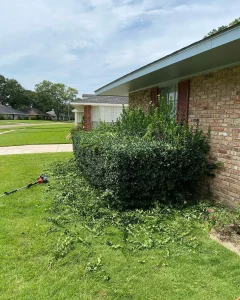
Caring for mature hedges takes more than a string trimmer and a free Saturday afternoon. All Seasons Landscaping & Lawn Care combines proper plant biology with professional field execution across Baton Rouge and surrounding areas.
Under guidelines set by the City of Baton Rouge Department of Environmental Services, curbside yard waste has strict bag and bundle limits for weekly collection. We pack up and haul all vegetative debris away with us, leaving your yard clean and your hedges healthy.
Call us today at 225-276-8658 or email [email protected] to schedule a hedge trimming estimate for your property.
Frequently Asked Questions About Hedge Trimming in Baton Rouge
How often do hedges need trimming in South Louisiana?
Fast-growing plants like Ligustrum require trimming two to three times annually. Slower-growing evergreens, including Boxwoods and Yaupon Hollies, typically need only one or two scheduled trimmings each season.
Why is my hedge completely hollow on the inside?
Constant surface shearing creates a dense outer leaf layer that blocks sunlight. Without light, internal leaves drop, leaving bare branches that require selective thinning cuts to recover.
Is it safe to trim my hedges during October?
No. Late-fall trimming forces tender new leaves that cannot harden off before freezing temperatures arrive, causing winter burn and tip dieback when winter cold snaps hit.
How does boxwood dieback spread across Baton Rouge landscapes?
Boxwood dieback spreads through microscopic fungal spores carried on contaminated pruning shears and water droplets. Disinfecting blades between individual plants prevents the fungus from moving down the hedge.
Can overgrown hedges be cut back to bare wood?
Ligustrums and Hollies can regenerate from hard renewal cuts into old wood. Conifers and mature Boxwoods rarely recover from severe cutting and often develop permanent bare spots.
Sources
- LSU AgCenter Plant Diagnostic Center – Research and management guidelines for boxwood dieback (Colletotrichum theobromicola) in Louisiana.
- LSU AgCenter – Practical horticultural recommendations on hedge tapering profiles, pruning schedules, and base sunlight management by Dan Gill.
- City of Baton Rouge Department of Environmental Services – Municipal solid waste ordinances and curbside residential yard waste collection guidelines.