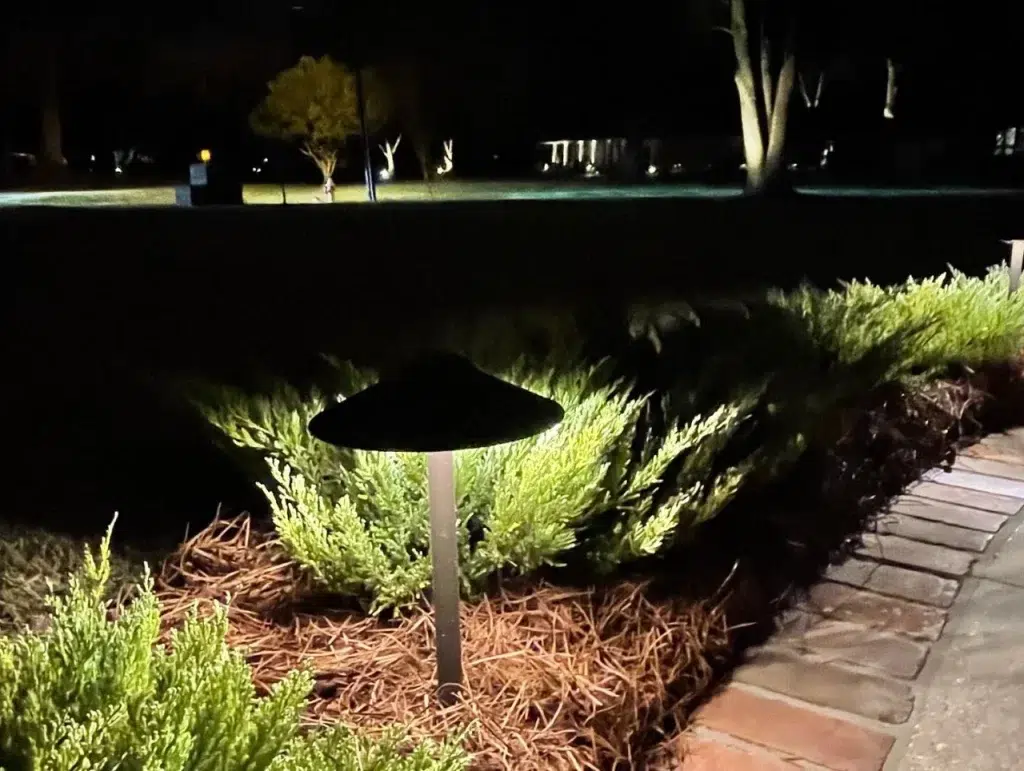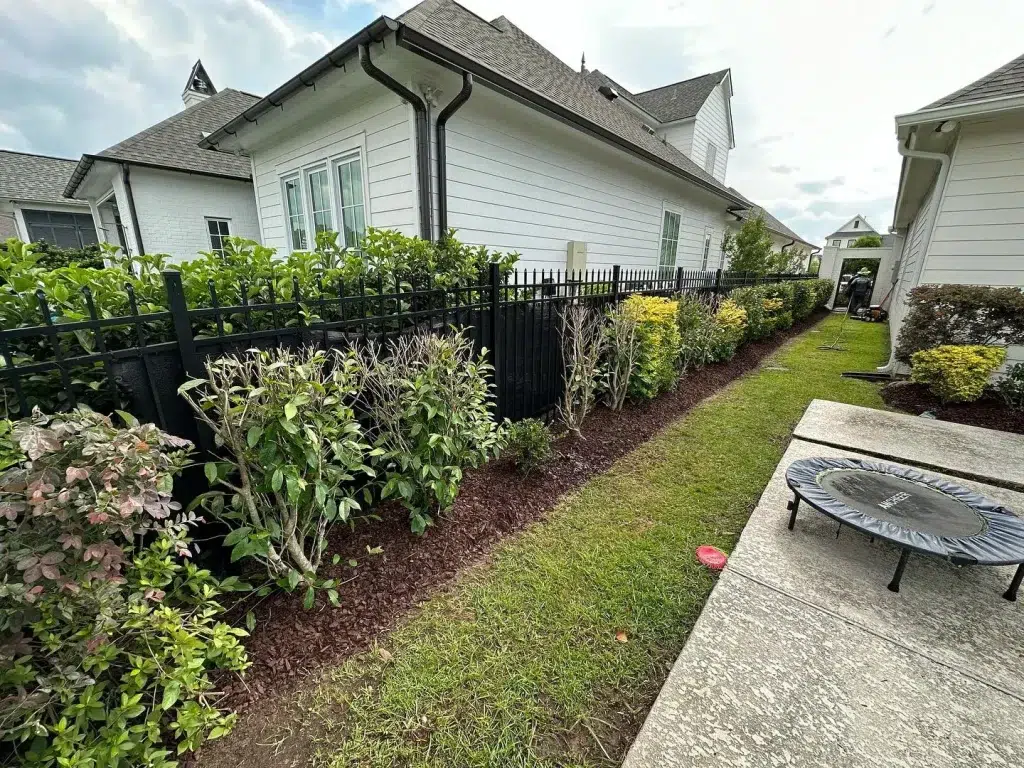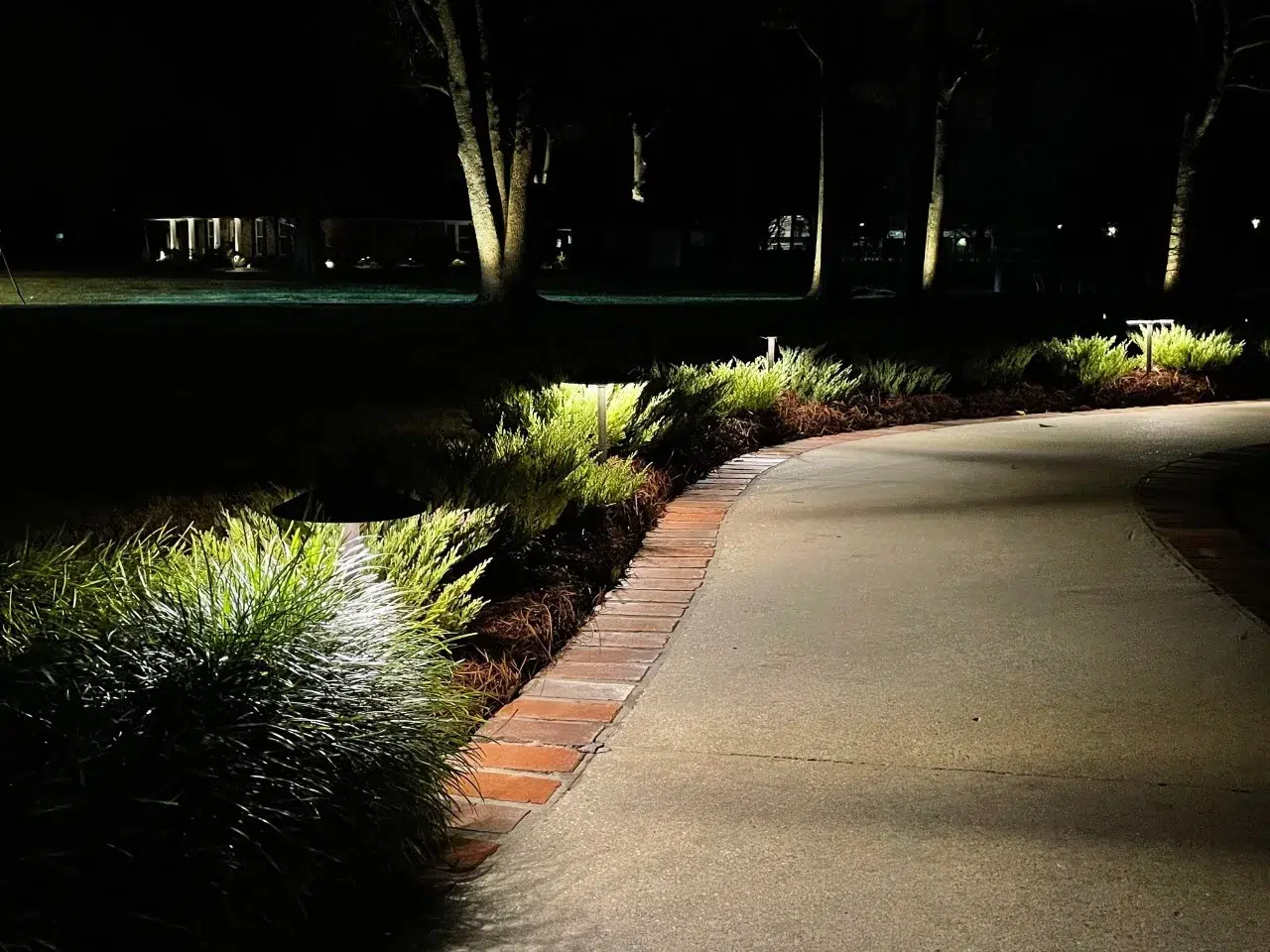
The property areas that benefit most from outdoor lighting are the ones you and your guests move through after dark: front entries and porches, walkways and steps, driveways, and deck or patio transitions. These circulation routes carry the highest safety payoff, while planting beds, specimen trees, and water features add the curb appeal layer. Outdoor lighting considerations can help you determine where to place lighting based on your lot layout, stairs, plantings, and how your family uses the yard. Side yards and service areas gain the most from motion-activated security lights. The right mix depends on your lot layout, stairs, plantings, and how your family uses the yard, but prioritizing paths and entry points first, then accent and security zones, delivers the strongest combination of protection and nighttime beauty.
TL;DR
- Light circulation routes first: entries, walkways, steps, and driveways prevent trips and falls and welcome guests.
- Follow the five principles for responsible outdoor lighting: light only what is useful, targeted, low level, controlled, and warm-colored, per DarkSky International.
- Multiple modest fixtures outperform one bright floodlight by reducing glare and the deep shadows where hazards hide.
- Accent lighting earns the curb appeal: uplights on trees, well lights in beds, and hardscape lighting on walls and steps shape how the property reads at night.
- Motion sensors fit side yards, service areas, and secondary doors, adding detection benefits without all-night brightness.
- Low-voltage (12V) LED systems dominate residential work thanks to low energy use, long fixture life, and flexible placement.
- Always review the design at night before finalizing fixture counts and aiming.
Why Placement Matters More Than Fixture Count
A lighting plan succeeds or fails on placement, not brightness. Glare from bright, unshielded fixtures actually decreases safety because light shines into your eyes, constricts your pupils, and makes it harder to adjust to low-light conditions, according to DarkSky International’s research summary on crime and safety. The American Medical Association has similarly warned that glare from nighttime lighting can create hazards ranging from discomfort to visual disability.
The better approach is layered and restrained. DarkSky and the Illuminating Engineering Society define responsible lighting with five principles: light only what is useful, aim it where it is needed, keep it low level, use controls so it runs only when needed, and choose warm-colored sources with limited blue-violet output. Projects that follow these principles save energy, cut light pollution, and reduce disruption to wildlife.
Fixture strategy matters just as much. Research compiled on security lighting recommends multiple lamps of moderate power instead of a few powerful units, which reduces glare, produces more even illumination, shrinks shadow pools, and provides backup if one fixture fails. A good plan also uses shielding and careful aiming so light points downward and never spills onto neighboring property.
Safety Zones: The Outdoor Lighting Priorities
Front Entries and Porches
Your front door is the most used and most visible point on the property. The National Institute on Aging recommends turning on the porch light at night whenever you plan to return home after dark, and keeping the steps and porch clear of debris. Wall lanterns flanking the door, a downlight above the landing, and a well-lit house number help guests find you safely and help drivers and delivery crews read your address.
Walkways, Paths, and Steps
Paths are where most nighttime stumbles happen. The NIA specifically suggests motion-activated lights that turn on automatically as you walk by, since good lighting at the top and bottom of stairs is one of the simplest fall prevention measures available. Outdoor lighting installation services can help create safer, more consistent illumination along paths, stairs, and other level changes. Low path lights spaced to create even pools of light, plus step lights recessed into risers, keep edges and level changes visible without washing out the yard.
Driveways and Approach
Driveways carry both vehicles and foot traffic after dark. Low, shielded bollards or area lights mark the edges, while downlights mounted in trees or on the structure show pedestrians and obstacles without throwing glare into a driver’s sightline. Keep the light targeted at the pavement, not the windows of your home or the neighbor’s.
Decks, Patios, and Outdoor Living Transitions
Steps off a deck are a leading spot for falls because level changes are hard to judge at night. Deck lights surface-mounted on posts, hardscape lights integrated into seat walls, and step lights on risers keep entertaining areas usable well past sunset while defining the space architecturally.
Here is how the priorities break down:
| Property Area | Primary Benefit | Fixture Types | Priority |
|---|---|---|---|
| Front entry and porch | Safe arrival, visible address, security | Wall lanterns, downlights, motion sensor | Highest |
| Walkways and steps | Fall prevention, guest guidance | Path lights, step lights | Highest |
| Driveway | Vehicle and pedestrian visibility | Bollards, area lights, tree downlights | High |
| Decks, patios, stairs | Usable living space, safe level changes | Deck lights, hardscape and step lights | High |
| Planting beds and trees | Curb appeal, depth, property framing | Uplights, well lights, tree lights | Medium |
| Water features and pools | Beauty plus edge awareness | Underwater and adjacent fixtures | Medium |
| Side yards, service areas | Intrusion detection, utility access | Motion-activated shielded fixtures | Medium |
Curb Appeal Zones Worth Lighting
Once safety routes are covered, accent lighting shapes how the property reads from the street. As Wikipedia’s overview of landscape lighting explains, outdoor illumination serves safety, nighttime aesthetics, accessibility, and security all at once, using fixture families such as uplights, well lights mounted below grade, tree lights, hardscape lights, and underwater fixtures.
- Specimen trees: uplights placed at the base reveal trunk structure and canopy, the single strongest curb appeal move in most yards.
- Planting beds: well lights tucked among plantings wash foliage with soft light and add depth that flat porch lighting cannot.
- Architectural features: grazing light across stone, brick, or columns gives the facade dimension after dark.
- Water features and pools: underwater fixtures in ponds, fountains, and pools create a focal point and make water edges noticeable to guests.
The accent layer should stay softer than the safety layer. Aim light at the feature, not at the viewer, and keep brightness consistent with the five principles above.
Security Zones: Side Yards, Service Doors, and Dark Corners
Secondary areas deserve a different treatment. Motion-activated fixtures with passive infrared sensors turn on when a person approaches, which increases both deterrence, because an intruder knows they have been detected, and detection, because the sudden light draws attention. Research compiled on security lighting also notes a widely cited 2002 meta-analysis of thirteen studies found improved lighting was associated with roughly a 20% crime reduction in treated areas, and a 2019 randomized experiment in New York City linked street lights to a 36% drop in nighttime outdoor index crimes.
Two cautions apply. First, DarkSky’s safety research stresses that there is no clear scientific evidence that simply adding more light deters crime, and that glare can work against you. Second, most household burglaries happen during the day, so treat lighting as one layer of security alongside locks, cameras, and visibility, not a standalone solution.
How to Prioritize Your Lighting Plan
A disciplined process beats buying fixtures first and hoping:
- Walk the property at night. Note every level change, path, and door you use after sunset.
- Mark hazards before beauty. Steps, slopes, and pool edges come first.
- Layer the design. Task light for routes, accent light for features, detection light for secondary zones.
- Choose controls. Landscape lighting systems commonly pair timers, photocells, and motion sensors so light runs only when needed.
- Test before final install. Review aiming and brightness after dark, then adjust.
Recommendations by Property Type
| Property Context | Recommended Approach | Key Notes |
|---|---|---|
| Households with children or older adults | Full path and step coverage, porch light, motion lighting | Fall prevention drives fixture placement |
| Sloped or multi-level lots | Extra step lights, handrail-adjacent fixtures | Light every riser and landing |
| Pool and waterfront owners | Underwater fixtures plus edge path lighting | Keep glare off the water and off neighbors |
| Frequent entertainers | Layered deck, patio, and bed lighting with dimmers | Balance ambiance with safe circulation |
| Large or rural lots | Zone-based low-voltage runs with photocells | Prioritize the approach, entry, and core yard |
Common Mistakes That Reduce Safety and Appeal
- Overlighting: brightness beyond what the task needs creates glare and shadow, the exact conditions that reduce safety.
- One floodlight instead of many small fixtures: harsh, uneven coverage leaves deep dark gaps.
- Cool blue-white color temperatures: harsher than needed and less friendly to neighbors and wildlife than warm-colored sources.
- Ignoring controls: fixtures that burn all night waste energy and add light pollution.
- Lighting features but not routes: a glowing oak tree cannot guide a guest down a dark step.
Signs You Have Found the Right Approach
- Every fixture has a clear purpose you can state in one sentence.
- You can walk every route at night without squinting or stepping carefully into shadow.
- Light falls where it is needed and never into your eyes or a neighbor’s window.
- The plan uses warm-colored, shielded fixtures with timers or sensors.
- The property reads as welcoming and layered from the street, not bright and flat.
Light Your Property Right With All Seasons Landscaping
Our team designs and installs outdoor lighting systems that balance safety, security, and curb appeal, starting with the routes you use every evening and layering in the accent lighting that makes a property memorable after dark. From front entries and walkways to decks, trees, and water features, we handle the layout, fixtures, controls, and nighttime aiming so every zone does its job. Call us at 225-276-8658 or email [email protected] to get started, and let our professionals show you what your yard looks like in its best light.
FAQs
Which area should I light first if I can only do one zone?
Start with the front entry, its steps, and the walkway leading to it. This is the route you and every guest use most after dark, and it carries the biggest combined safety and welcome factor.
Are floodlights the best choice for home security?
Not by themselves. Bright, unshielded floodlights create glare and deep shadows, so motion-activated, shielded fixtures on side yards and service doors usually perform better.
What is the difference between low-voltage and line-voltage outdoor lighting?
Line-voltage systems run at standard household current and handle permits and conduit requirements, while low-voltage (12V) systems use a transformer and are the standard choice for paths, beds, and accent lighting in residential yards.
What color light works best for outdoor lighting?
Warm-colored light is the better choice for most residential zones. DarkSky International recommends limiting blue-violet, short-wavelength light, which aligns with responsible lighting principles and reduces disruption to neighbors and wildlife.
How do timers, photocells, and motion sensors fit into a lighting plan?
They make the system run only when needed: photocells switch fixtures on at dusk, timers set schedules, and motion sensors cover secondary doors and side yards. Controls are one of the five principles of responsible outdoor lighting.
Sources
- Wikipedia – Landscape lighting – Overview of outdoor lighting purposes (safety, aesthetics, accessibility, security) and fixture types including path, step, well, hardscape, and underwater lights, plus common controls like timers and photocells.
- Wikipedia – Security lighting – Research summary on lighting’s crime impact, motion sensor benefits, the value of multiple moderate fixtures over single floodlights, and shielding guidance to prevent glare.
- DarkSky International – Five Principles for Responsible Outdoor Lighting – Joint DarkSky and Illuminating Engineering Society principles: useful, targeted, low level, controlled, and warm-colored lighting.
- DarkSky International – Light Pollution Effects on Crime and Safety – Research explaining why glare from unshielded lighting decreases safety and why visibility, not brightness, should be the goal.
- National Institute on Aging – Preventing Falls at Home: Room by Room – Federal guidance on porch lights, motion-activated lighting, and keeping outdoor stairs and walkways safe.