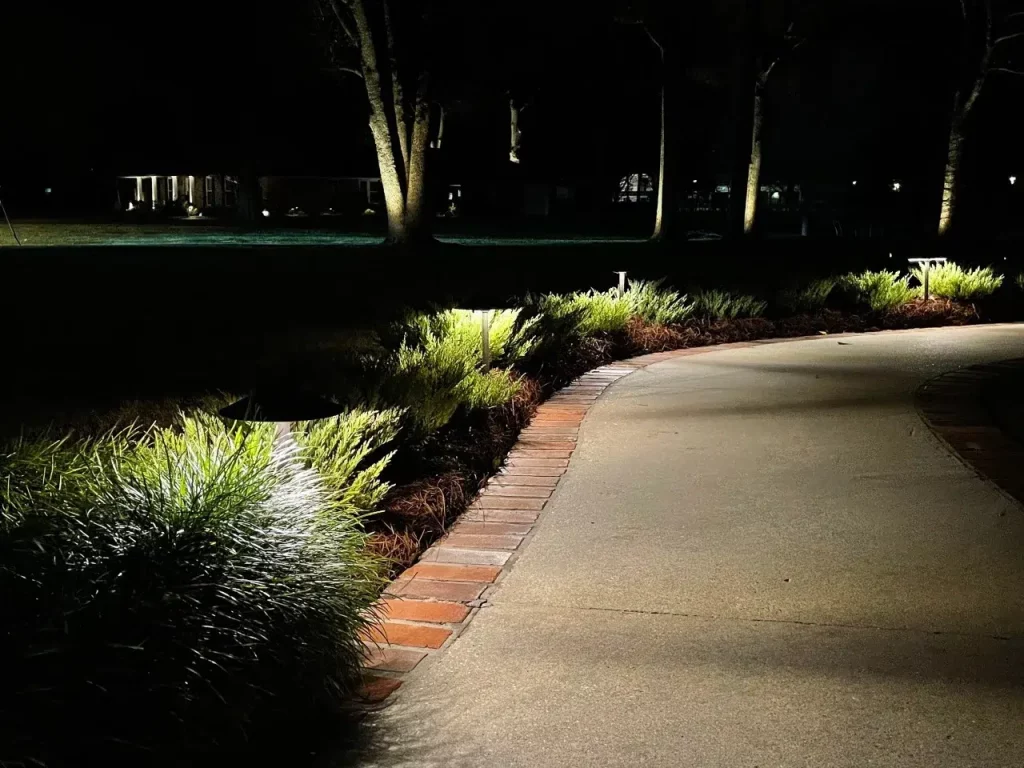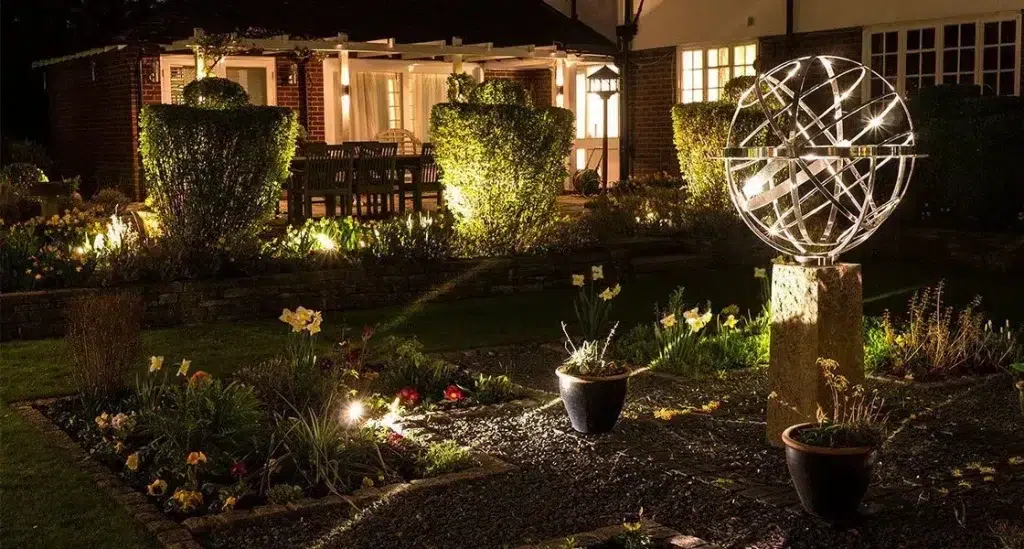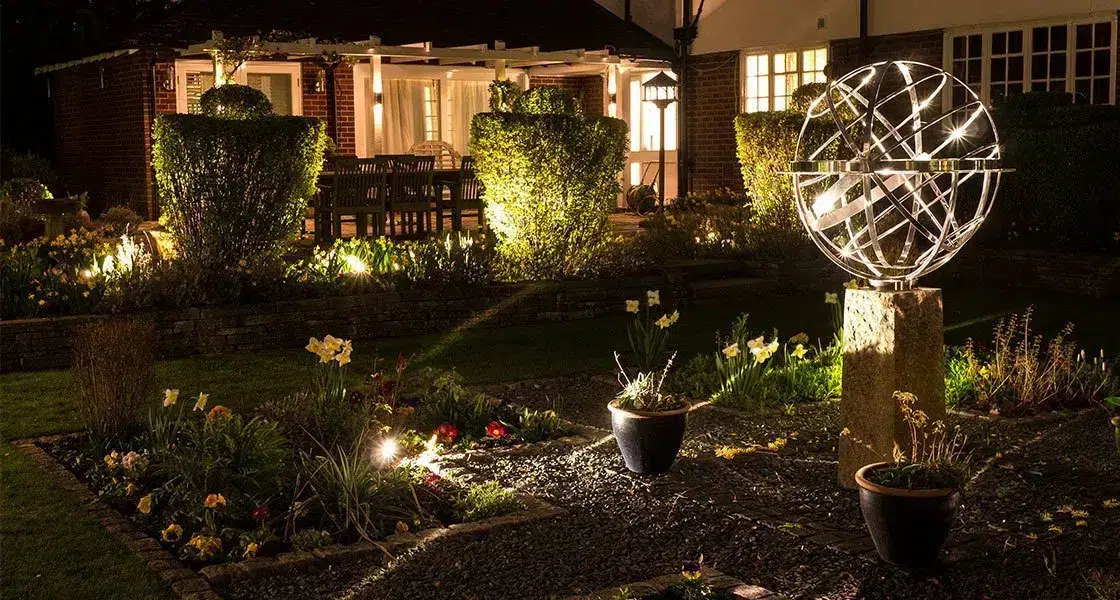
Professional outdoor lighting reshapes your Baton Rouge landscape after dark by adding layers of light that daytime sun cannot provide. The right system does three jobs at once: it highlights your live oaks, camellias, and architecture with accent lighting; it makes walkways, steps, and pool decks safe with path and task lighting; and it supports security with outdoor lighting planning that provides controlled, glare-free coverage. The best approach for your property depends on your goals, your plantings, and how you use your yard, but every strong design follows the same principles: light only what matters, aim it carefully, keep it dim and warm, and control when it runs. Below, we break down the techniques, the technology, and the decision factors that separate a stunning nighttime landscape from a row of cheap solar stakes.
TL;DR
- Professional outdoor lighting serves three core purposes: nighttime aesthetics, safety and accessibility, and security, with different fixture types assigned to each job.
- Layering beats flooding. Techniques like uplighting, downlighting, grazing, and path lighting create depth; a single floodlight flattens everything and creates glare.
- LED is the default. ENERGY STAR-qualified LED products use at least 75% less energy than incandescent lighting, last 35 to 50 times longer, and are available with dimming, motion sensors, and automatic daylight shut-off.
- Brighter is not safer. Glare from unshielded lights constricts pupils and actually reduces visibility, according to the American Medical Association.
- Responsible design follows five rules: light only what is useful, targeted, low level, controlled, and warm-colored.
- Low-voltage (12V) systems are the residential standard, running on transformers with timers, photocells, and smart controls.
- Implementation is fast relative to other landscape upgrades: most residential systems are designed, wired, and aimed within days once the plan is approved.
Why Nighttime Lighting Changes How Your Property Feels
During the day, your landscape is one continuous scene. At night, lighting lets you edit it. Every fixture becomes a decision about what deserves attention and what fades into shadow, which is why professionally designed outdoor lighting services feel intentional rather than lit by accident.
Baton Rouge proves the concept on a grand scale every winter, when the LSU AgCenter Botanic Gardens at Burden hosts Louisiana Lights, walking visitors through illuminated garden rooms, a shimmering lake, and a tunnel of light set against mature oaks and crape myrtles. The same design logic scales down to a residential lot: light a few focal points, connect them with safe paths, and the property gains an entirely new personality after sunset.
Landscape lighting has always served four jobs at once. The Wikipedia overview of landscape lighting defines its purpose as safety, nighttime aesthetics, accessibility, security, and recreation, a list that has held true from lantern-lit gardens to modern LED systems. A good plan assigns fixtures to each purpose instead of asking one floodlight to do everything.
Core Techniques Professionals Use After Dark
| Technique | Best For | Visual Effect | Typical Fixture |
|---|---|---|---|
| Uplighting | Live oaks, crape myrtles, columns | Dramatic vertical emphasis, texture on bark and brick | Adjustable bullet spot |
| Downlighting (moonlighting) | Patios, lawns, garden beds | Soft, natural dappled light from above | Tree- or eave-mounted downlight |
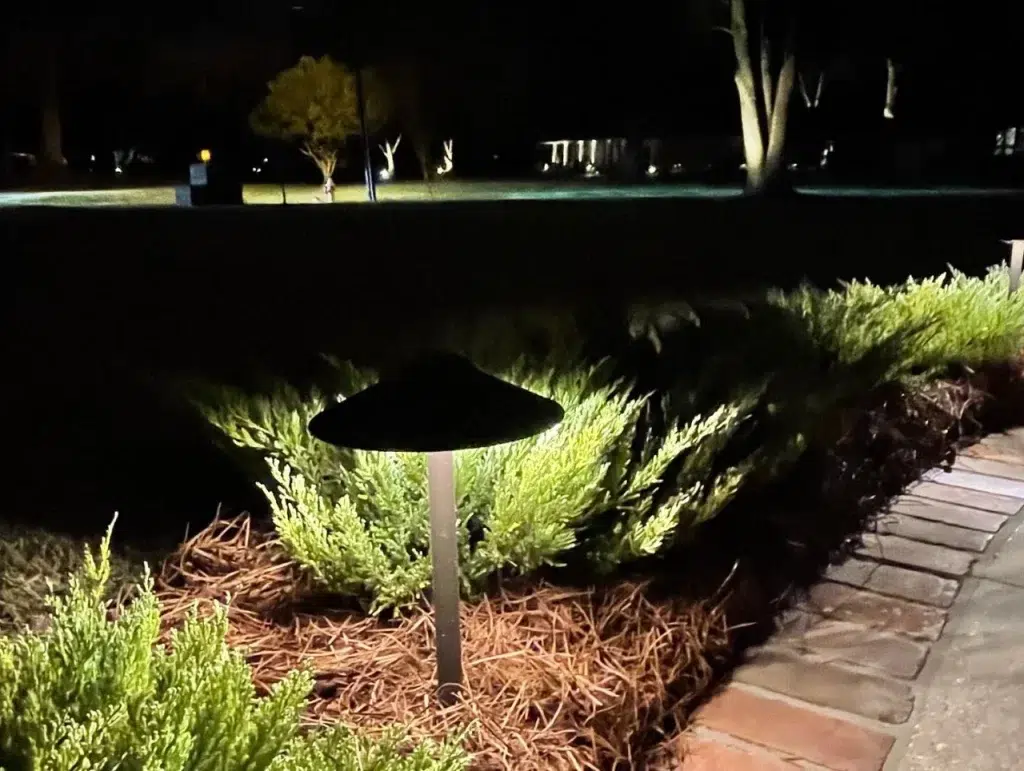
| Path lighting | Walkways, driveways, garden borders | Safe navigation, defined edges | Low stake-mounted path lights |
| Grazing | Stone walls, brick facades, fencing | Texture accent along a surface | Close-range wash fixture |
| Step and hardscape lighting | Stairs, retaining walls, outdoor kitchens | Safety exactly where feet land | Recessed or integrated fixtures |
| Water feature lighting | Pools, fountains, ponds | Movement and reflection after dark | Submersible or perimeter fixtures |
The mistakes we see most often in DIY systems are the reverse of this table: too many fixtures, too high wattage, cool blue color temperatures, and lights aimed into eye level. Each one flattens the scene, creates glare, and wastes energy.
The Five Principles That Separate Pro Design From Guesswork
Quality outdoor lighting is governed by a simple test, published jointly by DarkSky International and the Illuminating Engineering Society as the Five Principles for Responsible Outdoor Lighting:
- Useful. Every fixture has a clear purpose, and its impact on the area, including wildlife, is considered.
- Targeted. Shielding and aiming keep light pointed downward and only where it is needed.
- Low level. Brightness is the minimum required for the task, since reflective surfaces bounce more light skyward than you expect.
- Controlled. Timers, photocells, and motion detectors ensure light is on when needed, dimmed when possible, and off when not.
- Warm-colored. Warmer color temperatures limit short-wavelength blue light, which reduces wildlife disruption and harshness.
Projects that follow these principles save energy and money, reduce light pollution, and still look spectacular. In our designs, this shows up as fewer fixtures than clients expect, lower-output lamps than DIY kits use, and warm 2700K color that flatters brick, stucco, and foliage rather than washing it out.
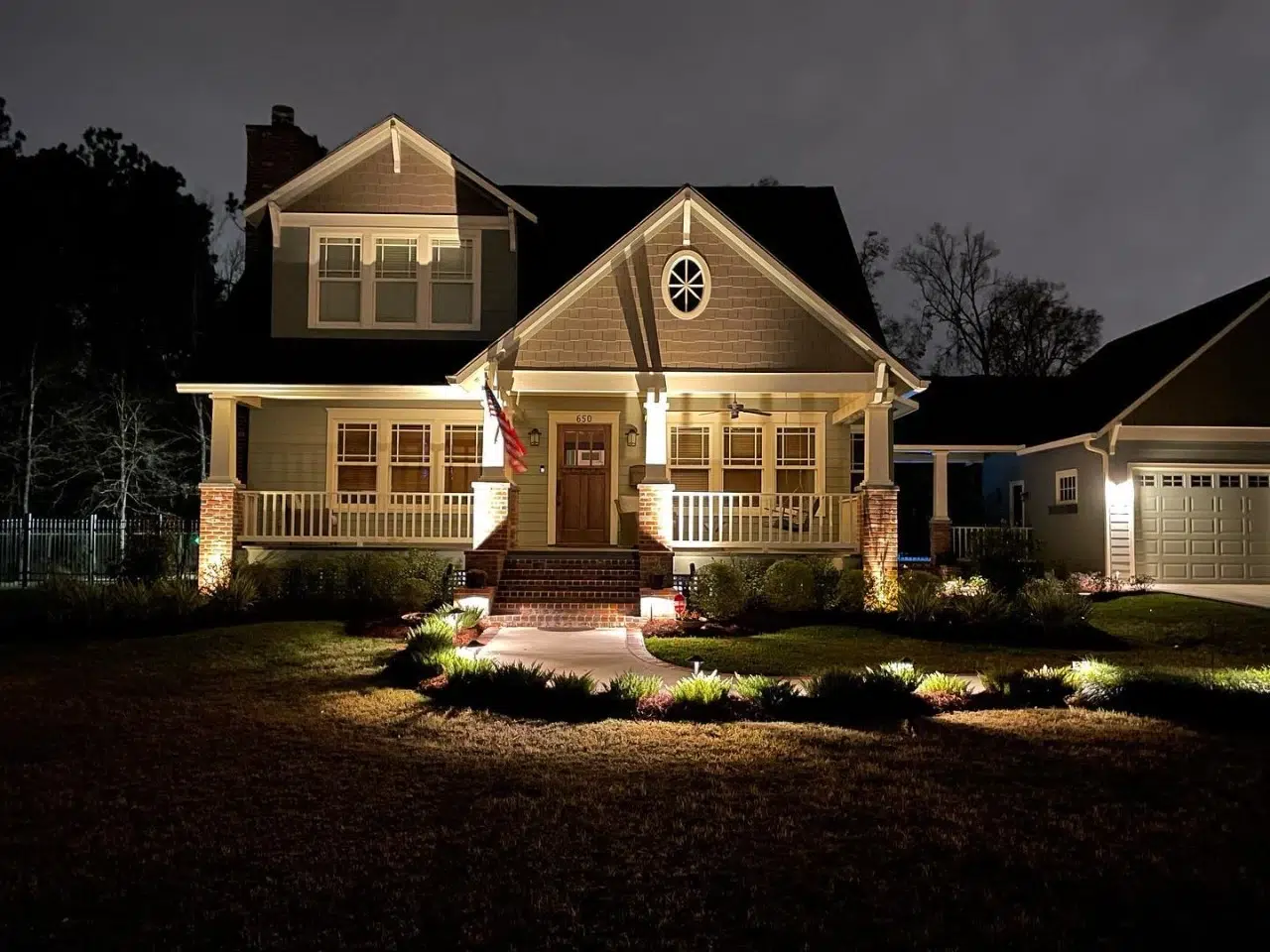
Why LED and Low Voltage Are the Baton Rouge Standard
LED technology has dominated outdoor lighting since roughly 2010, when output finally matched brightness expectations, according to the Wikipedia entry on LED lamps. For homeowners, the practical benefits compound:
| Factor | LED Low Voltage (12V) | Line Voltage (120V) | Solar Stake Lights |
|---|---|---|---|
| Energy use | Uses at least 75% less energy than incandescent (ENERGY STAR qualified) | High, especially with halogen or incandescent lamps | Zero grid use, but unreliable output |
| Lifespan | 35 to 50 times longer than incandescent | Bulb replacements required | Short, weather-dependent |
| Controls | Dimming, motion sensors, daylight shut-off, timers | Limited without extra equipment | None |
| Safety | 12V output, shallow burial permitted | Requires conduit, deeper burial, more code complexity | N/A |
| Light quality | Consistent warm color, instantly on | Good but costly to run | Dim, inconsistent |
Warm white output around 2700K matches the color of traditional incandescent light, which is why modern LED systems can look rich rather than clinical. Combined with transformers, timers, photocells, and smart switching, a low-voltage system gives you scene control that line voltage can rarely match.
Safety and Security: Why Brighter Is Not Better
The most persistent myth in outdoor lighting is that a wall of floodlight makes a property safer. The research says otherwise. DarkSky International’s summary of lighting, crime, and safety research reports there is no clear scientific evidence that increased outdoor lighting deters crime, and that glare from bright, unshielded fixtures actually decreases safety by shining into eyes and constricting pupils, making it harder to see into shadowed areas. A 2012 American Medical Association report cited in that resource warns that glare from nighttime lighting creates hazards ranging from discomfort to visual disability.
The professional answer is visibility, not brightness: shielded fixtures aimed down and out, consistent low-level light along paths and entries, and local outdoor lighting reviews can help homeowners compare local experiences with motion-controlled spots at key access points. You keep the deterrent effect of a maintained, well-lit property without blinding yourself or your neighbors.
Recommendations by Property Type
| Property / Context | Recommended Approach | Key Notes |
|---|---|---|
| Mature oak-filled lots | Downlighting from canopies plus selective uplighting | Moonlighting shows off bark texture without light trespass |
| Pool and patio homes | Task lighting on hardscape, warm perimeter accents | Keep fixtures clear of water sightlines, use dimmers |
| New construction | Design lighting with the landscape plan, wire before hardscape | Cheaper conduit runs and cleaner fixture placement |
| Historic facades | Grazing and silhouette techniques | Warm color preserves brick and masonry tones |
| Large estates | Zoned systems with smart controls | Scenes for entertaining, arrival, and vacation modes |
Signs You Have Found the Right Approach
- The designer walks your property at night before proposing anything.
- The proposal names techniques and purposes per fixture, not just a fixture count.
- Warm color temperatures, shielding, and controls are specified in writing.
- Fewer, better-aimed fixtures are recommended over covering every bed.
- The plan addresses your neighbors and the street, not just your fence line.
Light Up Your Landscape With All Seasons Landscaping & Lawn Care
Your landscape should not disappear when the sun goes down, especially with Baton Rouge evenings warm enough to use year-round. At All Seasons Landscaping & Lawn Care, we design and install professional outdoor lighting systems that layer accent, path, and security lighting into one controlled, efficient design, built around your trees, hardscape, and how you actually live outside. Call us at 225-276-8658 or email [email protected], and let’s put your property in its best light.
FAQs
How much does professional outdoor lighting cost?
Pricing depends on the number and type of fixtures, transformer capacity, and control options, so we provide an itemized quote after a property walkthrough. That keeps your investment tied to a specific design rather than a generic package.
How long does installation take?
Most residential low-voltage systems are installed and aimed within a few days once the design is approved. Trenching is minimal, and mature beds and root zones are worked around, not dug through.
Will lighting bother my neighbors or waste energy?
A properly shielded, warm-colored, low-level design keeps light on your property and off theirs. Timers, photocells, and motion sensors stop fixtures from burning all night for no reason.
Can lighting be added to an existing landscape?
Yes, low-voltage systems are built for retrofits, with shallow cable burial and fixtures placed around established plantings. We regularly integrate lighting into mature oaks, camellia beds, and existing hardscape.
Does outdoor lighting really improve security?
Thoughtful lighting improves visibility, which is the real security goal, while glare from oversized floodlights can reduce it. We use shielded, motion-controlled fixtures at access points and consistent low-level light along paths and entries.
Sources
- Wikipedia – Landscape lighting – Overview of the purposes, history, fixture types, and low-voltage components of garden and landscape lighting systems.
- DarkSky International – Five Principles for Responsible Outdoor Lighting – Jointly published principles (useful, targeted, low level, controlled, warm-colored) for reducing light pollution while keeping lighting beautiful and functional.
- DarkSky International – Light Pollution, Crime, and Safety – Research summary on why brighter outdoor lighting does not reliably deter crime and how glare reduces safety, citing AMA findings.
- Wikipedia – LED lamp – Technical reference covering LED efficiency, lifespan, warm color temperatures, and ENERGY STAR qualifications for outdoor lighting products.
- LSU AgCenter Botanic Gardens at Burden – Baton Rouge institution whose Louisiana Lights event demonstrates how illuminated garden rooms, lakes, and mature oaks reshape a landscape at night.

- How Does Regular Hedge Trimming Improve Your Landscape’s Overall Appearance? - October 12, 2026
- The Complete Guide to Hedge Trimming, Care, Maintenance, and Healthy Growth - October 6, 2026
- How Can Professional Drainage Services in Central, LA Protect Your Property From Water Damage? - September 11, 2026