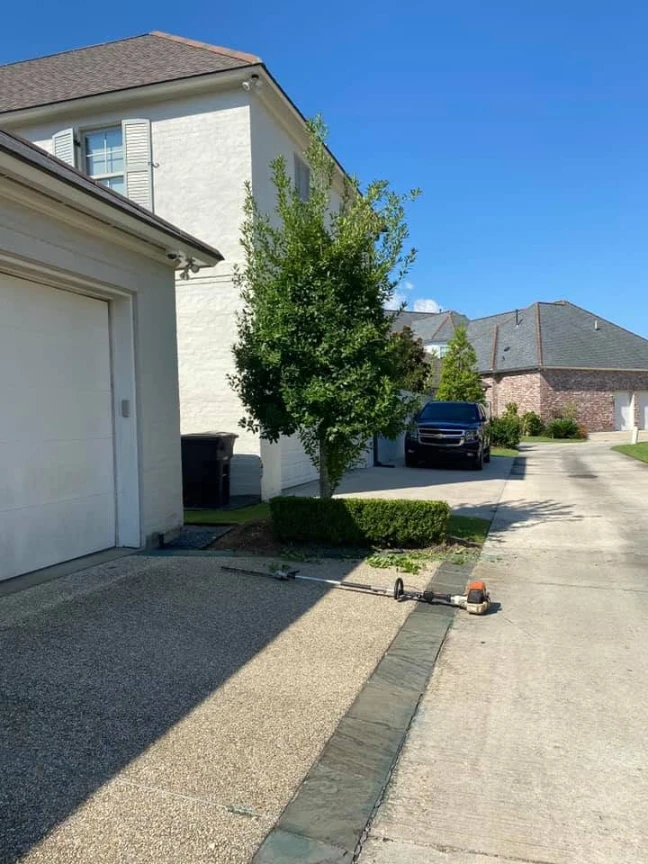
Regular hedge trimming improves your landscape by controlling hedge height, width, shape, and density. A properly maintained hedge has cleaner edges and fits better with nearby lawns, paths, fences, and garden beds.
The main benefit is consistency. Trimming keeps growth within its intended form, rather than letting the hedge become uneven, oversized, or visually disconnected from the rest of the property.
TL;DR
- Regular trimming controls hedge height and width.
- Clean edges define lawns, paths, and garden areas.
- Proper shaping can support fuller growth.
- Formal hedges usually need more frequent maintenance.
- Overgrown hedges may need corrective pruning.
- Hedge Trimming Services can help with large, tall, or difficult-to-manage hedges.
How Does Regular Hedge Trimming Improve the Overall Look of a Landscape?
Hedge trimming does more than remove excess growth. It helps the hedge maintain a size and shape that work with the rest of the property.
A hedge that’s too wide can crowd a walkway or garden bed. One that’s too tall can overwhelm nearby plants, fences, or windows. The complete hedge trimming guide can help you understand proper sizing and shaping techniques. Uneven growth can also make an otherwise maintained yard look less organized.
Regular trimming keeps these changes under control.
Cleaner Lines and Defined Edges
Hedges often act as living boundaries. They can separate lawns from garden beds, define walkways, frame property areas, or create visual screens. Iowa State University Extension and Outreach explains that hedges can mark boundaries and guide pedestrian movement.
Maintaining those edges keeps different parts of the yard visually distinct. A consistently shaped hedge can make a path look more defined, while a controlled hedge beside a garden bed can prevent the area from appearing crowded.
An informal hedge doesn’t need perfectly straight lines. It can retain a natural shape while still being maintained within the space available.
Better Height, Width, and Proportion
A hedge can be healthy and still look out of place if it has grown beyond the scale of its surroundings.
Regular trimming helps us keep its dimensions closer to the intended form. This matters around narrow walkways, fences, windows, driveways, and smaller planting areas.
As the University of Maryland Extension explains, pruning can control plant size, but it doesn’t stop continued growth. That means ongoing maintenance matters when a hedge needs to stay within a defined space.
Why Does Hedge Shape Matter to Landscape Appearance?
Hedge shape affects both the outline of the planting and how foliage develops from top to bottom.
For many formal hedges, we maintain a profile that’s slightly wider at the base than at the top. This allows more light to reach lower growth and can help the hedge maintain foliage closer to the ground. University of Maryland Extension guidance recommends this general approach for many formal hedges.
The exact shape still depends on the plant and the desired style. A formal hedge may have a defined geometric profile, while an informal hedge can keep a more natural outline.
The goal isn’t to make every hedge look identical. It’s to maintain a shape that suits both the plant and the surrounding landscape.
What Happens When Hedges Are Not Trimmed Regularly?
Without regular maintenance, a hedge can gradually move away from its intended size and shape. Professional hedge trimming services help keep growth controlled, prevent branches from spreading into unwanted areas, and maintain a neat appearance. Growth may spread outward, become uneven, or extend into areas that were meant to remain open.
This can change how the entire property looks. A walkway may feel narrower, a garden bed may look crowded, or a fence may become hidden behind uncontrolled growth.
Eventually, the work may move beyond routine trimming. University of Maryland Extension’s pruning guidance distinguishes regular pruning from renewal pruning for older or overgrown plants.
Signs a Hedge Has Become Overgrown
Look for:
- An uneven or irregular profile
- Excessive height or width
- Growth extending into paths or garden areas
- Loss of the original shape
- A noticeable imbalance with nearby landscape features
Once these problems develop, light trimming may not be enough to restore the previous form.
How Often Should Hedges Be Trimmed for a Consistent Appearance?
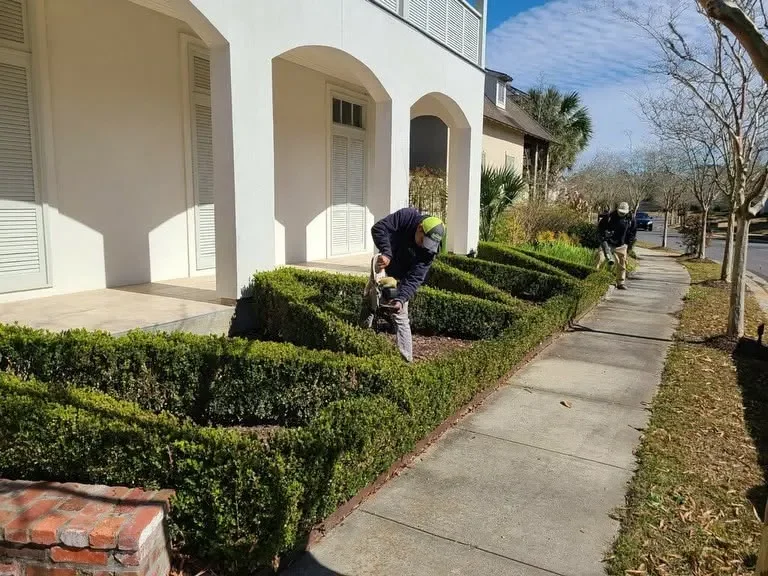
There isn’t one schedule that works for every hedge. Frequency depends on the plant species, growth rate, hedge type, and desired appearance.
Formal hedges generally need more consistent attention because their defined shape is part of their design. Iowa State University Extension notes that formal, sheared hedges may need pruning two or more times a year, while informal hedges usually require less frequent pruning.
| Hedge Situation | Main Maintenance Focus |
|---|---|
| Formal hedge | Maintain consistent shape and edges |
| Informal hedge | Control unwanted growth while keeping a natural form |
| Fast-growing hedge | Monitor growth more closely |
| Overgrown hedge | Assess before major pruning |
The goal is to maintain the intended form rather than wait until excessive growth changes the hedge’s proportions.
Regular Hedge Trimming vs. Corrective Pruning
Routine trimming maintains a hedge that’s already close to its intended size and shape. The focus is on controlling new growth and keeping the outline consistent.
Corrective or renewal pruning is different. You may need it when a hedge has become badly overgrown, misshapen, or sparse. The right method depends on the plant because not every hedge responds well to severe cutting.
For that reason, we don’t treat every overgrown hedge as though it can simply be cut back to the same size.
When Should You Consider Professional Hedge Trimming Services?
Professional Hedge Trimming Services can make sense when the work goes beyond occasional light maintenance.
This may include tall hedges that are difficult to access, large hedge sections that need consistent shaping, substantial overgrowth, or formal hedges where maintaining an even profile matters.
Professional help can also be useful when a hedge needs assessment before significant pruning. The plant type and its current condition should be considered before removing large amounts of growth.
We also view hedge trimming as part of broader landscape maintenance. Keeping hedges at a controlled size helps preserve their relationship with the rest of the property.
Frequently Asked Questions About Hedge Trimming
Can Regular Hedge Trimming Keep a Hedge From Becoming Overgrown?
Regular trimming helps control size and shape, but it doesn’t stop a plant from growing. Maintenance needs depend on the species and growth rate.
Can Trimming Make a Hedge Look Fuller?
Proper shaping can help maintain balanced foliage, especially when the hedge is wider at the base than the top. Results depend on the plant and pruning method.
Should Every Hedge Have a Formal Shape?
No. Formal hedges are intentionally shaped and need more regular maintenance. Informal hedges can retain a more natural appearance and need less rigid pruning.
Does Hedge Trimming Affect Flowering?
It can. Pruning time matters for flowering shrubs because some plants form flower buds on older growth. Incorrect timing can reduce flowering for that season.
How Do You Know if a Hedge Needs More Than Routine Trimming?
Substantial overgrowth, excessive width or height, an irregular profile, or growth interfering with nearby features may indicate that corrective pruning is needed.
Keep Your Landscape Looking Clean With Regular Hedge Maintenance
A well-maintained hedge should work with the rest of the property, not compete with it. Regular trimming helps us control its height, width, shape, density, and edges, making the surrounding landscape look more organized.
If your hedges have become difficult to manage or need consistent maintenance, All Seasons Landscaping & Lawn Care can help. Call 225-276-8658 or email [email protected] to discuss your hedge trimming needs.
Sources
- University of Maryland Extension – Pruning methods, hedge shape, overgrown plants, and pruning considerations.
- Iowa State University Extension and Outreach – Hedge functions, formal and informal hedges, maintenance, and shaping.

- How Does Regular Hedge Trimming Improve Your Landscape’s Overall Appearance? - October 12, 2026
- The Complete Guide to Hedge Trimming, Care, Maintenance, and Healthy Growth - October 6, 2026
- How Can Professional Drainage Services in Central, LA Protect Your Property From Water Damage? - September 11, 2026