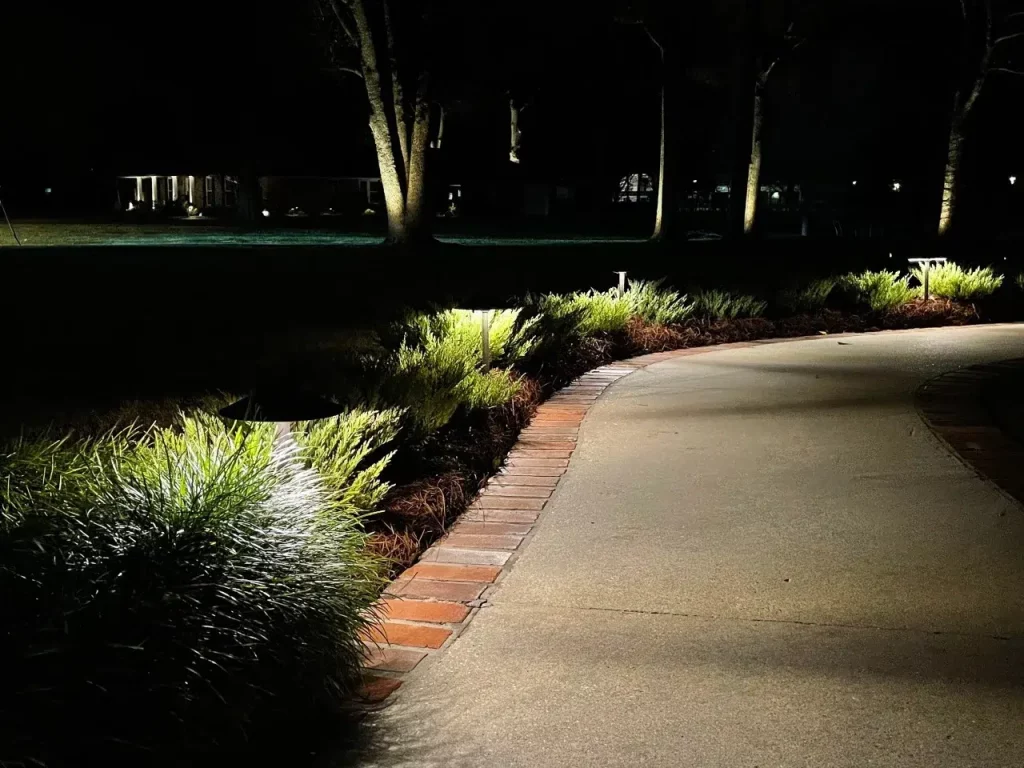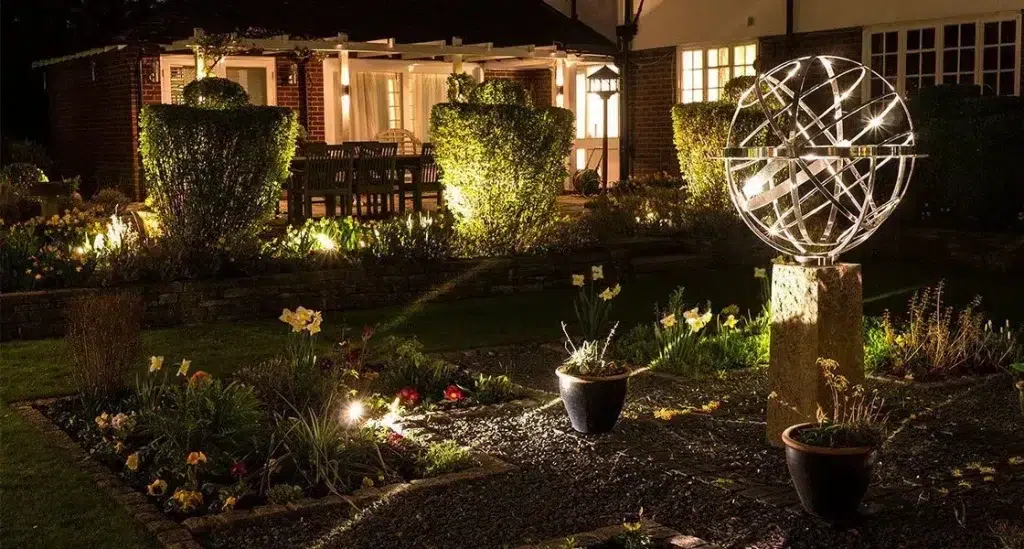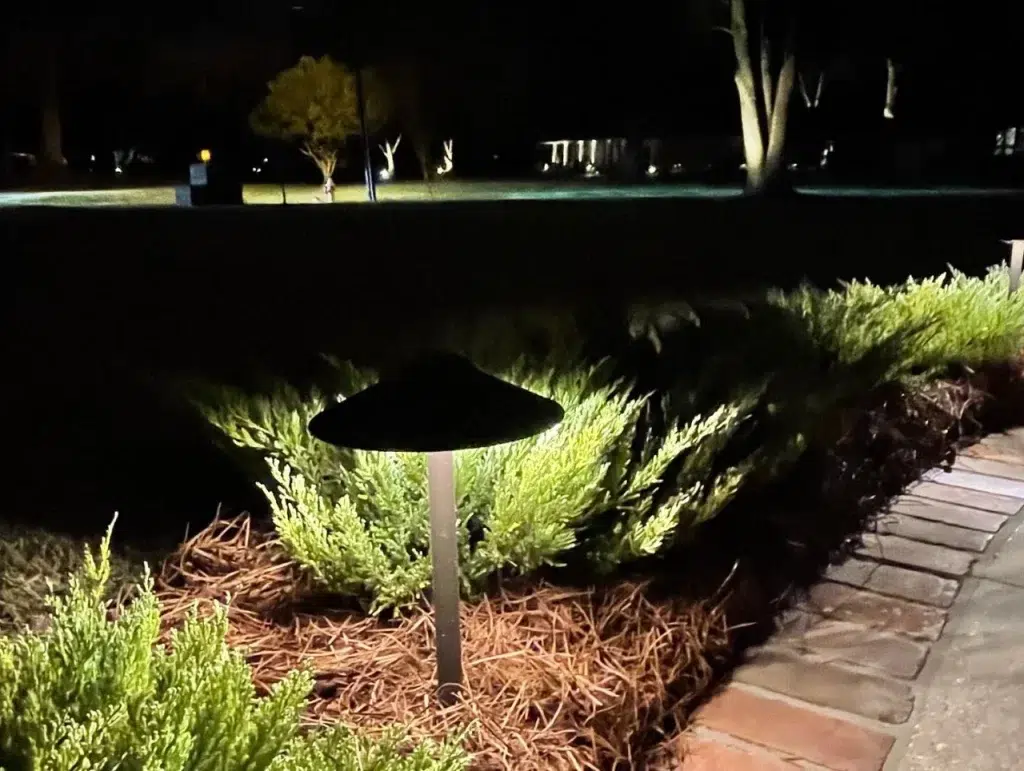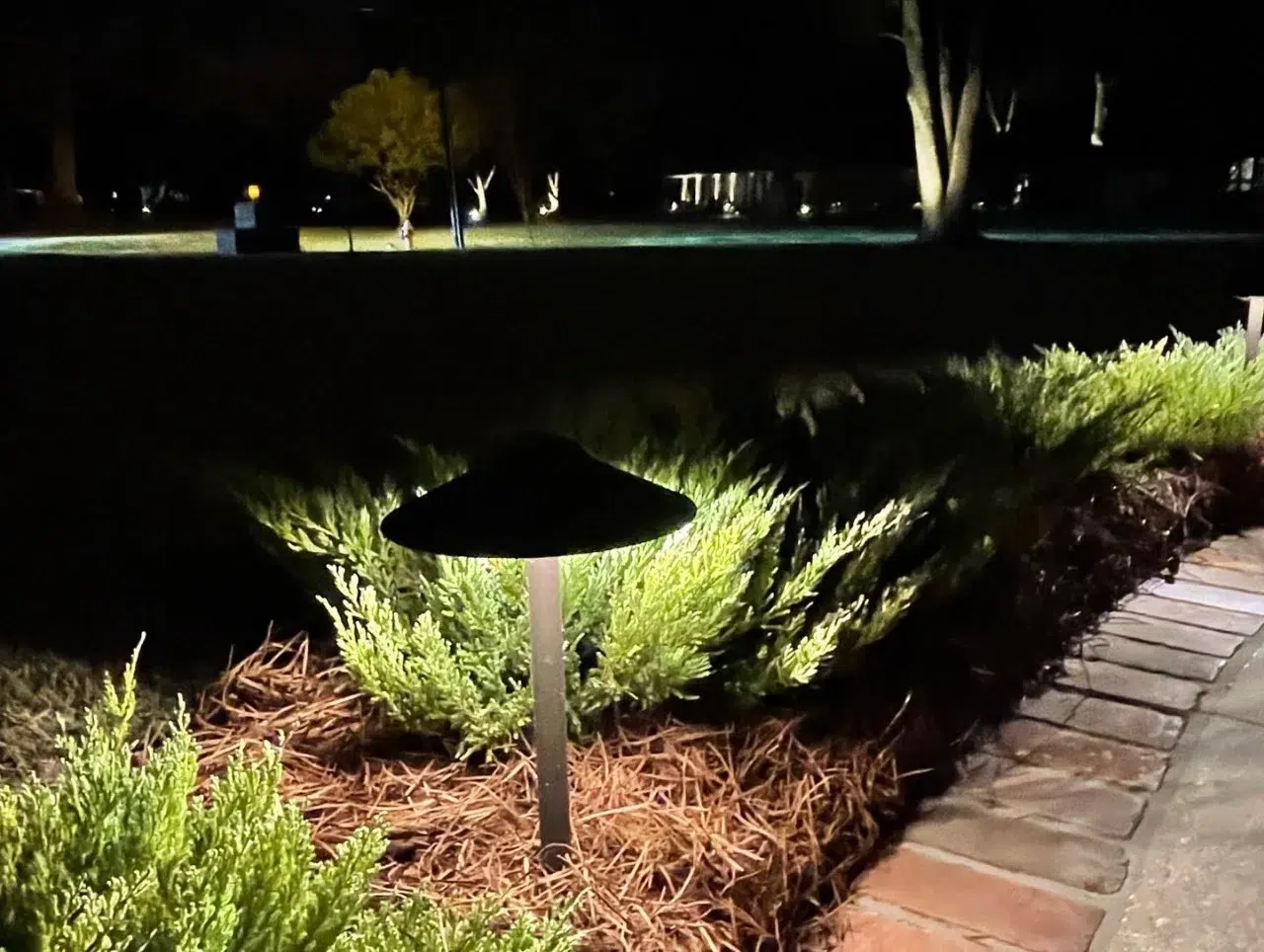
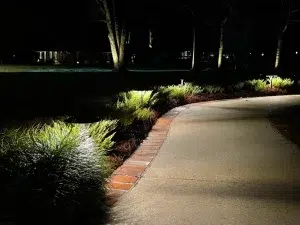
The best outdoor lighting options for a more inviting yard in St. George, LA depend on your lot size, how you use the space, and which features you want to show off after dark. Most homeowners get the strongest results by layering four categories: path and step lighting for safe movement, uplighting and moonlighting to add depth around trees and architecture, hardscape and deck lighting to make patios usable late into the evening, and motion-controlled security fixtures for peace of mind. In a city where warm, humid evenings make outdoor living a year-round habit rather than a season, an outdoor lighting planning guide can help homeowners understand how to combine low-voltage LED fixtures with weather-rated materials and smart controls. The right plan should account for both usability and long-term performance. Below, we break down the fixture types that matter, the design principles professionals follow, and how to match each option to your yard.
TL;DR
- Layer four categories instead of flooding the yard with light: paths, accents, task areas, and security each need their own fixture type and aim.
- Low-voltage (12V) LED is the workhorse of modern residential outdoor lighting, running path lights, uplights, well lights, deck lights, and step lights off a single transformer.
- Controls beat brightness. The Department of Energy notes that automatic controls such as timers, photocells, and motion detectors can save more energy than upgrading the fixture itself.
- Follow the five principles promoted by DarkSky International: light that is useful, targeted, low level, controlled, and warm-colored.
- Build for Louisiana weather. The state’s humid subtropical climate brings year-round rain and 60-plus days of thunderstorms annually, so wet-rated, corrosion-resistant hardware is non-negotiable.
- Warm color temperature wins. Warm white light reduces glare and light spill while limiting the blue wavelengths that disrupt wildlife.
- Phase the project if needed. Start with entries and walkways, then add accent layers once you see how the yard feels at night.
Why St. George Yards Reward Thoughtful Lighting
St. George is Louisiana’s newest city, incorporated after a 2019 vote and spanning roughly 60 square miles of East Baton Rouge Parish with a population of about 86,000 (Wikipedia – St. George, Louisiana). Much of the area developed as subdivisions with generous lots, mature oaks, and backyard pools, which means there is real material to work with after sunset. Evening hours matter here too: summer overnight lows regularly stay above 70 degrees, so families actually use their patios, not just look at them (Wikipedia – Louisiana). Good lighting turns those hours into usable, comfortable time outdoors.
The Main Outdoor Lighting Options for an Inviting Yard
Residential outdoor lighting falls into a handful of proven fixture families, most of which run on safe 12-volt low-voltage systems fed by a transformer (Wikipedia – Landscape lighting). Here is how each option earns its place:
| Fixture Type | Best For | The Effect It Creates | Placement Notes | Limitations |
|---|---|---|---|---|
| Path lights | Walkways, garden edges, driveways | Guides movement, adds rhythm | Space evenly along routes, keep light low | Too many creates an airport runway look |
| Uplights (bullet or well) | Trees, columns, facades, statuary | Drama, depth, silhouette | Aim at trunks and texture; hide the source | Can glare into windows if misaimed |
| Downlights/moonlighting | Seating areas, lawns under canopy | Soft, natural glow like moonlight | Mount high in trees or on eaves | Requires tall, healthy trees or mounting points |
| Step and hardscape lights | Retaining walls, stairs, seat walls | Safety with zero glare | Recess into risers and wall caps | Plan during hardscape builds when possible |
| Deck and patio lights | Railings, pergolas, outdoor kitchens | Task light for cooking and dining | Mount under rails and beams | Needs circuits near the house |
| String lights | Pergolas, fences, gathering zones | Warm, festive atmosphere | Span between sturdy anchors | Decorative, not a safety layer |
| Motion-activated floods | Driveways, side yards, entries | Security when it counts | Shield downward, aim at approach zones | Poorly aimed units create glare and blind spots |
A welcoming yard rarely needs every category. The goal is a balanced mix, usually two or three fixture families, placed with intention.
LED Efficiency and the Controls That Do the Heavy Lifting
Every fixture on that list is available in LED, and for good reason. In the Department of Energy’s comparison of exterior lighting technologies, solid-state LED lighting rates best on efficacy, system life, controllability, and dimming, outperforming halogen and high-intensity discharge sources (DOE FEMP – Purchasing Energy-Efficient Exterior Lighting). Just as important, the DOE points out that pairing fixtures with automatic controls, timers, photocells, and motion detectors saves more energy than improving the fixture alone. Practically, that means:
- A photocell turns the system on at dusk and off at dawn without you touching a switch.
- A timer shuts decorative layers down before bedtime so the yard rests too.
- Motion sensors on security floods keep light off until something moves.
Five Design Principles That Keep a Yard Inviting, Not Glaring
We follow the five principles for responsible outdoor lighting published by DarkSky International and the Illuminating Engineering Society: Light only what is useful, aim it so it is targeted where needed, keep levels low, make it controlled so it runs only when needed, and responsible outdoor lighting should use warm-colored sources that limit blue light (DarkSky International – Five Principles for Responsible Outdoor Lighting). Applied to a residential yard, this translates into shielded fixtures, downward aims, a few well-placed accents instead of blanket brightness, and warm white lamps throughout. The payoff is a yard that feels like a retreat rather than a parking lot, and neighbors who thank you instead of calling about glare.
Matching Your Lighting to Louisiana’s Climate
Louisiana’s humid subtropical climate means frequent rain in every season and more than 60 days of thunderstorms per year, second only to Florida (Wikipedia – Louisiana). Parts of the St. George area also have a documented flood history, particularly near Bayou Manchac, Ward Creek, and the Amite River (Wikipedia – St. George, Louisiana). When evaluating local providers, St. George, LA landscaping reviews and ratings can help you compare local customer experiences before choosing fixtures suited to these conditions. Your fixtures should be chosen accordingly.
- Wet-location-rated fixtures only, especially for in-grade well lights and anything at ground level.
- Corrosion-resistant materials such as brass, copper, or quality powder-coated housings that shrug off humidity.
- GFCI protection and code-correct burial depth for all low-voltage and line-voltage runs.
- Elevated fixture placement in low spots that hold water after heavy rain.
Our Recommendations by Yard Type
| Your Situation | Recommended Approach | Why It Works |
|---|---|---|
| Families with kids and pets | Path lights plus soft downlighting | Clear sightlines without harsh glare |
| Outdoor entertainers | Deck, step, and string lighting on dimmers | Layered ambience that shifts with the evening |
| Pool owners | Shielded low-glare lights placed away from the water | Reflection stays soothing, not blinding |
| Mature, tree-heavy lots | Moonlighting from the canopy plus selective uplights | Highlights oaks the way nature intended |
| Security-minded homeowners | Motion-activated floods on entries and dark sides | Light appears only when it matters |
| Budget-conscious phased projects | Entries and walkways first, accents later | Safety wins immediately, beauty builds over time |
Common Mistakes That Make a Yard Feel Less Welcoming
- Overlighting. A yard lit brighter than a storefront feels harsh, invites bugs, and washes out every shadow that creates depth.
- Cool blue floodlights everywhere. Blue-heavy light increases glare and light pollution, the exact outcome the DarkSky principles exist to prevent.
- Unshielded fixtures at eye level. Exposed bulbs blind guests on the porch steps.
- Solar path lights as the whole plan. They dim in cloudy Gulf weather and cannot compete with a wired low-voltage system for consistency.
- Skipping controls. A system without timers or sensors runs all night, wastes energy, and disturbs wildlife.
Signs You’ve Landed on the Right Plan
You will know the design is working when guests comment on how the yard feels rather than how bright it is. Walk the property after dark and look for these indicators:
- You can walk every path without glare hitting your eyes.
- Trees and architectural lines have visible depth instead of flat, even light.
- Seating areas feel warm and conversational, not lit for surgery.
- Lights come on and off without anyone touching a switch.
- No neighbor can see bare bulbs from their windows.
Bring Your St. George Yard to Life After Dark with All Seasons Landscaping & Lawn Care
Your yard should be just as inviting at 9 p.m. as it is at noon, and our team at All Seasons Landscaping & Lawn Care designs and installs low-voltage outdoor lighting systems built for Louisiana weather. From a single lighting design consultation to a full layered installation, we handle the fixtures, the transformer sizing, the buried wiring, and the aiming, so all you do is enjoy the evenings. Call us at 225-276-8658 or email [email protected] to get started, and let’s turn your yard into the best seat on the block after sunset.
Frequently Asked Questions
How many lights does a typical yard actually need?
Fewer than most homeowners expect. A well-designed plan often uses 8 to 15 fixtures layered across paths, entries, and two or three focal points, which beats dozens of scattered lights on both looks and upkeep.
Are solar path lights a good option in St. George?
Solar units work as temporary accents but struggle with Louisiana’s frequent clouds, shade from oaks, and humidity. A wired low-voltage LED system delivers consistent output every night of the year.
What color temperature works best for an inviting yard?
Warm white in the 2700K range is the sweet spot. Warm light flatters plants and stone, reduces glare, and limits the blue wavelengths associated with light pollution and wildlife disruption.
Can outdoor lighting hold up to Louisiana thunderstorms?
Yes, when it is specified correctly. Wet-rated fixtures, corrosion-resistant housings, GFCI protection, and code-correct buried wiring are the standard we follow on every installation.
Is a professional installation worth it for low-voltage lighting?
DIY kits can handle a single short run, but whole-yard systems involve transformer sizing, voltage drop calculations, burial depth, and aiming technique. A professional design gets the fixtures, placement, and controls right the first time.
Sources
- Wikipedia – Landscape lighting – Overview of outdoor lighting fixture families, low-voltage 12V systems, transformers, photocells, and control options used in residential gardens and yards.
- Wikipedia – St. George, Louisiana – Background on St. George’s incorporation, population, geography, waterways, and flood history relevant to outdoor lighting planning.
- Wikipedia – Louisiana – State climate data covering Louisiana’s humid subtropical conditions, summer temperatures, year-round rainfall, and thunderstorm frequency.
- DOE FEMP – Purchasing Energy-Efficient Exterior Lighting – U.S. Department of Energy guidance comparing exterior lighting technologies and explaining how automatic controls cut energy use beyond fixture upgrades.

- How Does Regular Hedge Trimming Improve Your Landscape’s Overall Appearance? - October 12, 2026
- The Complete Guide to Hedge Trimming, Care, Maintenance, and Healthy Growth - October 6, 2026
- How Can Professional Drainage Services in Central, LA Protect Your Property From Water Damage? - September 11, 2026