TL;DR
- Standing water that lingers for more than 24 hours after rainfall is the clearest early indicator of a drainage failure on your property.
- Hairline cracks in drywall, brickwork, or slab floors often signal that soil movement from excess moisture has already begun affecting your foundation.
- Louisiana’s clay-heavy soils expand and contract dramatically with moisture changes, accelerating foundation stress in poorly drained areas.
- Gaps around windows and doors that develop gradually point to foundation shifting caused by water accumulation near the perimeter.
- Regular inspections after heavy rain events allow you to catch pooling, erosion, and moisture intrusion before drainage problems translate into structural damage.
- Professional grading corrections and French drain installations are the most common corrective solutions for residential drainage issues in the Jackson area.
Why Jackson, LA, Properties Are Especially Vulnerable
Louisiana’s climate creates a perfect storm for drainage-related foundation problems. According to the North Carolina Institute for Climate Sciences (NCICS) Louisiana State Climate Summary, annual precipitation across Louisiana ranges from around 50 inches in the north to approximately 70 inches in southeastern areas of the state. East Feliciana Parish falls within that higher range, receiving roughly 55 to 60 inches of rainfall annually, well above the national average. That volume of water, combined with the region’s predominant clay soils, means the ground surrounding your home undergoes repeated swelling and shrinking cycles throughout the year.
In Southeast Louisiana, the clay-heavy soil composition is a well-documented contributor to ground movement. When soil absorbs water, expanding clay soil pushes against foundation walls. As clay dries, soil contracts and pulls away, leaving voids. This repeated pressure can crack slabs, distort framing, and misalign structural elements over time. Properties in Jackson with flat lots, minimal slope away from the foundation, or older grading that has settled are at the highest risk. The USDA Natural Resources Conservation Service (NRCS) reports that the American Society of Civil Engineers estimates half of all homes in the United States are built on expansive soils, and half of those homes will experience some degree of damage from soil movement. Research published by Frontiers in the Built Environment specifically examining Louisiana found that expansive soil swelling potential varies significantly across the state, with certain census blocks showing swelling potential as high as 58 percent, placing a large number of Louisiana properties at elevated risk for foundation distress.
Early Warning Signs of Drainage Problems
Standing Water and Persistent Pooling
The most obvious sign of a drainage problem is water that remains on your property long after a rain event has ended. Puddles that form against the foundation after rain and ground that slopes toward the building with visible signs of erosion are among the most common and recognizable indicators that a property is suffering from inadequate drainage. If water pools near your foundation for more than 24 hours, drainage problems are actively causing water to seep into the soil and exert hydrostatic pressure against your foundation walls and slab.
Pay attention to where water collects. Common trouble spots include low spots in the yard, areas where the ground slopes toward the house rather than away from the house, and zones where downspout discharge concentrates. Even shallow puddles that appear consistently in the same locations after every storm indicate that the soil beneath has become compacted or the grading has shifted.
Foundation and Wall Cracks
Cracks are your foundation, communicating that structural stress is building. Not all cracks are emergencies, but crack size, crack location, and crack progression tell an important story. Cracking in walls, floors, and brickwork is a primary symptom of foundation distress caused by soil moisture changes in expansive soils. Cracks in the foundation or water intruding into basements and crawl spaces are serious warning signs that drainage issues have progressed to the point of threatening structural integrity. Hairline cracks that appear and remain stable are less concerning, but cracks that are wider than one-quarter inch, that grow over time, or that appear in a stair-step pattern along mortar joints in brickwork suggest active foundation movement.
Inside the home, look for cracks where walls meet ceilings, around window and door frames, and along baseboards. These interior cracks often mirror the stress patterns happening at the foundation level below.
Doors and Windows That Stick
Gaps appearing around window and door frames, particularly at the top corners, are another related symptom. As the foundation moves, rough openings distort, pulling trim away from the frame and creating visible daylight gaps.
Interior Moisture and Musty Odors
Excess moisture in crawl spaces and basements is a direct result of poor exterior drainage. The LSU AgCenter has documented that moisture buildup from wet soil and condensation on cool surfaces is a persistent problem in vented crawl spaces throughout Louisiana. If you notice a damp, musty smell in lower levels, visible efflorescence (white powdery deposits) on concrete walls, or dampness on framing members, the source is almost certainly water entering from the exterior through the soil.
Chronic exposure to moisture degrades structural connections, promotes mold growth, and weakens load-bearing elements over time.
How Drainage Problems Progress to Structural Damage
Understanding the progression from a drainage issue to structural damage helps homeowners prioritize action. The timeline varies depending on soil conditions, foundation type, and rainfall frequency, but the general sequence follows a predictable pattern.
| Stage | What Happens | Visible Signs |
|---|---|---|
| 1. Surface pooling | Water accumulates in low areas after rain due to poor grading | Puddles lasting 24+ hours, soggy grass patches |
| 2. Soil saturation | Clay soil absorbs water, expands, and pushes against the foundation | Slight swelling near the foundation perimeter |
| 3. Hydrostatic pressure | Saturated soil exerts a lateral force on foundation walls and an upward force on slabs | Hairline cracks in walls or slab, minor door sticking |
| 4. Soil erosion and voids | Water flowing along the foundation washes soil away, creating unsupported zones | Gaps between the soil and the foundation, settling on one side |
| 5. Structural damage | Differential settlement causes framing distortion, cracks, and alignment issues | Large cracks, stuck windows/doors, uneven floors |
According to the USDA NRCS, expansive soils that repeatedly absorb and release water cause progressive foundation movement, and the longer excess moisture remains in contact with foundation-bearing soils, the more severe the resulting structural damage becomes. Expansive clay soils rank among the most damaging subsurface conditions in the United States, generating estimated annual property damage exceeding $15 billion nationwide, illustrating the financial scale of drainage-related foundation failures. The FEMA Foundation Fact Sheet further emphasizes that proper site drainage, including positive grading away from the structure, is one of the most important mitigation measures for reducing foundation damage risk from water intrusion.
Furthermore, the 6. The United States Geological Survey (USGS) explains that runoff is the scientific mechanism by which water accumulates when the ground is fully saturated or when the rate of rainfall exceeds the soil’s natural infiltration capacity.
Real-World Scenarios in Jackson, LA
These examples illustrate how drainage problems have progressed for actual homeowners in our service area. While details have been generalized for privacy, the patterns are consistent with what our team encounters regularly.
| Scenario | Home Type | Problem | Solution | Outcome |
|---|---|---|---|---|
| Ranch on flat lot | 1970s slab foundation | No slope away from the house, water pooled at the rear wall after every storm | Regrading + surface drain along rear perimeter | Pooling eliminated, crack progression stopped |
| Raised cottage | Pier and beam | Crawl space flooding due to missing gutters and a negative grade | French drain, gutter system, vapor barrier | Crawl space moisture reduced by 90%, no wood rot progression |
| New construction | Slab on grade | Builder-grade grading settled within 2 years, water channeling toward the front entry | Channel drain at driveway, corrected front yard slope | Standing water resolved, no foundation movement detected |
| Brick home | Slab foundation | Persistent puddles at the corner of the house, a stair-step crack developing in the brick | Downspout extensions + dry well installation | Crack stabilized, no further widening over a 12-month monitoring period |
| Country property | Slab with perimeter grade | Clay soil expansion from seasonal wet/dry cycles is causing seasonal door sticking | Sub-surface French drain with gravel, soil amendment | Door operation normalized within one season |
Actionable Steps to Identify and Address Drainage Issues
Catching drainage problems early requires a systematic approach. Here are concrete steps any homeowner in Jackson can take, starting this week.
1. Conduct a Post-Rain Inspection
The single most effective diagnostic tool is your own observation after a heavy rain. Walk your property’s perimeter within 12 to 24 hours after a storm ends. Look for pooling water near the foundation, water tracks or channels forming in the soil, and areas where erosion has exposed roots or shifted mulch. Take photos of any standing water and note how long it takes to drain. Repeating this process over several rain events will reveal consistent trouble spots.
2. Check Your Grading Slope
Your yard should slope away from your foundation at a minimum of 6 inches of vertical drop over the first 10 horizontal feet. Use a level or a simple string-and-stake method to check the grade around your entire perimeter. If the ground is flat or slopes toward the house in any section, water is being directed toward your foundation rather than away from the foundation. This is one of the most common issues we find on properties in Jackson, particularly on older homes where decades of settling have altered the original grade.
3. Inspect Gutters and Downspouts
Gutters that are clogged, damaged, or undersized overflow and dump water directly alongside the foundation. Downspouts that discharge too close to the house, or that have no extensions to carry water away, create concentrated saturation points. Every downspout should discharge at least 5 to 10 feet from the foundation. If your property does not have gutters at all, installing a properly sized gutter system is often the single most impactful improvement you can make.
4. Examine Your Foundation for Crack Patterns
Walk around the exterior of your home and inspect the visible portion of the foundation and the lower brickwork. Look for horizontal cracks, vertical cracks wider than a pencil lead, and stair-step cracks following mortar joints. Inside, check for cracks in drywall near corners of windows and doors, and examine tile floors for cracking or grout separation. Document any cracks with photos and measurements so you can track whether cracks are growing over time.
5. Monitor Seasonal Changes in Doors and Windows
Doors and windows that operate freely in dry months but stick during wet seasons are a strong indicator that soil moisture changes are causing foundation movement. Track when these issues appear and whether these issues correlate with heavy rainfall periods. This pattern strongly suggests a drainage-related problem rather than a structural failure from another cause.
6. Test Soil Drainage Rate
Dig a small hole, roughly 12 inches deep and 12 inches wide, in an area where you suspect poor drainage. Fill the hole with water and time how long the water takes to drain. If the water has not drained within a few hours, you have confirmation that the soil in that area has poor percolation, which means surface water will sit and saturate rather than drain away naturally.
Factors That Affect Drainage Performance
Several variables influence how quickly and severely drainage problems affect a specific property. Understanding these factors helps explain why two homes on the same street can experience very different outcomes.
- Soil composition. Clay soils dominate much of East Feliciana Parish. Clay has extremely low permeability, meaning water moves through clay very slowly. Properties with higher sand or loam content naturally drain faster and are less susceptible to foundation stress from surface water.
- Property topography. Flat lots with no natural runoff path are at higher risk than properties with even a gentle slope. Homes situated at the bottom of a slope receive water runoff from uphill properties in addition to direct rainfall.
- Foundation type. Slab-on-grade foundations are particularly vulnerable to upward hydrostatic pressure from saturated soil. Pier and beam foundations can tolerate some soil movement but are susceptible to crawl space moisture that leads to wood rot and framing deterioration.
- Age of construction. Older homes often have grading that has settled over decades, gutters that are undersized or damaged, and drainage systems that no longer function as designed. New construction is not immune either, as settlement within the first few years can reverse initial grading.
- Vegetation and tree proximity. Large trees near the foundation can absorb significant moisture from the soil during dry periods, causing uneven soil shrinkage. Conversely, overgrown landscaping can block water flow and create damming effects that redirect water toward the structure.
Corrective Solutions for Drainage Problems
Once a drainage issue is identified, the appropriate solution depends on the specific conditions of the property. Here are the most common and effective corrective approaches we implement for homeowners in the Jackson area.
- Surface regrading involves reshaping the soil around the foundation so that water flows away from the structure rather than toward the structure. This is often the first step and can resolve minor pooling issues without additional intervention.
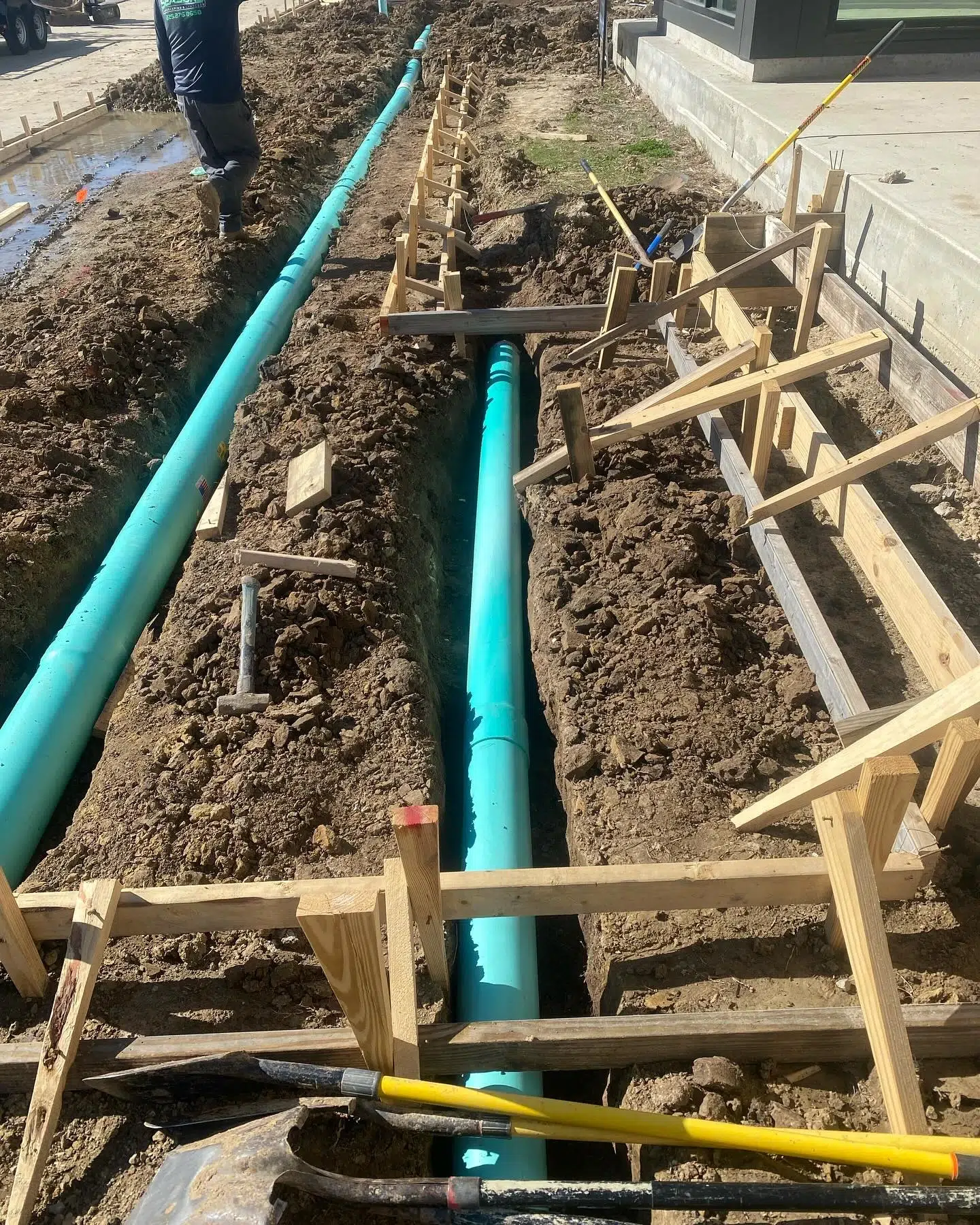
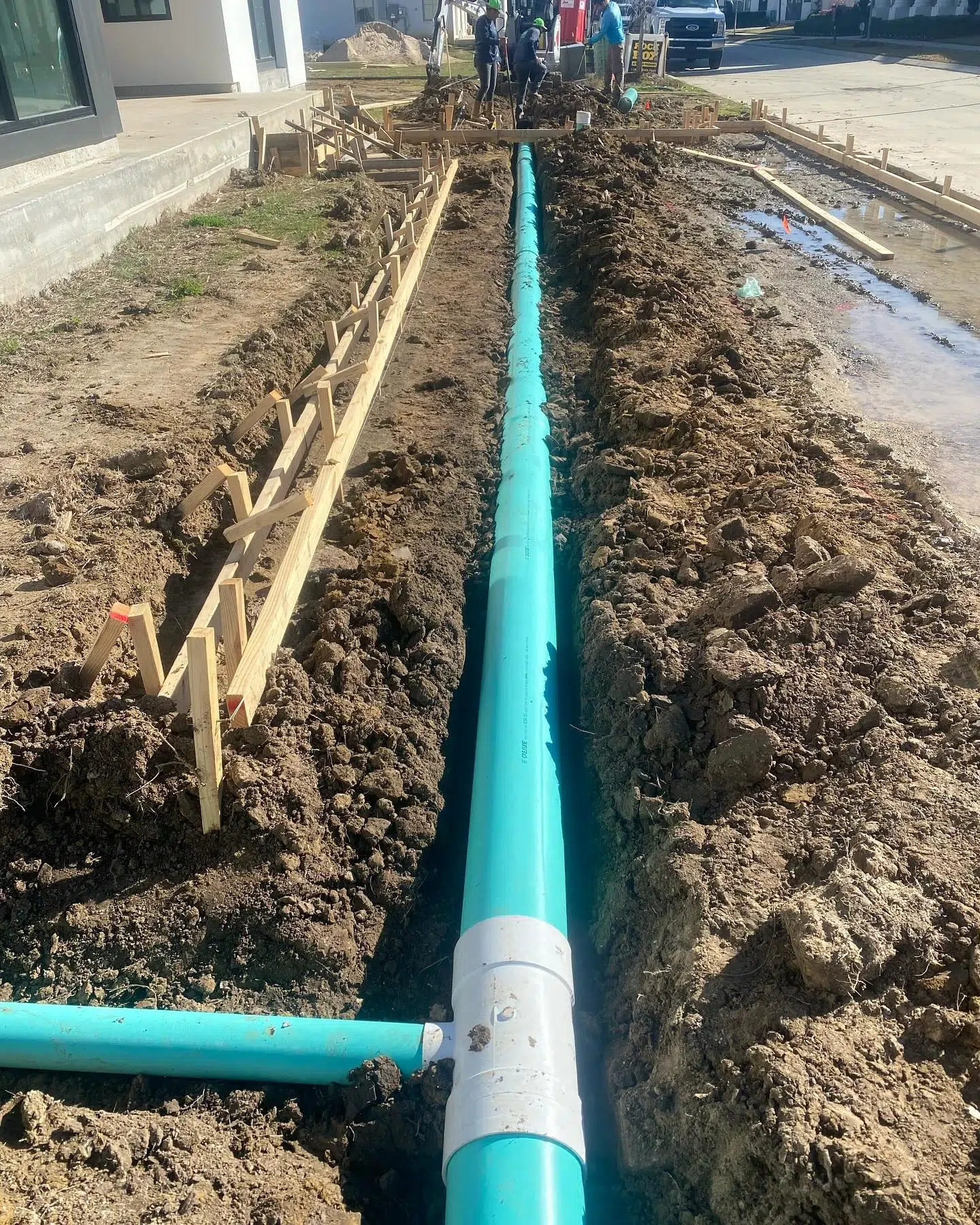
- French drains are subsurface perforated pipe systems installed in a gravel bed along the perimeter of the foundation or in low-lying yard areas. French drains collect groundwater and redirect it away from the structure before groundwater can saturate the soil adjacent to the foundation.
- Channel and trench drains are surface-level drainage systems installed in concrete areas like driveways, patios, and walkways where water pools in flat hardscape zones.
- Downspout extensions and dry wells capture roof runoff and discharge it well away from the foundation or into a subsurface chamber where roof runoff can percolate slowly into the ground.
- Gutter system installation or upgrade ensures that roof water is collected and channeled to designated discharge points rather than cascading off the roof edge and saturating the soil immediately around the perimeter.
Get Professional Help Before Small Problems Become Costly Repairs
Identifying drainage problems early is the difference between a manageable landscaping correction and a major structural repair. If you have noticed standing water, cracks, sticking doors, or crawl space moisture on your property in Jackson, LA, our team at ALL SEASONS LANDSCAPING can evaluate your site and recommend the right solution. We specialize in drainage assessment, grading correction, French drain installation, and full exterior water management systems designed for Louisiana’s challenging soil and rainfall conditions.
Don’t wait for the next heavy rain to confirm what you already suspect. Call us at 225-276-8658 or email [email protected] to get started.
Frequently Asked Questions
How long does it take for poor drainage to cause foundation damage?
Damage timelines vary based on soil type, rainfall frequency, and foundation construction, but visible structural symptoms typically develop over months to a few years of consistent drainage problems.
Can I fix drainage problems myself, or is professional help necessary?
Minor grading adjustments, gutter cleaning, and downspout extensions are manageable DIY projects. However, persistent pooling, foundation cracks, and complex water flow issues require professional assessment.
What is the most cost-effective way to improve drainage around my home?
Ensuring gutters are clean and functional and extending downspouts at least 5 to 10 feet from the foundation are the lowest-cost improvements with the highest impact.
Does homeowners’ insurance cover drainage-related foundation damage?
Most standard homeowners’ insurance policies do not cover foundation damage caused by poor drainage, groundwater intrusion, or soil settlement, as these are typically classified as maintenance-related issues.
How often should I inspect my property for drainage issues?
A thorough visual inspection after every heavy rain event, ideally within 24 hours, is the best practice. Additionally, walk the perimeter of your home at least twice a year during spring and fall.
Sources
- North Carolina Institute for Climate Sciences (NCICS) Louisiana State Climate Summary – Official state climate data documenting Louisiana’s annual precipitation range of 50 to 70 inches, providing context for the high rainfall volumes that drive drainage issues in East Feliciana Parish.
- USDA Natural Resources Conservation Service (NRCS) – Federal research documenting that half of all U.S. homes are built on expansive soils, and half of those homes will experience damage, highlighting the risk clay soils pose to foundations.
- Frontiers in the Built Environment – Peer-reviewed research documenting expansive soil swelling potential across Louisiana census blocks, with some areas showing swelling potential as high as 58 percent.
- LSU AgCenter – Research and guidance on managing moisture in crawl spaces and foundations, with specific relevance to Louisiana’s climate and soil conditions.
- FEMA – Fact Sheet 3.1: Foundations – Federal guidance on foundation damage mitigation, emphasizing proper site drainage and positive grading as key measures for reducing water-related foundation risk.
- United States Geological Survey (USGS) – Scientific explanation of how surface and overland runoff occurs when rainfall exceeds the soil’s infiltration capacity.

- How Does Regular Hedge Trimming Improve Your Landscape’s Overall Appearance? - October 12, 2026
- The Complete Guide to Hedge Trimming, Care, Maintenance, and Healthy Growth - October 6, 2026
- How Can Professional Drainage Services in Central, LA Protect Your Property From Water Damage? - September 11, 2026