Achieving a healthy, green lawn starts with having the right equipment. The essential tools for effective lawn care fall into four main categories: cutting, feeding, cleaning, and safety. For basic maintenance, every homeowner should have a quality lawn mower, a string trimmer, a spreader for fertilizer or seed, and fundamental hand tools like a rake and gloves. Without these core items, routine tasks become difficult, and the results are often disappointing. This guide provides a detailed look at the tools needed to maintain a beautiful lawn. “For professional-grade lawn care tools and expert tips, check out All Seasons Landscaping & Lawn Care’s recent press release highlighting their industry-leading equipment and services It moves from the most basic equipment to more specialized items, offering practical advice based on extensive field experience. The information here will help you choose the right tools for your property size, grass type, and budget, ensuring you can work efficiently and achieve professional-looking results.
Core Mowing and Edging Equipment
The most frequent lawn care task is mowing, which requires reliable and sharp equipment to ensure a clean cut that helps grass heal and grow properly.
The Lawn Mower
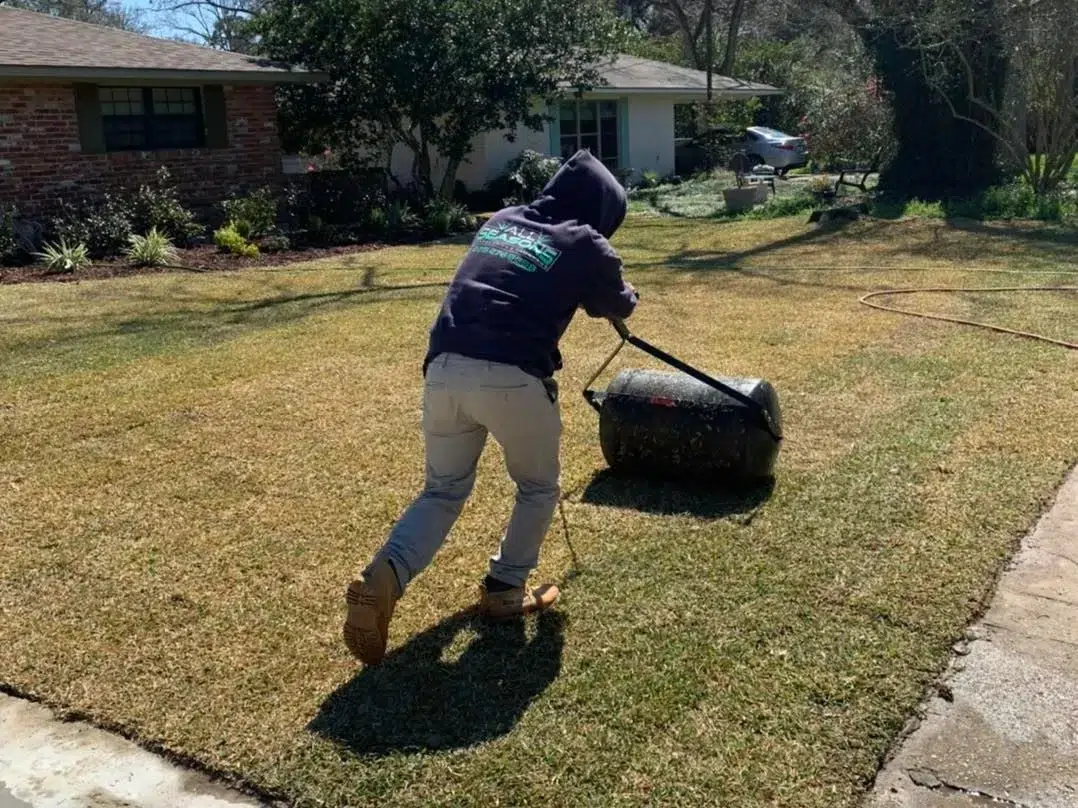
The lawn mower is the centerpiece of any lawn care arsenal. The type you need depends largely on the size of your yard. For small yards under half an acre, an electric or battery-powered push mower is often sufficient, quiet, and low-maintenance. For larger properties, a gas-powered or self-propelled mower offers more power and speed. A report from the Outdoor Power Equipment Institute shows that walk-behind mowers remain a popular choice for homeowners, highlighting their utility for a wide range of lawn sizes.
Bonus Tip: Regardless of the type, keeping the mower blade sharp is critical. A dull blade tears grass instead of cutting it, leaving jagged edges that can lead to disease and a brownish tint on your lawn. Aim to sharpen your mower blade at least twice per growing season.
String Trimmer and Edger
A string trimmer, often called a weed eater, is used for cutting grass in areas a mower can’t reach, such as around trees, fence lines, and flower beds. An edger serves a more specific purpose: creating a sharp, clean line between the lawn and hard surfaces like sidewalks, patios, and driveways. While a string trimmer can be turned on its side to perform some edging, a dedicated edger with a metal blade provides a much cleaner and more professional finish.
Tools for Feeding, Seeding, and Weeding
A healthy lawn requires proper nutrition and occasional reseeding or weed control. The right application tools ensure even coverage and prevent waste or damage to your grass.
Spreaders for Granular Products
Spreaders are used to apply granular fertilizer, seed, or pest control products uniformly across your lawn. There are two primary types, each suited for different applications. Spreader Type Best For How It Works Key Consideration
- Broadcast Spreader Larger, open lawns A spinning disk flings granules in a wide, fan-like pattern. Fast coverage, but requires careful overlap to avoid stripes.
- Drop Spreader Smaller yards, precise applications Drops granules straight down in a line as wide as the hopper. Excellent for controlled application near gardens or sidewalks. Proper calibration is key to using any spreader. Always read the product label for the correct setting to avoid applying too much or too little material, which can either burn the lawn or produce poor results.
Sprayers for Liquid Applications
For liquid herbicides, insecticides, or fertilizers, a sprayer is necessary. A small, one or two-gallon handheld sprayer is perfect for spot-treating weeds. For larger areas, a backpack sprayer offers more capacity and comfort, reducing the number of times you need to stop and refill. These are especially useful in Louisiana’s climate for applying fungicides or dealing with persistent warm-season weeds.
Cleanup and Maintenance Tools
Keeping your lawn free of debris not only looks better but also helps prevent disease and pest infestations.
Rakes and Leaf Blowers
A sturdy leaf rake is indispensable for gathering leaves in the fall. A bow rake, with its hard metal tines, is better for heavier jobs like spreading soil or removing thatch, the layer of dead grass and roots that can build up and choke your lawn. A leaf blower can make quick work of clearing grass clippings from driveways and sidewalks after mowing. Handheld electric models are light and convenient, while gas-powered backpack blowers provide the power needed to move large volumes of wet leaves or debris.
Wheelbarrow or Yard Cart
For moving mulch, soil, pulled weeds, or other debris, a wheelbarrow is a back-saver. Look for a model with a sturdy, rust-proof basin and a pneumatic tire, which makes it easier to navigate over uneven ground compared to a solid wheel.
Things to Consider Before Making a Decision
Choosing the right tools involves more than just picking the most powerful or expensive option.
- Lawn Size and Terrain: A quarter-acre flat lot has very different needs than a multi-acre property with hills. Let the size of your yard dictate whether you need manual, electric, or gas-powered equipment. Self-propelled mowers are a great choice for sloped terrain.
- Storage Space: Power equipment, wheelbarrows, and long-handled tools all require dry, secure storage. Make sure you have enough space in a garage or shed before you buy.
- Your Budget: The lawn and garden equipment market is substantial, with a study from Freedonia Group projecting continued growth. This means there are options at nearly every price point. While it can be tempting to buy the cheapest tool, investing in quality equipment often pays off in durability and better performance.
- Local Climate: In warm, humid climates, tools with rust-resistant coatings or made from durable composite materials can last longer. Equipment must also be powerful enough to handle dense, fast-growing warm-season grasses.
Common Questions About Lawn Care Tools
Do I need both a string trimmer and an edger?
For the cleanest look, yes. A trimmer is for maintenance in hard-to-reach spots, while an edger is for creating defined borders. If your budget is tight, you can use a trimmer for both, but the results won’t be as sharp.
How important is it to clean my tools?
Very. Caked-on grass clippings can hold moisture and lead to rust. Cleaning mower decks and tools after each use prevents the spread of lawn diseases and extends the life of your equipment. A study from the University of Minnesota Extension confirms that clean tools are a key part of preventing disease transmission.
What is the best all-around tool for a beginner?
A quality mower is the top priority. After that, a good leaf rake and a pair of gardening gloves will handle most basic cleanup tasks. You can add more specialized tools as you identify specific needs.
Frequently Asked Questions
What safety precautions are most important?
Always wear sturdy, closed-toe shoes, safety glasses, and gloves when operating lawn equipment. For loud tools like gas mowers and blowers, hearing protection is also recommended. Read and follow all safety instructions in the tool’s manual.
How do I choose between a gas and an electric mower?
Gas mowers are generally more powerful and have longer runtimes, making them ideal for large or overgrown lawns. Electric mowers (both corded and battery) are quieter, require less maintenance, and produce no emissions, making them a great choice for smaller, standard suburban yards.
What is the best tool for dealing with thatch?
For minor thatch, a stiff bow rake or a specialized dethatching rake can work. For moderate to severe thatch buildup, a power dethatcher (also called a scarifier) is the most effective tool. These can often be rented from local home improvement stores.
Is a broadcast or drop spreader better for my lawn?
A broadcast spreader is faster for large, open areas. A drop spreader is better if you have many flower beds, gardens, or sidewalks, as it gives you precise control over where the product goes, preventing it from landing where it shouldn’t.
How often should I replace my string trimmer line?
Trimmer line degrades over time, becoming brittle and breaking easily. It’s a good practice to replace the line at the beginning of each mowing season. If you notice the line breaking frequently, it’s time for a new spool.
Final Recommendations
Building a collection of lawn care tools is an investment in your property. Start with the essentials: a mower suited to your yard’s size, a string trimmer, a spreader, a rake, and safety gear. From there, you can add more specialized tools like an edger or a sprayer as your needs and confidence grow. Always prioritize quality and proper maintenance to ensure your tools last for years and help you create a lawn you can be proud of.
Get Your Lawn Assessed by a Professional
Understanding your lawn’s specific needs is the first step toward choosing the right tools and treatments. If you’re unsure where to start or want an expert opinion, All Seasons Landscaping & Lawn Care can help. For a professional consultation, contact the team at 225-276-8658 or send an email to [email protected]. A professional evaluation can provide clarity and set you on the right path to a healthier lawn.
Sources
- Outdoor Power Equipment Institute – Provides market statistics and trends for the outdoor power equipment industry.
- Freedonia Group – An international business research company that provides analysis on the power lawn and garden equipment market.
- University of Minnesota Extension – Offers research-based advice on gardening, including best practices for tool sanitation to prevent plant disease.

- How Can Professional Drainage Services in Central, LA Protect Your Property From Water Damage? - September 11, 2026
- Which Areas of Your Property Benefit Most From Outdoor Lighting for Safety and Curb Appeal? - September 11, 2026
- How Does Professional Outdoor Lighting Transform Your Landscape at Night in Baton Rouge, LA? - September 9, 2026