A consistently superior lawn usually results from a combination of proper soil biology, precise mowing habits, and timing applications to the grass growth cycle rather than the calendar. Most homeowners struggle because they treat the lawn as a decorative plant rather than a living crop that needs specific cultural practices. By understanding the biological mechanics behind turf growth, the gap between an average yard and a pristine one becomes clear and manageable. This information is based on extensive field experience diagnosing turf issues and observing patterns in successful lawn care routines.
ALL SEASON LANDSCAPING has identified five distinct factors that separate thriving yards from struggling ones.
Soil Health Often Determines Success
Grass health starts underground. A neighbor’s lush lawn likely grows in soil with the proper pH balance and active microbial life. Many homeowners focus on the green blades but ignore the dirt. If the soil pH is too acidic or too alkaline, grass roots cannot absorb nutrients effectively, regardless of how much fertilizer is applied.
In the Baton Rouge region, soil tends to be acidic and clay-heavy. This often requires lime applications to raise the pH level. Without a soil test, homeowners are essentially guessing, which often leads to wasted money and poor results.
Optimal pH Ranges for Common Turf
Understanding soil acidity is the first step toward improvement.
| Grass Type | Ideal Soil pH | Common Issue in Louisiana |
|---|---|---|
| St. Augustine | 6.0 – 7.5 | Iron chlorosis in high pH |
| Centipede | 4.5 – 5.5 | Fertilizer burn if pH is high |
| Bermuda | 6.0 – 7.0 | Poor growth in acidic soil |
| Zoysia | 6.0 – 7.0 | Thatch buildup in poor soil |
Bonus Tip: Take a soil sample every three years. Send it to a local extension service. This small step eliminates guesswork and provides a roadmap for amendments.
Mowing Practices Impact Grass Density
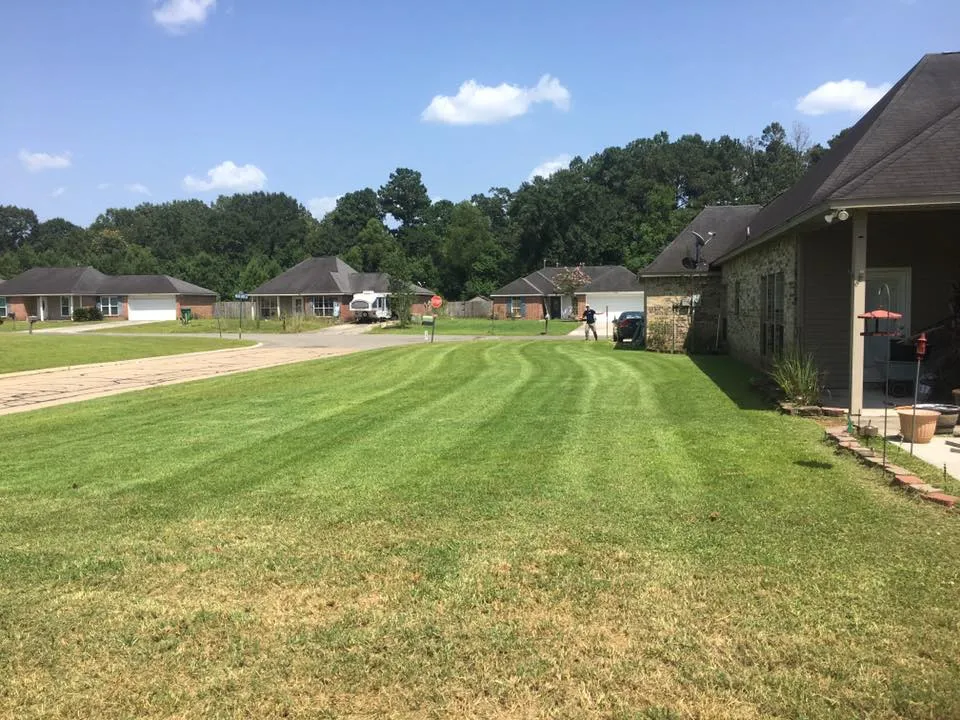
Improper mowing is the most common cause of weak turf. Neighbors with great lawns almost certainly follow the “one-third rule.” This rule states that no more than one-third of the grass blade should be removed in a single mowing session. Cutting more than this stresses the plant, reduces root growth, and invites weeds.
Many homeowners mow too low to extend the time between cuts. This scalping exposes the soil to sunlight, which encourages weed germination and dries out the roots quickly. Taller grass shades the soil, retaining moisture and preventing weeds from sprouting.
Mower blades also need to be sharp. Dull blades tear the grass rather than cutting it cleanly. Torn tips turn brown and give the yard a dull, brown cast while opening the plant to disease.
Watering Depth Matters More Than Frequency
Frequent, light watering causes shallow root systems. Grass roots grow where the water is. If a homeowner waters for 10 minutes every day, the roots stay near the surface. When the weather gets hot, these shallow roots dry out fast, leading to brown patches.
The neighbor across the street likely waters deeply but infrequently. This encourages roots to grow deep into the soil in search of moisture. Deep roots provide stability and drought resistance.
Bonus Tip: Water early in the morning. Watering in the evening leaves the grass wet all night, which encourages fungal diseases. Morning watering allows the sun to dry the blades quickly.
Fertilizer Application Requires Precision
Applying fertilizer at the wrong time feeds the weeds instead of the grass. Warm-season grasses, common in Louisiana, need fertilizer when actively growing. Applying nitrogen too early in the spring, while the soil is still cool, can cause a rapid flush of growth that is damaged by a late frost.
Data from Statista shows that American homeowners spend billions annually on lawn and garden activities. A significant portion of this is wasted on products applied at the wrong time or in the wrong amounts.
ALL SEASON LANDSCAPING observes that successful yards use slow-release fertilizers. These products provide a steady stream of nutrients over weeks rather than a sudden dump that the grass cannot process. This prevents “surge growth” and reduces the need for constant mowing.
Proactive Weed Control Stops Problems Early
A great lawn is a result of preventing weeds rather than fighting them. Pre-emergent herbicides create a barrier in the soil that stops weed seeds from germinating. Timing this application is critical. If applied too late, the seeds have already sprouted, and the product is useless.
Most weed seeds germinate when soil temperatures reach specific thresholds. A neighbor with a weed-free yard tracks these soil temperatures or applies pre-emergents based on historical data for the region, often around February or March in this area.
Missing the window for pre-emergent means spending the summer pulling weeds or using post-emergent sprays, which can sometimes stress the desirable grass along with the weeds.
Things to Consider Before Making a Decision
Before changing a lawn care routine or buying new products, carefully evaluate the current situation.
- Identify the Grass Species: Different grasses require vastly different care. Centipede grass needs much less fertilizer than Bermuda. Misidentifying the grass leads to damage.
- Assess Sunlight Exposure: Shade determines what grass will survive. St. Augustine tolerates shade better than Bermuda. Planting the wrong grass for the light conditions ensures failure.
- Evaluate Irrigation Coverage: An automatic sprinkler system is only effective if it evenly covers the lawn. Place cups around the yard to measure how much water each area receives during a cycle.
- Check for Compaction: If water pools on the surface, the soil might be compacted. Aeration might be necessary before any fertilizer or seed will be effective.
FAQS
Why does my grass turn brown in the winter if my neighbor’s stays green?
The neighbor likely has overseeded with a cool-season grass like Ryegrass. This provides green color in the winter but dies off as the heat returns. This is a cosmetic choice and requires extra mowing and water.
Is bagging clippings better than mulching them?
Mulching is usually better. Grass clippings decompose quickly and return valuable nitrogen to the soil. Bagging removes these nutrients and creates extra waste. Only bag if the grass is extremely long or diseased.
How do I fix yellow spots in my lawn?
Yellow spots often indicate a lack of iron or nitrogen, or possibly dog urine. A soil test is the best way to determine the cause. If the soil test is fine, check for fungus or irrigation issues.
Can I use baking soda to kill weeds?
This is a common internet myth. Baking soda raises soil pH, which can kill weeds but will also kill the grass and ruin the soil balance for a long time. Targeted herbicides are safer and more effective.
When should I stop mowing in the fall?
Mow until the grass stops growing. For warm-season grasses, this usually happens after the first frost. Keep the height slightly higher in the fall to protect the plant’s crown during winter.
Final Thoughts on Lawn Quality
A better looking lawn is rarely the result of luck. It comes from understanding the specific needs of the grass species and the soil conditions. Consistency in mowing, deep watering, and timely applications of pre-emergents creates the environment where grass thrives and weeds struggle. Start with a soil test and adjust the mowing height. These two steps alone can make a significant difference in a yard’s appearance within a single growing season.
Professional Consultation Options
For personalized advice specific to the Baton Rouge climate and soil conditions, contact ALL SEASON LANDSCAPING. Professional assessment can identify specific issues like fungal infections or pest infestations that might not be obvious to the untrained eye. Reach out via email at [email protected] or call 225-276-8658 to discuss lawn care needs.
Sources
- University of Georgia Extension – Comprehensive guide to turfgrass management in the Southeast, covering fertilization and mowing heights.
- Statista – Statistical data regarding consumer spending on lawn and garden care in the United States.
- Environmental Protection Agency – Information on water-efficient landscaping and irrigation best practices.

- How Does Regular Hedge Trimming Improve Your Landscape’s Overall Appearance? - October 12, 2026
- The Complete Guide to Hedge Trimming, Care, Maintenance, and Healthy Growth - October 6, 2026
- How Can Professional Drainage Services in Central, LA Protect Your Property From Water Damage? - September 11, 2026