Professional drainage services in Zachary, LA, represent a vital, long-term investment that protects the structural integrity, monetary value, and usability of residential and commercial property. The decision to hire experts for water management is essential due to two major regional factors: the exceptionally high annual precipitation typical across the Gulf South, and the local soil composition, often characterized by heavy, expansive clay. These conditions combine to create an environment where poor water runoff management rapidly causes costly damage, making proactive drainage infrastructure a necessity, not a luxury.
Effective water control requires much more than simply directing excess rainwater away from the immediate surface. It demands specialized knowledge of local hydrology, subsurface conditions, and the potential for hydrostatic pressure buildup near foundations. By focusing on mitigating these complex water issues at the source, professional services minimize the risk of devastating foundation failure, control pest proliferation, and prevent the severe property depreciation that saturated land inevitably causes. This article explains why expert drainage is the right approach for property owners in Louisiana’s unique climate.
The Regional Challenge: High Rainfall and Heavy Clay
The climate around Zachary creates significant difficulties for any property lacking adequate drainage infrastructure. South Louisiana experiences intense, frequent rainfall, often dropping several inches of water in very short periods. When this high volume of water meets the region’s prevalent heavy clay soil, issues arise quickly. Clay soil is dense and has low percolation rates, so water struggles to soak into the ground. Instead, water pools on the surface or is absorbed slowly, leading to prolonged saturation and dramatically increased hydrostatic pressure.
Foundation Preservation Through Water Control
Hydrostatic pressure is the immense force exerted by water pushing against a submerged or partially submerged structure, such as a slab or crawlspace foundation. When the heavy clay soil near a foundation becomes saturated, it expands, pushing against walls and slabs with force. As the soil subsequently dries, it contracts, pulling away from the structure. This constant cycle of expansion and contraction eventually compromises structural stability, leading to cracks, settlement, and potentially catastrophic damage. The cost of foundation repair in the region is always substantial; addressing water infiltration proactively is far more cost-effective than fixing the resulting structural problems. According to data tracked by The Louisiana Housing Foundation, water-related foundation issues consistently rank among the most expensive home repairs facing Gulf Coast residents.
Bonus Tip: Monitor Grading. Look closely at the grade around your house. If the soil slopes toward the foundation rather than away from it, even perfect drainage installed elsewhere may fail. Re-grading the land near the home’s perimeter to ensure a slight downhill slope is often the first, cheapest step in water management.
Preventing Health and Pest Issues
Standing water is not only damaging to structures but is also detrimental to public health. Water that remains stagnant for 72 hours or more provides an ideal breeding habitat for mosquitoes, which are endemic to Louisiana and pose significant risks, including West Nile Virus. Properly engineered drainage systems, such as French drains or catch basins, eliminate these standing pools and serve as a critical component of pest management. Research published by the Louisiana State University Agricultural Center consistently stresses that adequate drainage is a primary non-chemical method for controlling mosquito populations.
Analyzing Subsurface and Surface Water Issues
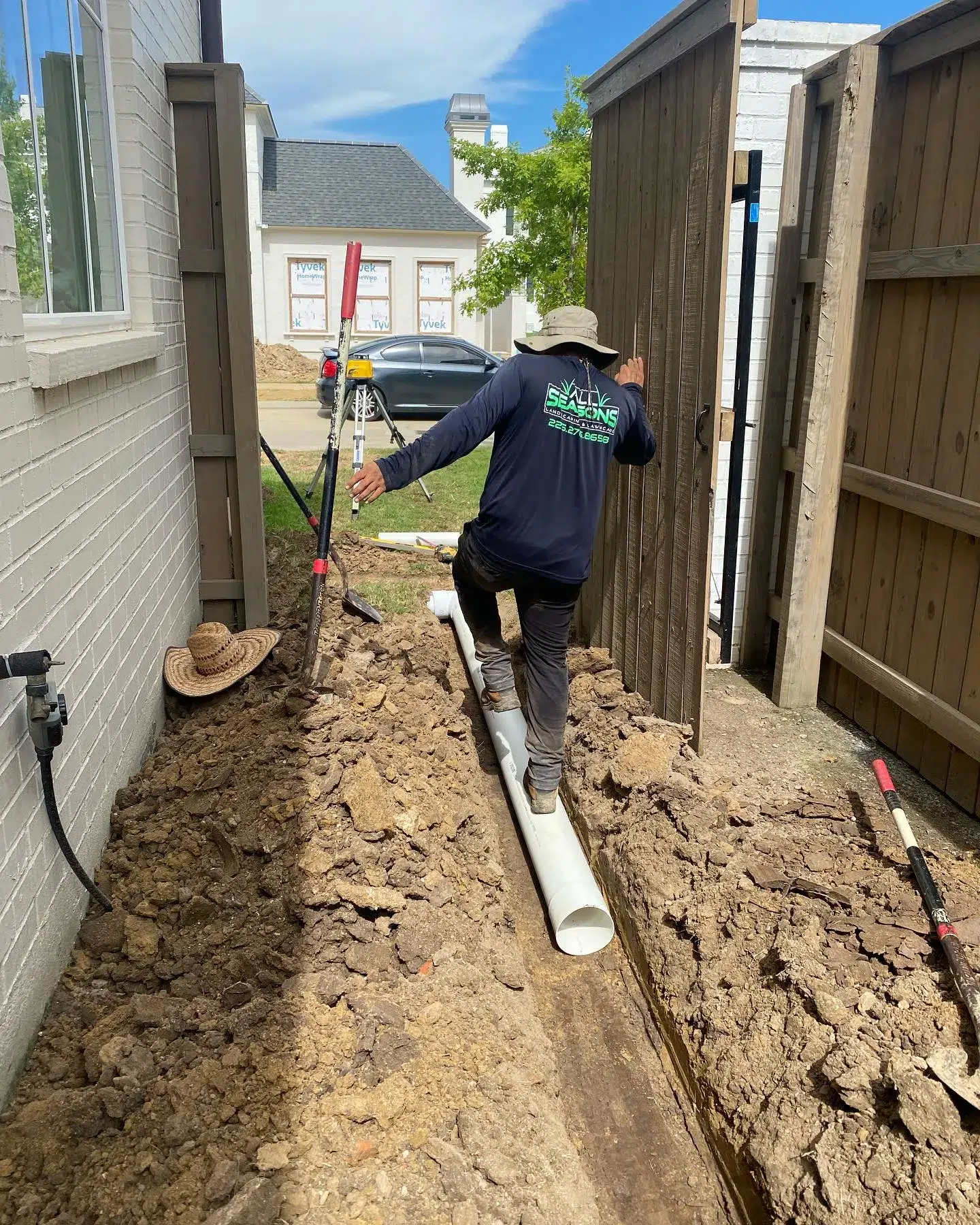
Professional services begin with a detailed analysis to distinguish between surface water problems (runoff that has not yet been absorbed) and subsurface water issues (such as high water tables or water migrating beneath the surface). Effective drainage often requires a combination of solutions tailored to the property’s topography and soil layers. For a clearer understanding of how these challenges are met, the following table compares the functions of common water management solutions used in the Zachary area:
| Solution Type | Primary Function | Best Used For | Typical Maintenance Needs |
|---|---|---|---|
| French Drain | Redirecting subsurface water and reducing hydrostatic pressure. | Yard saturation, sloping properties, and preventing crawlspace moisture. | Pipe flushing, clearing outlets. |
| Catch Basin/Area Drain | Capturing high volumes of surface runoff. | Driveways, patios, and low points in the yard. | Clearing debris and sediment regularly. |
| Sump Pump System | Mechanically lifting collected water out of a confined space (e.g., crawlspace, basement). | Areas with a high water table or below-grade structures. | Checking battery backup, ensuring pump functionality. |
| Gutter/Downspout Extensions | Directing roof water far away from the foundation. | Any property with roofing runoff. | Ensuring clear flow, checking connections. |
The Cost of Inaction: Financial Realities
Waiting until water damage becomes visible often results in a far greater financial expenditure than proactive drainage installation. Most standard homeowner insurance policies offer limited or no coverage for damage caused by gradual seepage, ground saturation, or rising groundwater, leaving the property owner to bear the full cost of repairs. Data from the Federal Emergency Management Agency (FEMA) consistently shows that even minor
water intrusion, if left untreated, can lead to exponential increases in restoration costs due to mold remediation and severe structural compromise.
Furthermore, neglecting drainage drastically reduces the financial return on landscaping investments. When expensive plants, trees, and sod sit in perpetually soggy soil, they frequently die prematurely, forcing costly replacement and repeated labor fees. Professional grading and subsurface drainage protect these outdoor assets, allowing them to thrive and contribute positively to curb appeal.
Bonus Tip: Check Your Policy. Review insurance documents annually. Do not assume your policy covers ground saturation damage. Understanding limitations now helps prioritize where preventative investment is most necessary.
Things to Consider Before Making a Decision
Before committing to any drainage project, a detailed site evaluation is crucial. Truly effective experts do not simply dig trenches; instead, they perform meticulous, site-specific analysis.
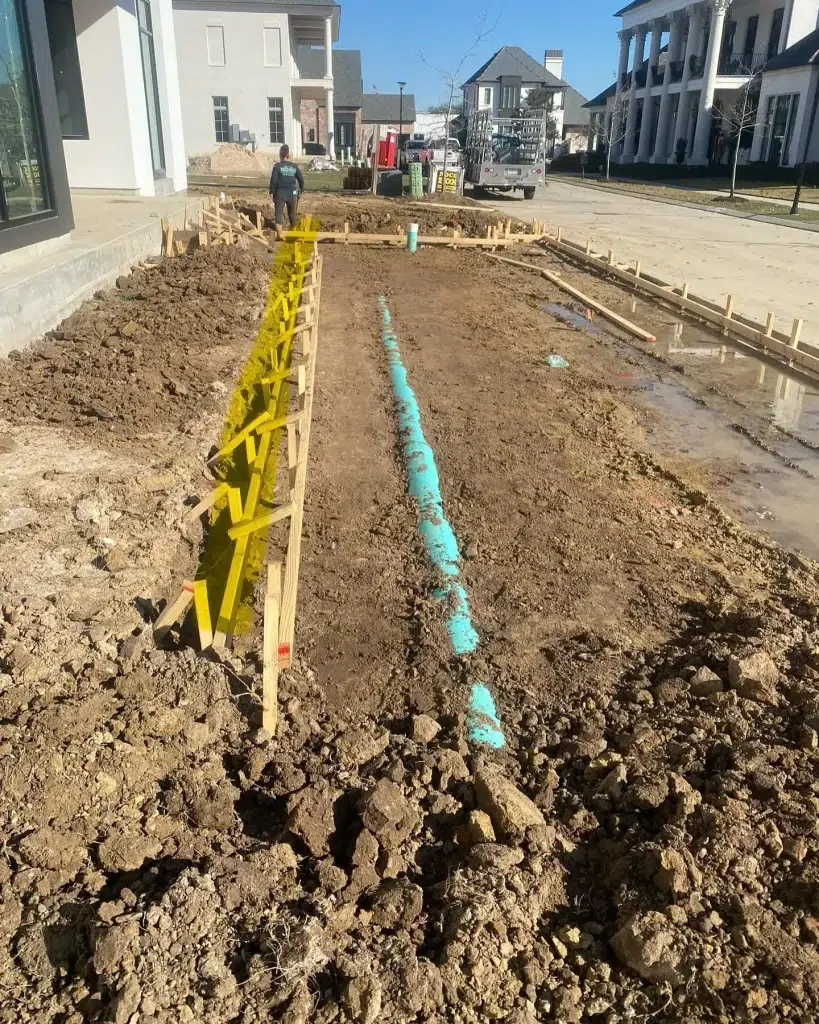
- Topography and Slope: A contractor must accurately map the elevation changes across the property to ensure water flows efficiently away from structures to the designated exit point, whether it is a municipal drain or an acceptable dispersal field.
- Utility Locations: Subsurface work requires precise identification of buried utility lines (gas, electric, water, sewage). Failing to accurately map and avoid these utilities can lead to dangerous and extremely expensive accidents.
- System Design and Materials: Evaluate the proposed solution’s longevity. While flexible corrugated pipe is cheaper, it is prone to crushing and clogging. Rigid PVC pipe offers superior performance and lifespan, making it a better choice for permanent installations that handle heavy Louisiana rainfall.
- Permitting and Compliance: Depending on the scope and final discharge point, certain drainage projects may require local permits to ensure compliance with municipal runoff regulations. Proper services handle all necessary permits and adhere to local code requirements.
Bonus Tip: Require a Digital Topography Map. Ask the service provider for a professional assessment that includes elevation measurements. This shows that the solution is engineered based on specific data, not just observation.
FAQS
How long does a typical drainage system installation take?
Most residential drainage systems, such as installing a French drain and accompanying catch basins, usually take between two and four days, depending on the length of the trenches required, the burial depth, and the complexity of routing around existing infrastructure.
Does professional drainage require a permit in Zachary?
It depends entirely on the specific design. Simple re-grading or small-scale surface drains usually do not require a permit. However, any work that ties into a public street curb, involves significant earth removal, or impacts wetlands will certainly require prior permitting from the local planning or public works department.
Can I install a French drain myself?
While the concept of a French drain is simple, achieving the correct slope (a minimum of 1% grade), ensuring the trench is deep enough for proper hydrostatic relief, and correctly handling the filtration fabric and aggregate (gravel) requires heavy equipment and precise calculations. Mistakes can lead to the pipe backing up or clogging quickly.
How often should a drainage system be inspected?
Inspect high-flow components like catch basin grates seasonally, particularly after major storms, to clear debris. The entire system should receive a professional inspection every three to five years, often involving flushing the pipes to remove accumulated silt and ensure clear flow capacity.
Taking the Next Steps
Protecting property from excessive water is essential for maintaining both structural health and market value in the Zachary area. Choosing professional drainage services mitigates regional risks associated with expansive clay and high precipitation, safeguarding against expensive foundation damage and promoting a healthier environment overall. Property owners should evaluate the unique requirements of their land, prioritize durable materials, and seek solutions engineered specifically for the challenges of South Louisiana’s climate.
Expert Consultation for Water Management
Understanding which drainage solution is appropriate for your specific site requires hands-on experience and specialized equipment. When you are ready to explore comprehensive water management solutions tailored precisely to your property’s topography and soil, contact ALL SEASON LANDSCAPING. Residents can reach the office by phone at 225-276-8658 or send detailed inquiries via email to [email protected].
Sources
- The Louisiana Housing Foundation – Information detailing common structural and financial issues related to Louisiana housing, emphasizing water damage costs.
- Louisiana State University Agricultural Center – Provides research and guidance on effective pest control strategies, including the role of drainage in mitigating mosquito breeding.
- Federal Emergency Management Agency (FEMA) – Data concerning the widespread financial impact and typical uncovered costs associated with non-flood-related water damage.

- How Does Regular Hedge Trimming Improve Your Landscape’s Overall Appearance? - October 12, 2026
- The Complete Guide to Hedge Trimming, Care, Maintenance, and Healthy Growth - October 6, 2026
- How Can Professional Drainage Services in Central, LA Protect Your Property From Water Damage? - September 11, 2026