Stopping mold and mildew growth around a home starts with managing water movement away from the structure. Mold needs organic material, comfortable temperatures, and, most importantly, high moisture levels (typically above 60% relative humidity) to establish colonies. The most effective way to prevent this growth is simple: eliminate standing water and saturated soil near the foundation using proper exterior drainage techniques.
Achieving these dry conditions requires proactive measures, such as ensuring the ground slopes away from the building, extending roof downspouts far enough, and installing subsurface solutions like French drains when grading alone is insufficient. Ignoring poor drainage allows perpetual moisture exposure, significantly increasing the risk of mold and extensive microbial contamination. Furthermore, poor drainage can eventually lead to significant structural damage, including foundation shifting, often requiring costly remediation. Expertise in site evaluation and water flow is essential for determining the right combination of drainage solutions for any given property.
The Core Problem: Soil Saturation and Moisture Infiltration
When rainwater pools next to a home or saturates the soil for extended periods, hydrostatic pressure pushes water against and through foundation walls, leading to damp basements and crawl spaces. This constant dampness creates the ideal breeding environment for mold spores. Studies show that controlling moisture is the most critical factor in preventing mold and mildew accumulation inside buildings, according to the Environmental Protection Agency (EPA).
Even small amounts of moisture infiltrating the building can rapidly accelerate problems. For instance, the presence of even minor water intrusion raises the relative humidity within wall cavities and beneath floors, allowing mold to flourish on materials like drywall, wood framing, and insulation. Preventing these conditions means treating the exterior environment as the first line of defense against interior moisture issues.
Understanding Grading and Slope
The foundation of any good drainage plan is proper grading, which involves sloping the ground away from the structure. The soil surrounding the home must achieve a six-inch vertical drop across the first ten feet. Suppose the grading is flat or, worse, slopes toward the house (negative grading). In that case, water collects immediately near the foundation, perpetually soaking the footing and allowing moisture to wick into the concrete.
Bonus Tip 1: Use a string line and a line level to check your existing slope. Measure a distance of ten feet out from the foundation wall. You should see at least a six-inch vertical drop across that distance (a minimum of 5% grade) to ensure effective gravity drainage.
Essential Drainage Solutions That Prevent Stagnation
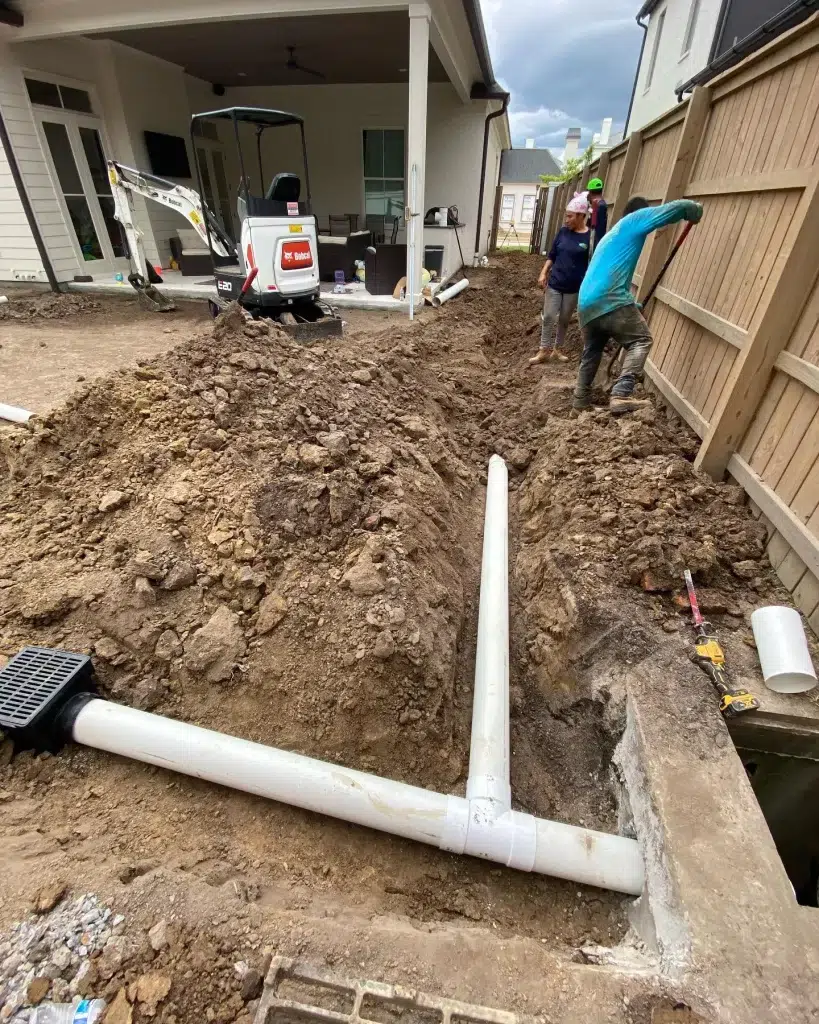
While good grading handles surface water runoff, many situations, especially in areas with heavy clay soil or high water tables, demand more complex solutions. These systems move large volumes of water efficiently to designated discharge points, such as storm drains or dry wells.
| Drainage Solution | Primary Function | Ideal Application | Maintenance Requirement |
|---|---|---|---|
| Surface Swale | Directs surface runoff along a gentle, broad channel. | Sloping yards, large properties, and moving water between two points. | Occasional mowing/clearing of debris. |
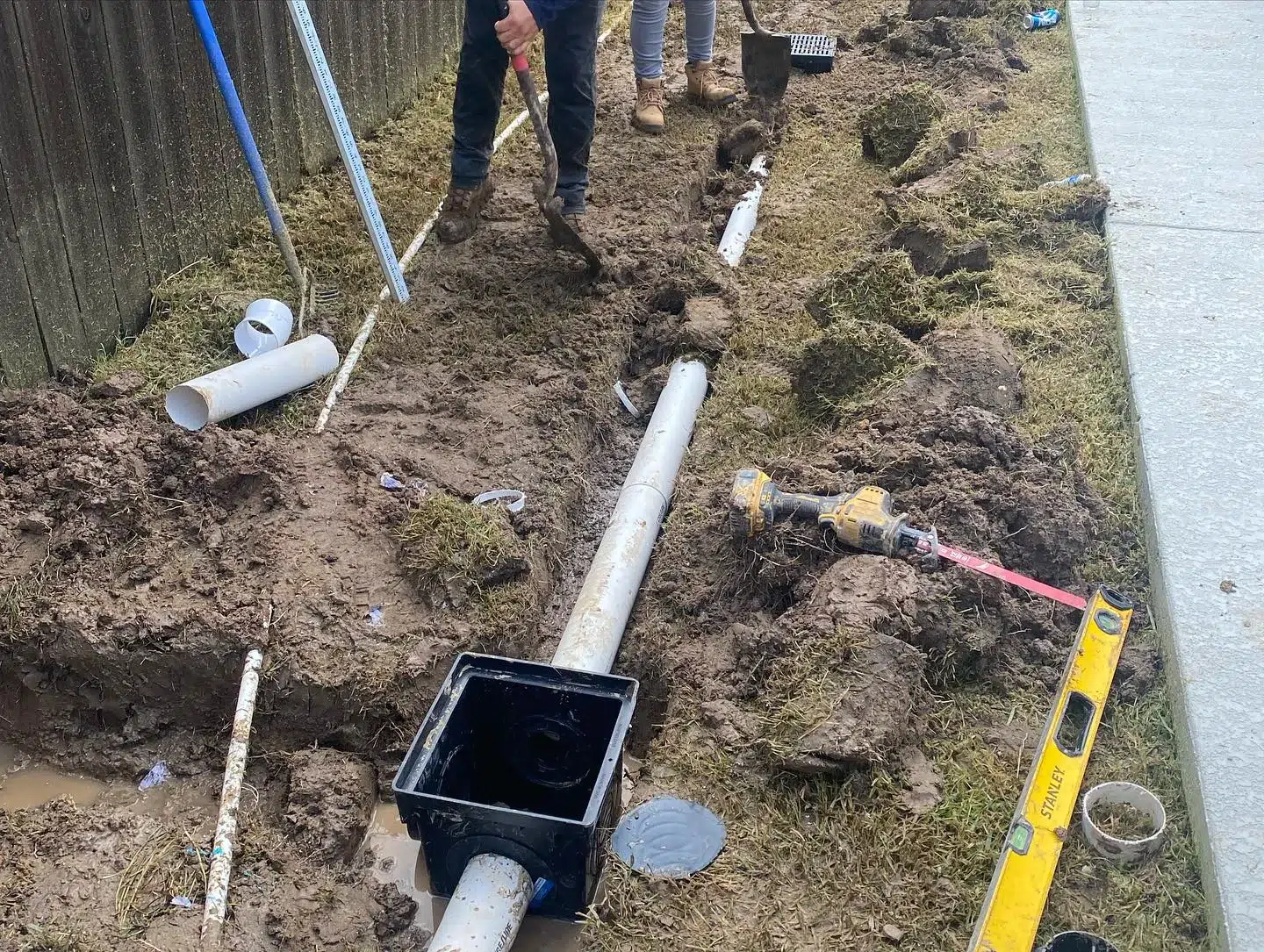
| Catch Basin/Area Drain | Collects concentrated surface water in low spots or paved areas. | Patios, driveways, pool decks, garage aprons. | Periodic cleaning of the sediment basket. |
| French Drain | Intercepts subsurface water and relieves hydrostatic pressure. | Around foundations, beneath retaining walls, and saturated lawn areas. | Flushing the perforated pipe every 3-5 years. |
| Trench Drain | Linear collection system for fast water runoff over impervious surfaces. | Long driveways, walkways, and narrow trenches. | Regular removal of grit and leaves. |
Selecting the right system often depends on the type of water problem. For instance, perimeter French drains address subsurface saturation around the foundation, while catch basins handle heavy, localized surface pooling.
According to the Federal Emergency Management Agency (FEMA), exterior drainage solutions are often far less expensive than subsequent flood or moisture damage repairs, reducing the risk of structural failure and mold damage that can cost tens of thousands of dollars to remediate.
Region-Specific Guidance for Heavy Rainfall Zones
In regions that experience intense, short-duration rainfall, like many areas served by ALL SEASON LANDSCAPING, simply extending a downspout might not be enough. The soil often becomes saturated quickly. In these cases, it is crucial to connect downspouts directly to a sealed piping system that carries the water underground to an appropriate discharge point, preventing the water from dumping directly onto the saturated ground near the foundation.
Bonus Tip 2: For catch basins and area drains, establish a routine cleaning schedule. Sediment and debris buildup restrict the basin’s capacity, causing water to back up and pool immediately adjacent to the collection point. Cleaning these twice a year is often sufficient to maintain flow.
Common Water Collection Points and How to Fix Them
Many drainage failures occur at specific locations where water naturally concentrates.
- Window Wells: These below-grade enclosures are notorious for collecting water. They require a proper gravel bed and often need a dedicated drain connected to the footing drain system or a small sump pump to remove water immediately.
- Patios and Hardscapes: Impervious surfaces, like concrete driveways and large patios, greatly increase water runoff volume. Ensure these surfaces are pitched away from the house (at least 1/8 inch per foot) and install trench drains or area drains where the hardscape meets the wall.
- Gutter and Downspout Systems: When gutters clog, water spills over the sides, concentrating flow directly at the foundation perimeter. Keeping gutters clear and ensuring downspout extensions reach 5 to 10 feet away from the house are easy, routine steps that dramatically reduce mold risk.
Evaluating Your Property: Key Considerations Before Installation
Before deciding on a major drainage installation, property owners must assess several environmental and structural factors to ensure the solution is appropriate and effective. A system that works well in sandy soil will fail rapidly in heavy clay.
- Soil Permeability: Determine how well your soil drains. Clay soils hold water and require aggressive subsurface drainage (French drains), while sandy soils drain quickly but may let water reach the foundation footing too easily.
- Average Rainfall and Water Table: Areas with persistently high water tables require foundation waterproofing combined with pump systems to handle the constant pressure, rather than just relying on gravity-fed drains.
- Site Elevation and Legal Discharge: Where will the water go? All drainage systems require a lower point for gravity to work, such as a city storm sewer, a dry well, or a remote area. Crucially, this plan must comply with local codes and not impact neighbors. In some regions, managing runoff is mandated by local stormwater regulations, as noted by the Center for Watershed Protection (CWP).
- Foundation Type: Crawl spaces and basements require more aggressive drainage systems (footing drains) than homes built on slabs, where surface water diversion is the primary concern.
Bonus Tip 3: When planning landscaping, avoid planting moisture-loving shrubs or trees directly against the foundation. Their roots can compromise vapor barriers and drainage tile, and the foliage traps moisture against the wall, slowing drying time and increasing mold risk.
Practical Maintenance for Long-Term Mold Prevention
Even the best-installed drainage system needs upkeep. Regular maintenance ensures the longevity of the installation and continuous protection against moisture intrusion.
- Annual Gutter Check: Clear all debris from gutters and check the integrity of the sealant and hangers. Make sure downspouts are securely fastened and angled correctly.
- Inspect Discharge Points: Verify that the ends of French drains or downspout extensions are clear of leaves, dirt, or ice build-up that could block the flow. If the water cannot escape freely, it backs up into the system.
- Monitor Grading: Over time, soil settles. After major storms or harsh winters, walk the perimeter of the home to ensure the ground still slopes away. Add compacted soil where necessary to restore the positive grade.
Frequently Asked Questions About Drainage and Mold
How quickly can mold start growing after a flood?
Mold can begin growing on damp surfaces within 24 to 48 hours of water exposure. This rapid growth timeframe is why immediate drying and cleanup are essential following any water intrusion event.
Should I seal my concrete foundation?
Yes, sealing or applying a waterproof coating to the exterior of the foundation, particularly below grade, is a necessary step, especially when installing a new foundation or footing drains. While sealing doesn’t replace drainage, it acts as a barrier to prevent moisture wicking through the porous concrete.
How do I know if my crawl space has a moisture problem?
Common signs include musty odors, visible condensation on pipes or ductwork, efflorescence (white, powdery salt deposits) on concrete walls, or standing water or wet insulation beneath the floor joists.
What is the difference between a French drain and a footing drain?
Both are subsurface systems. A French drain is typically installed within the yard or landscaped area to intercept groundwater before it reaches the structure. A footing drain (or foundation drain) is placed explicitly around the exterior perimeter of the foundation footing, usually at the lowest point, to relieve hydrostatic pressure and keep the foundation base dry.
Final Considerations for a Dry Environment
Maintaining a dry environment requires recognizing that water always follows the path of least resistance. Implementing proper grading and functional drainage systems prevents water from choosing the path through or under your home. Evaluate your property’s specific soil conditions, rainfall patterns, and structural needs, then select targeted solutions that manage both surface runoff and subsurface saturation. Proactively addressing drainage is the most cost-effective long-term defense against mold, mildew, and structural damage.
Connect with ALL SEASON LANDSCAPING
Addressing severe drainage issues often requires professional design and installation to ensure compliance and longevity. If your property exhibits persistent dampness or you need expert guidance on implementing grading or subsurface solutions, reach out to ALL SEASON LANDSCAPING. Discuss your water management concerns by calling 225-276-8658 or sending an email inquiry to [email protected] for specific assessment and planning help.
Sources
- Environmental Protection Agency (EPA) – Information regarding the importance of moisture control in preventing mold growth in residential environments.
- Federal Emergency Management Agency (FEMA) – Data and guidance on managing water damage in basements and the value of proactive exterior drainage systems.
- Center for Watershed Protection (CWP) – Details on regional stormwater management regulations and how impervious surfaces influence runoff and overall water movement.

- How Does Regular Hedge Trimming Improve Your Landscape’s Overall Appearance? - October 12, 2026
- The Complete Guide to Hedge Trimming, Care, Maintenance, and Healthy Growth - October 6, 2026
- How Can Professional Drainage Services in Central, LA Protect Your Property From Water Damage? - September 11, 2026