Good pool landscaping maintenance does more than improve the view around your pool; it actively reduces the mess you deal with every week. By choosing the right plants and hardscape materials, you create a barrier that keeps dirt, grass clippings, and leaves from ending up in the water. This complete landscaping services guide covers the broader principles, and this page focuses specifically on the poolside details: plant selection, hardscaping, drainage, and the above-ground pool setups that often get overlooked.
TL;DR
- Choose low-mess, evergreen plants with large leaves and non-invasive roots near the pool.
- Use inorganic hardscaping (pavers, concrete, decorative rock) instead of wood mulch close to the water.
- Grade the yard so runoff drains away from the pool, not toward it.
- Above-ground pools need a dedicated border and drainage plan since the deck sits above grade.
- A 12-inch mowing strip between lawn and pool deck stops most grass clippings from blowing in.
The First Line of Defense: Strategic Planting
The plants nearest your pool are your first defense against windblown debris. They act as a natural filter, catching leaves, pollen, and dust before it reaches the water. The wrong plants, though, can create more mess than they prevent.
Selecting Low-Mess Plants
Look for species with these traits:
- Evergreen foliage: Plants that hold their leaves year-round, like boxwoods or holly, give you a consistent barrier without seasonal cleanup.
- Large leaves: Bigger leaves are easier to clean up than tiny leaves or needles that clog filters. Hostas and canna lilies work well.
- Minimal dropping: Skip trees and shrubs that shed a lot of flowers, fruit, or seed pods, since these can stain decking and attract insects.
- Contained root systems: Aggressive roots can damage pool plumbing and liners, so choose non-invasive varieties near the pool shell.
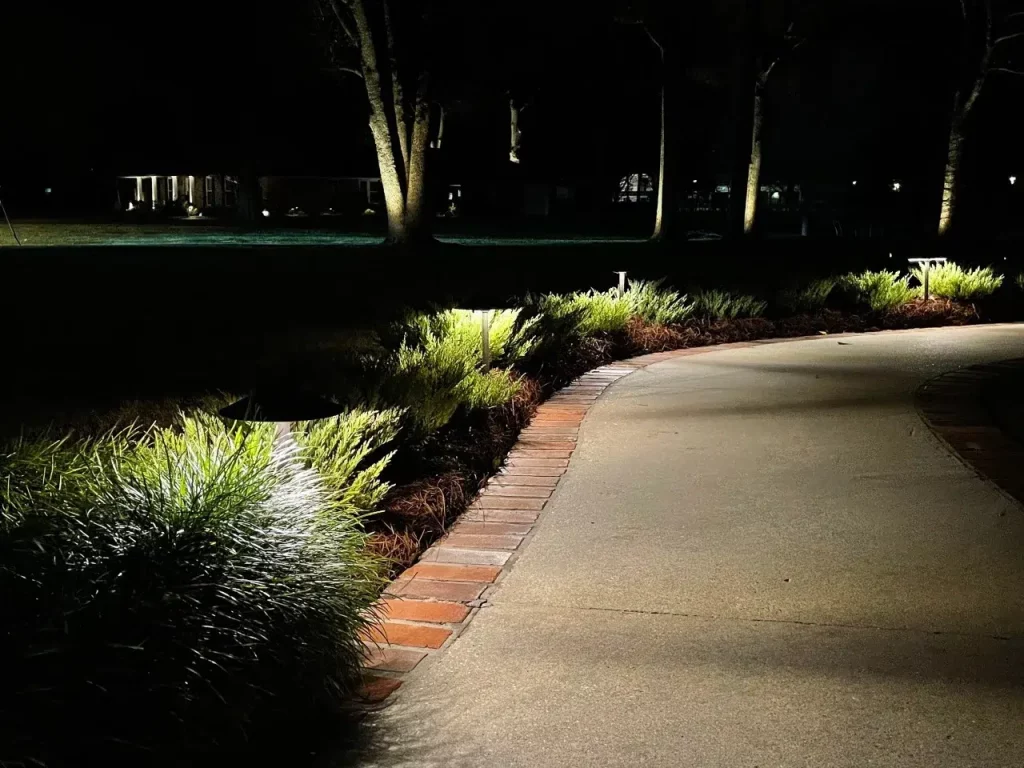
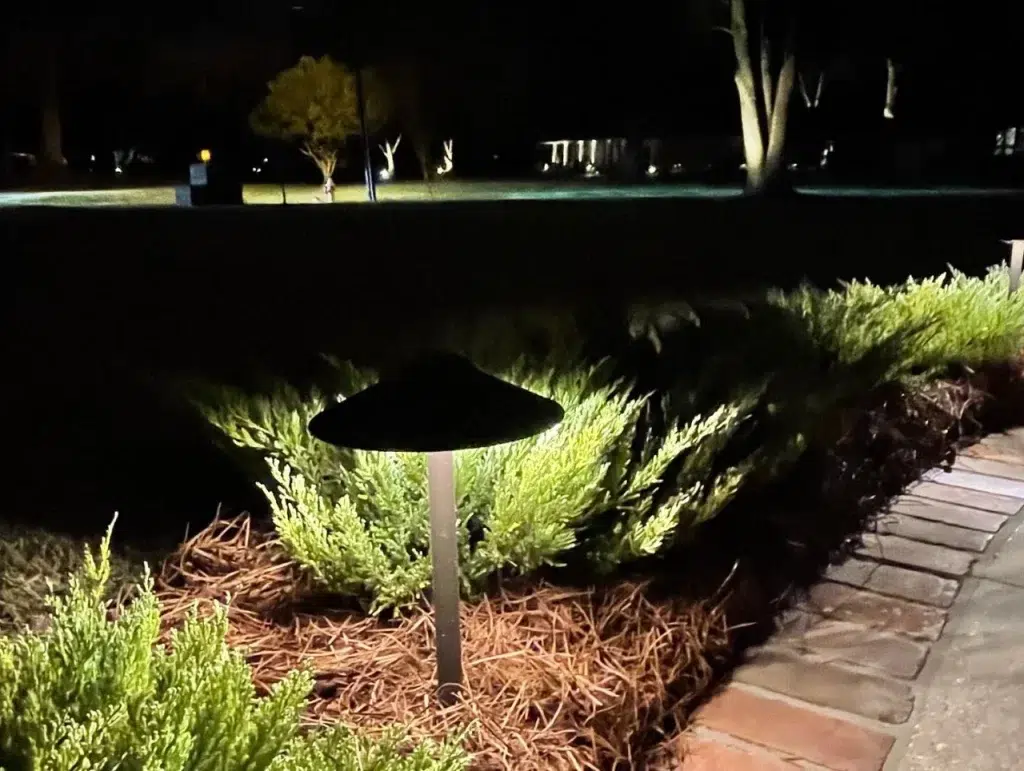
For a warm, humid climate, Liriope (Monkey Grass), Agapanthus, and clumping ornamental grasses are reliable, low-maintenance choices that don’t generate much debris.
Bonus tip: A raised planter bed around the pool deck perimeter adds visual interest while also containing soil and mulch, so debris doesn’t blow across the deck and into the water.
Above Ground Pool Landscaping Ideas
Above-ground pools bring a different set of challenges since the pool sits higher than the surrounding grade, which means water and debris naturally want to run toward the base of the pool wall rather than away from it.
- Build a mowing strip border: A ring of pavers, brick, or poured concrete at least 12 inches wide around the base keeps grass clippings and soil from migrating under the pool wall.
- Use decorative rock instead of mulch: River rock or pea gravel around the base won’t float or wash out during heavy rain, and it holds up better than wood mulch against the pool’s drip line.
- Consider artificial turf: For above-ground pools sitting on a lawn, artificial turf around the perimeter eliminates mowing, clippings, and muddy patches.
- Add a raised deck or walkway: A small wraparound deck lifts foot traffic off bare soil, which cuts down on tracked-in dirt significantly.
- Slope soil away from the pool base: Since these pools sit above grade, even a gentle upward slope toward the pool will funnel runoff underneath it. Regrading the immediate area prevents standing water and erosion at the base.
These same principles apply whether you’re landscaping around a brand-new above-ground pool or retrofitting an older one that’s had ongoing mud and grass problems.
Using Hardscaping to Minimize Dirt and Mud
Hardscaping, meaning the non-living elements of your landscape like patios, walkways, and decorative rock, plays a central role in keeping a pool area clean by giving you solid, easy-to-clean surfaces instead of bare soil.
The pool deck or coping is the most important surface of all. Research from the University of Maryland Extension organic mulches can float and create problems in pool water, which is exactly why inorganic materials are the better choice for poolside zones. Concrete pavers, travertine, and poured concrete all create a wide, stable buffer that gives swimmers a place to walk without stepping in dirt or grass. If you’re weighing options for a full renovation, our hardscaping services walk through material choices in more depth.
Beyond the deck itself, decorative gravel or river rock in the planting beds (instead of traditional wood mulch) further reduces mess, since these materials don’t decompose or float away in heavy rain.
Comparing Poolside Hardscaping Materials
| Material | Debris Control | Heat Retention | Maintenance | Cost |
| Poured Concrete | Excellent | High | Low (can crack) | $$ |
| Concrete Pavers | Excellent | Moderate to High | Low (easy to replace) | $$$ |
| Travertine | Excellent | Low (stays cool) | Medium (needs sealing) | $$$$ |
| Decorative Rock | Good | Moderate | Low | $$ |
Managing Drainage to Prevent Contaminated Runoff
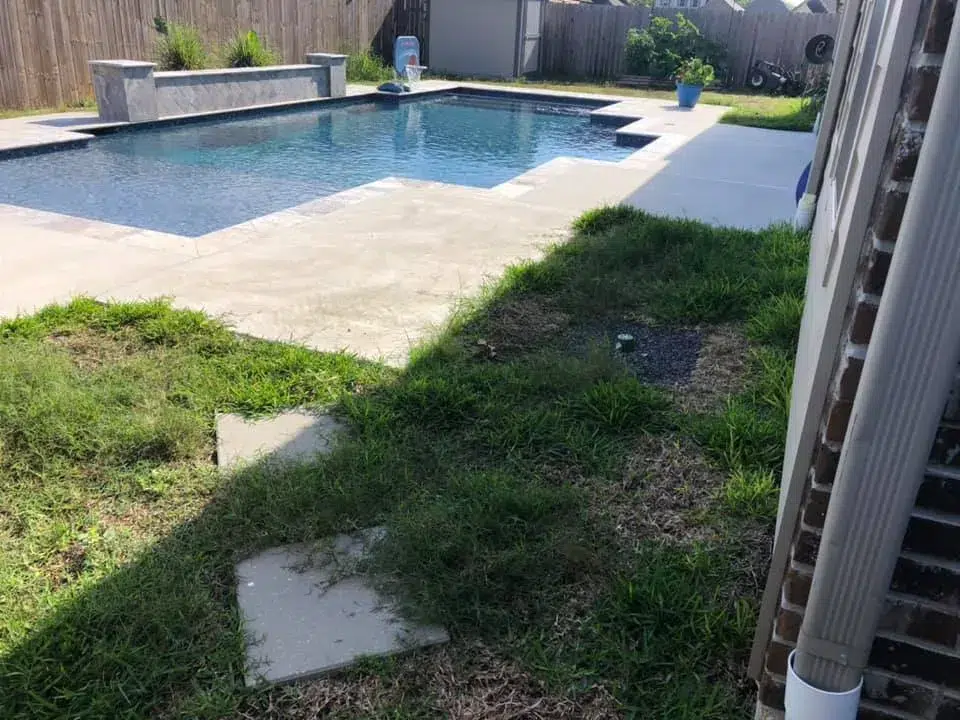
Drainage is easy to overlook, but it’s essential for pool landscaping maintenance. When a yard or patio slopes toward the pool, every rainstorm washes dirt, fertilizer, and other contaminants straight into the water, which can lead to cloudy water, algae blooms, and chemical imbalances.
The fix is grading the landscape so water moves away from the pool. For yards with heavier runoff, a dedicated drainage system helps capture and redirect water before it becomes a problem:
- French drains: A gravel-filled trench with a perforated pipe that collects and channels groundwater away, effective when installed along the edge of a pool deck.
- Channel drains: Grated drains set directly into the hardscape surface to catch surface water and pipe it away.
- Permeable pavers: These let water seep through the joints into a gravel base below, cutting down on surface runoff. The U.S. Environmental Protection Agency considers permeable surfaces as an effective tool for managing stormwater, which keeps that same water out of your pool.
How to Stop Grass and Mud From Reaching Your Pool
- Install a mowing strip. Lay pavers or poured concrete at least 12 inches wide between the lawn and the pool deck to catch grass clippings before they blow or get tracked in.
- Add a wider buffer where needed. For yards with heavier wind or slope, extend the buffer with decorative rock or a raised planter bed beyond the mowing strip.
- Grade the surrounding soil. Make sure the ground slopes away from the pool on all sides so rain doesn’t carry dirt toward the water.
- Choose non-invasive ground cover. Replace bare soil or turf next to the deck with low-mess plants or artificial turf so there’s less loose material to track in.
- Maintain the border seasonally. Trim back any plants encroaching on the buffer zone and top off decorative rock as needed so the barrier stays effective year-round.
Things to Consider Before Making a Decision
- Sun and shade patterns: Watch how sunlight moves across the pool area throughout the day, since this affects which plants thrive and which hardscape materials get uncomfortably hot underfoot.
- Intended use and foot traffic: High-traffic areas need durable, non-slip surfaces, so define walkways and lounging zones to keep foot traffic off garden beds.
- Maintenance commitment: If you prefer a hands-off approach, stick with slow-growing evergreens and durable hardscapes that don’t need frequent sealing or cleaning.
- Long-term growth: A small shrub planted too close to the deck can quickly become an overgrown obstacle. Plan layout around the plant’s mature size, not its size at planting.
Bonus tip: When planting trees near a pool, place them at a distance at least equal to their expected mature height. This helps prevent roots from seeking out water and damaging the pool structure later on.
Final Thoughts on Pool Landscaping Maintenance
Creating a clean poolside environment comes down to a combination of smart plant choices, the right hardscaping, and effective drainage. If you’re also thinking about water use across the rest of the yard, this water-saving landscaping ideas guide is a useful next read. A well-planned landscape acts as a natural buffer that keeps dirt, leaves, and muddy runoff from ever reaching the water, saving you time on cleanup and giving you a more enjoyable outdoor space.
Ready to Update Your Outdoor Space?
A well-designed landscape is the key to easier, lower-maintenance pool care. If you’d like help planning a poolside setup that stays clean and looks great year-round, request a free quote and our team will walk you through the options that fit your yard.
You might also like: What Are the Benefits of Professional Tree Planting Services?
Frequently Asked Questions
What is the best ground cover to use around a pool?
Artificial turf gives a lush, green look without mud, mowing, or clippings. For a non-plant option, pea gravel or larger river rocks work well since they don’t blow around or wash away easily.
What should I put around my pool to prevent mud?
A hardscaped buffer, like concrete pavers, poured concrete, or decorative rock, is the most reliable fix. Combine it with proper grading so water drains away from the pool rather than pooling at its edge.
How can I stop grass from getting into the pool?
A physical border is the most effective method. A mowing strip made of pavers or concrete at least 12 inches wide between the lawn and pool deck catches most clippings, and a wider border of decorative rock or a raised planter bed works even better.
Is it safe to use rubber mulch near a pool?
Yes. Unlike wood mulch, rubber mulch doesn’t float, so it won’t wash into the pool during a rainstorm and clog the filter. It also suppresses weeds and retains soil moisture.
Are ornamental grasses messy?
Most clumping varieties are not messy. They don’t shed leaves like deciduous trees and typically only need cutting back once a year in late winter, adding texture without contributing to pool debris.
What’s the best landscaping approach for an above-ground pool?
A mowing strip border at the base, decorative rock instead of mulch, and grading the soil away from the pool wall are the three changes that make the biggest difference for above-ground setups.
Sources
- University of Maryland Extension – information on how organic mulches can float and cause problems in pool water.
- U.S. Environmental Protection Agency – data on the effectiveness of permeable pavements for managing stormwater runoff.

- How Does Regular Hedge Trimming Improve Your Landscape’s Overall Appearance? - October 12, 2026
- The Complete Guide to Hedge Trimming, Care, Maintenance, and Healthy Growth - October 6, 2026
- How Can Professional Drainage Services in Central, LA Protect Your Property From Water Damage? - September 11, 2026