St. George, LA, sits on heavy clay soil often saturated by frequent Gulf moisture and intense rainfall. When water has nowhere to go, lawns suffer predictable, preventable damage. The five major lawn problems in this region, due to faulty drainage, are fungal diseases such as brown patch, root suffocation, increased mosquito and insect breeding, nutrient loss, and severe turf thinning caused by compaction. Understanding these five issues helps property owners protect their yard investments.
Poor drainage creates an environment hostile to healthy turf. This persistent issue must be addressed mechanically, not just chemically, especially given the local soil’s density. Addressing the unique hydrostatic pressure and drainage challenges specific to East Baton Rouge Parish requires specialized expertise.
Fungal Diseases Thrive in Soggy Conditions
Fungi need moisture and heat to grow quickly, and constant surface water provides the perfect environment for destructive lawn diseases during the warm months. This is arguably the fastest killer of turfgrass in wet Louisiana summers. Brown patch (caused by Rhizoctonia solani) is especially aggressive on St. Augustinegrass and Zoysiagrass when soils stay wet. The pathogen finds ideal conditions to attack the grass crowns and leaf blades whenever the ground remains saturated for 48 hours or more.
The resulting brown or yellow circular patches quickly spread, often killing the entire section of turf. Research conducted by the LSU AgCenter emphasizes that moisture management is the single most significant factor in controlling these destructive summer diseases in Southern lawns. Without proper drainage, any fungicide application offers only temporary relief, as the underlying wet environment allows the disease to return quickly.
Bonus Tip: If water stands in the yard after a rain, check the lawn 12 hours later. If puddles remain, immediate action is necessary to prevent severe disease development, especially if temperatures are above 70°F.
Root Suffocation and Oxygen Deprivation
Grass roots, like all living organisms, need oxygen to breathe and absorb water and nutrients effectively. When soil pores are continuously filled with water instead of air, the roots essentially drown. This process is called root suffocation. The lack of air creates anaerobic (oxygen-free) conditions below the surface.
Anaerobic bacteria then begin to break down organic matter, producing toxic compounds such as ethanol and sulfides that further harm the remaining roots. This results in the grass turning yellow, exhibiting stunted growth, and eventually dying, often appearing similar to drought stress, even though the soil is soaked. Since heavy St. George clay holds water so well, this process starts much faster than in sandier soils.
This comparison shows how severely waterlogging affects the necessary conditions for turf survival:
| Drainage Condition | Root Health Outcome | Soil Environment | Impact on Turf Color |
|---|---|---|---|
| Good Drainage | Deep, extensive root systems | Aerobic (Oxygen present) | Rich Green, Vigorous |
| Poor Drainage | Shallow, weak, or rotten roots | Anaerobic (Oxygen absent) | Yellowing, Dying Patches |
| Poor Drainage (Heavy Clay) | Limited depth due to density | Often anaerobic when saturated | Stressed, Chlorotic Appearance |
Mosquito and Pest Proliferation
Excessive water pooling does more than harm the grass; it turns the yard into a breeding ground for harmful insects. St. George sits near swamps and wetlands, meaning insect pressure is already high. Even small, shallow pools of standing water left for a few days are enough for mosquitoes to complete their life cycle, posing a health risk to people and pets.
Beyond mosquitoes, wet, decaying organic material attracts nuisance insects like fungus gnats, termites, and certain types of beetles that prefer damp environments. For property owners, poor drainage directly increases the time and effort required to manage pest populations in and around the home. Moreover, the increased need for pesticides and fertilizers on stressed lawns worsens local water quality. According to a United States Environmental Protection Agency report, managing stormwater runoff is essential for reducing nonpoint source pollution, including preventing chemical runoff from saturated lawns into local waterways.
Nutrient Leaching and Soil Chemistry Shifts
Healthy turf relies on a stable soil pH and adequate mineral balance. When large volumes of water constantly flow through the soil, they often flush out essential, water-soluble nutrients, a process known as leaching. Nitrogen, sulfur, and boron are particularly susceptible to being washed away. This sudden nutrient deficit starves the grass, making it more vulnerable to stress and disease.
Additionally, long-term saturation can drastically alter the soil’s chemistry. High water content alters the chemical environment, sometimes raising soil pH near the surface, hindering the grass’s ability to absorb micronutrients. This deficiency often becomes visible as yellowing between leaf veins (chlorosis). Because heavy clay soils already have complex chemistry, adding constant saturation compounds exacerbates fertilization problems.
Bonus Tip: If you suspect nutrient leaching, postpone applying fertilizers until drainage issues are addressed. Otherwise, those expensive nutrients will simply be washed away.
Compaction and Turf Thinning
When clay soil is wet, it loses structural integrity and becomes easily molded. Walking, mowing, or driving across saturated ground exerts significant pressure on soil particles, pushing them tightly together and causing soil compaction. This process severely limits water infiltration, trapping even more water on the surface and creating a damaging cycle. Compacted soil has minimal air space, which prevents roots from penetrating deeply and exacerbates the root suffocation problem by physically restricting access to oxygen and nutrients.
Data from the Texas A&M AgriLife Extension shows that highly compacted turf can reduce water infiltration rates by up to 90%, illustrating how quickly this issue seals the soil surface and worsens the problem. Thinning turf, uneven patches, and bare areas are the visual result of roots failing to thrive in the tight, airless soil.
Bonus Tip: Avoid mowing or walking on the lawn when the ground squishes underfoot. This simple action prevents the worst surface compaction.
These five interrelated issues, from fungal attack and root death to pest invasion and physical compaction, show that ignoring poor drainage guarantees turf failure. Solving these problems requires moving beyond quick fixes and performing a proper, mechanical assessment.
Evaluating Drainage Improvement Options
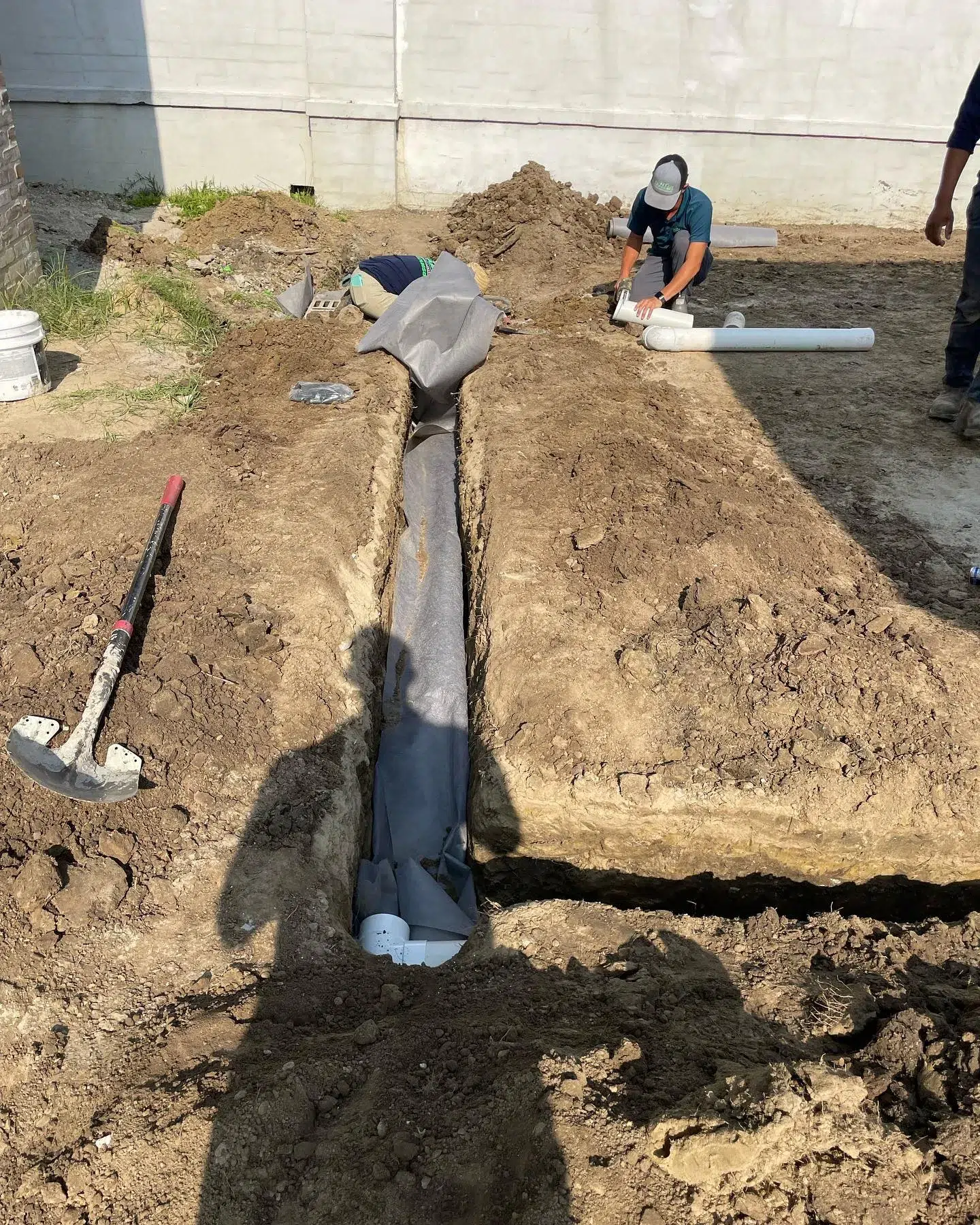
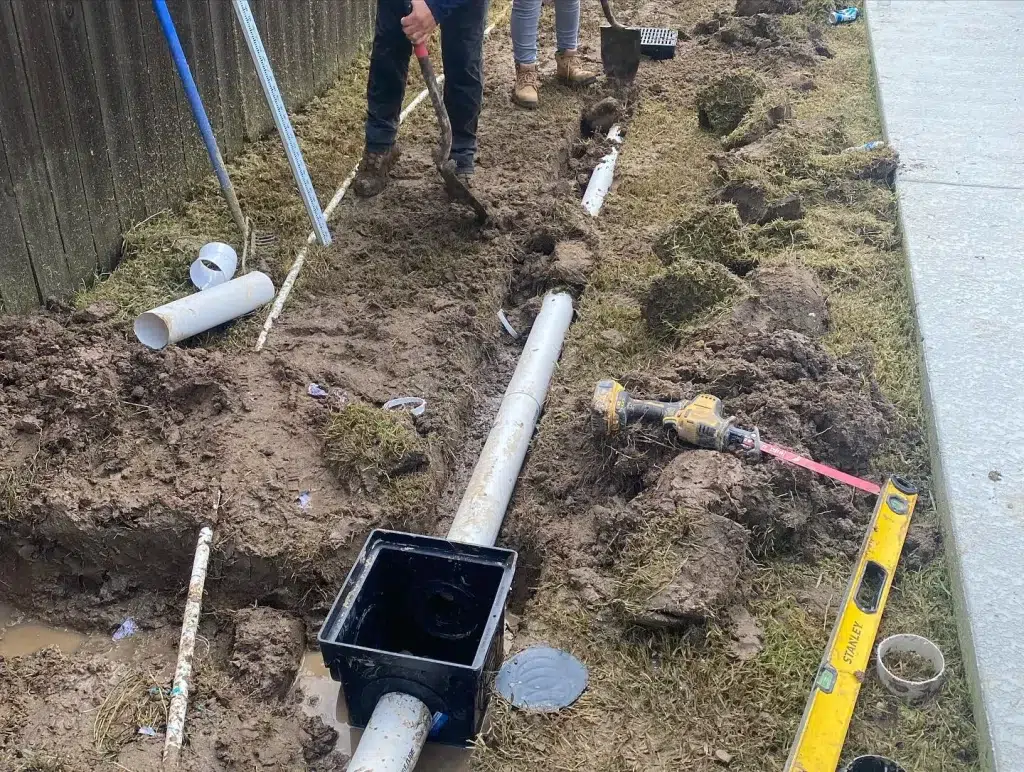
Before selecting a drainage solution, consider the source and volume of the water. Is the water pooling because impervious areas like patios are trapping surface runoff, or is it due to subsurface water being retained by the clay’s low permeability? Evaluate the slope of the property and determine if water is coming from a neighbor’s yard or simply from rainfall. French drains work best for subsurface water movement, but surface swales or catch basins connected to piping might be necessary for large volumes of sheet flow. Property owners must correctly identify the primary cause of saturation before committing to a fix.
Your Drainage Questions Answered
How does Louisiana clay soil affect drainage solutions?
Because clay particles are tiny, St. George soil has very low permeability, meaning water moves through it slowly. Drainage solutions here must focus on quickly moving water over or around the clay layer, using catch basins and French drains with high-quality drainage aggregate, rather than relying on the soil to absorb the water.
Can simply aerating the lawn fix severe drainage problems?
Aeration helps address surface compaction and temporarily increases air space, which improves infiltration. However, aeration is a maintenance measure. It cannot fix structural grading problems, hydrostatic pressure issues, or major low spots. These severe, persistent drainage problems require engineering solutions such as professional grading or subsurface drainage installation.
What is the average lifespan of a correctly installed French drain?
A French drain installed professionally using high-quality materials, proper geotextile fabric to prevent clogging, and appropriate PVC pipe often lasts 20 to 40 years. Its lifespan largely depends on the quality of the initial installation and on how well it is protected from soil infiltration.
When should drainage concerns be addressed, spring or fall?
While drainage work can be done at any time, the best time to assess drainage issues is immediately after a significant rain event, when the problems are visible. Installation is often ideal during the drier months of late summer or early fall when the ground is easier to work with.
What Readers Need to Know Next
Addressing poor drainage quickly protects the lawn from long-term harm and costly replacement. Evaluate your yard’s persistent water issues, focusing on where water collects and how quickly it dissipates after a heavy rain. Taking an objective look at grading, soil type, and existing runoff patterns provides a clear starting point for corrective action that ensures a healthy yard.
Contact ALL SEASON LANDSCAPING
When persistent water issues threaten the health and appearance of the lawn, timely expert assessment makes a difference. For residents dealing with heavy clay, high humidity, and intense rainfall patterns, specialized drainage plans are often needed. To discuss solutions, including grading corrections, French drain installation, and aeration specific to St. George properties, contact ALL SEASON LANDSCAPING. Email detailed inquiries to [email protected] or call 225-276-8658 to schedule a site evaluation.
Sources
- LSU AgCenter – Provides research and extension services focused on agriculture and horticulture specific to Louisiana’s climate and soil types.
- United States Environmental Protection Agency – Source for information on nonpoint source pollution and best practices for managing stormwater runoff to protect local water quality.
- Texas A&M AgriLife Extension – Offers extensive research and practical guidance on turf management, soil science, and drainage issues common in the hot, humid Gulf Coast region.

- How Can Professional Drainage Services in Central, LA Protect Your Property From Water Damage? - September 11, 2026
- Which Areas of Your Property Benefit Most From Outdoor Lighting for Safety and Curb Appeal? - September 11, 2026
- How Does Professional Outdoor Lighting Transform Your Landscape at Night in Baton Rouge, LA? - September 9, 2026