TL;DR
- Modern landscaping uses geometric layouts, minimal plant varieties, hardscape-dominant surfaces, and materials like concrete, steel, and composite decking.
- Classic landscape design relies on symmetry, lush plantings, curved garden beds, and materials like natural stone, brick, and wood.
- Modern designs typically require less ongoing maintenance due to fewer plant varieties and more hardscaping.
- Classic designs often deliver higher long-term maintenance costs because of pruning, lawn care, and seasonal plant replacements.
- Modern landscaping generally carries a higher upfront cost, driven by custom fabrication, specialty materials, and professional installation.
- Classic designs tend to offer broader contractor availability and more predictable material pricing.
- The style of your home, not personal preference alone, should be the primary driver of this decision.
- Hybrid designs that blend elements from both styles are increasingly popular for homeowners who want the best of both approaches.
What Defines Modern Landscaping
Modern landscaping is built around simplicity, intentionality, and function. According to Dynascape’s analysis of modern vs. traditional design, modern landscape design prioritizes outdoor living spaces, clean geometry, and a restrained plant palette. Instead of filling every corner with greenery, modern design uses deliberate open space as a design element.
Key characteristics include:
- Geometric shapes and straight lines in pathways, planters, and bed edges
- Minimal plant varieties repeated throughout the space for visual cohesion
- Hardscape-dominant layouts with concrete, poured-in-place pavers, gravel, and corten steel
- Integrated outdoor living features such as built-in seating, fire pits, and outdoor kitchens
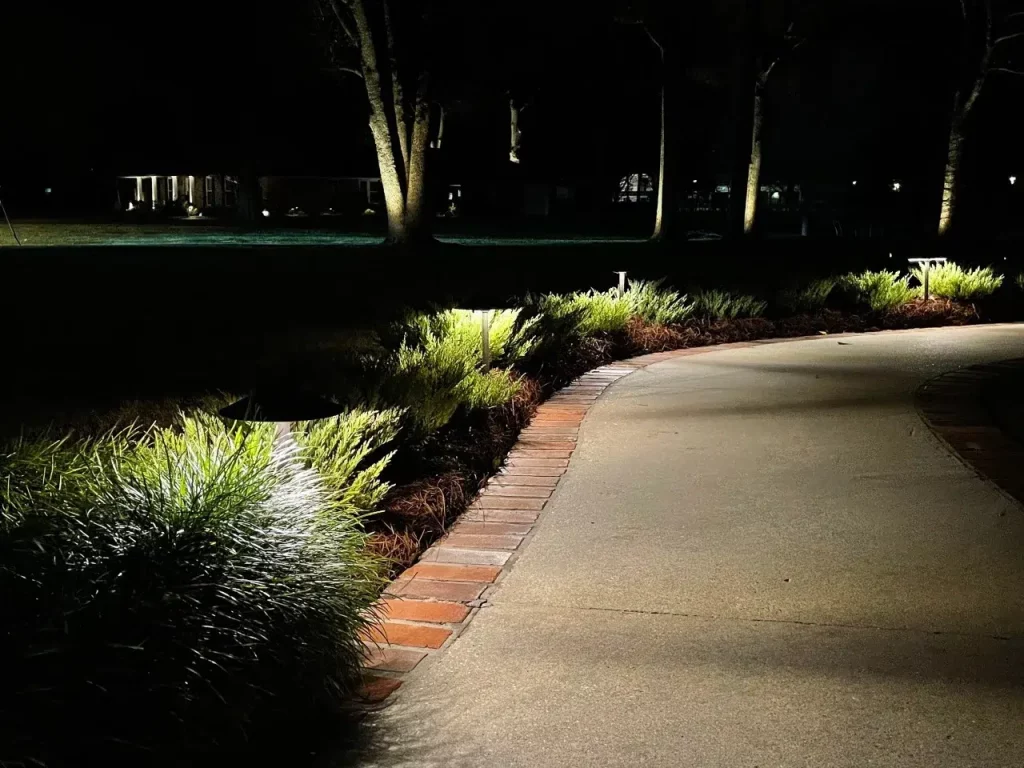
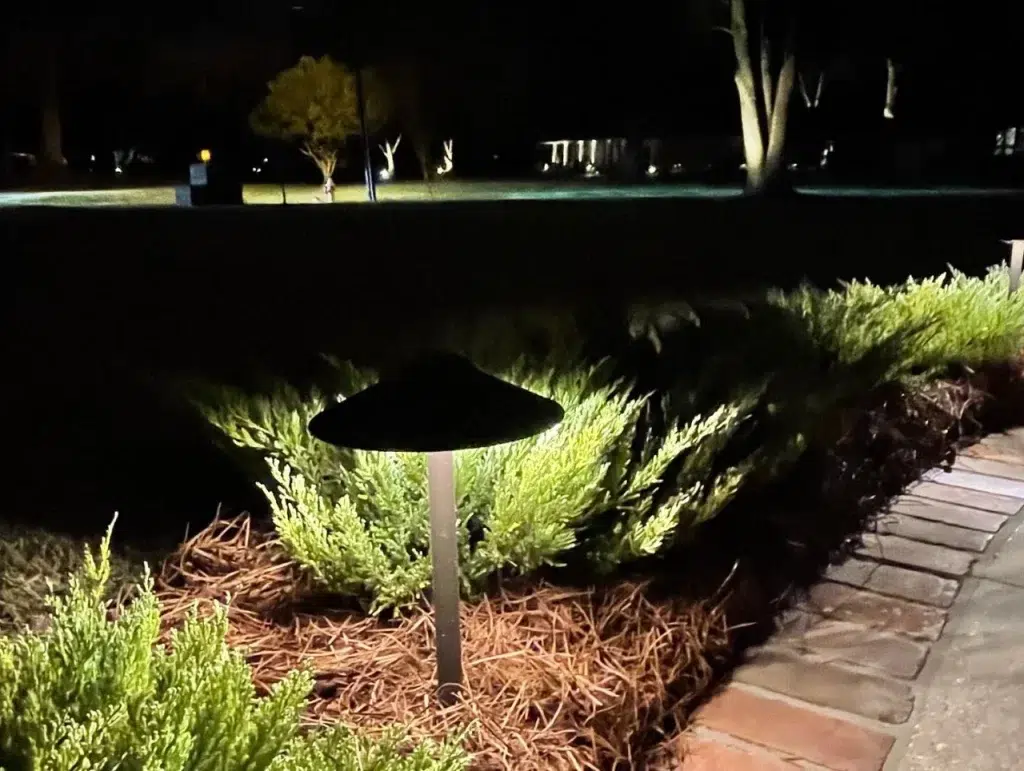
- Architectural lighting is used as a design feature rather than a purely functional add-on
- Neutral color palettes with occasional bold accents in planters or furniture
Houzz’s guide to modernist landscape elements notes that modernist garden design focuses on the spaces around and connecting to the home, using trees, shrubs, and structures to define zones rather than decorating every surface. This approach creates a strong visual connection between indoor and outdoor areas, which is especially effective for homes with large windows, open floor plans, or flat rooflines.
What Defines Classic Landscape Design
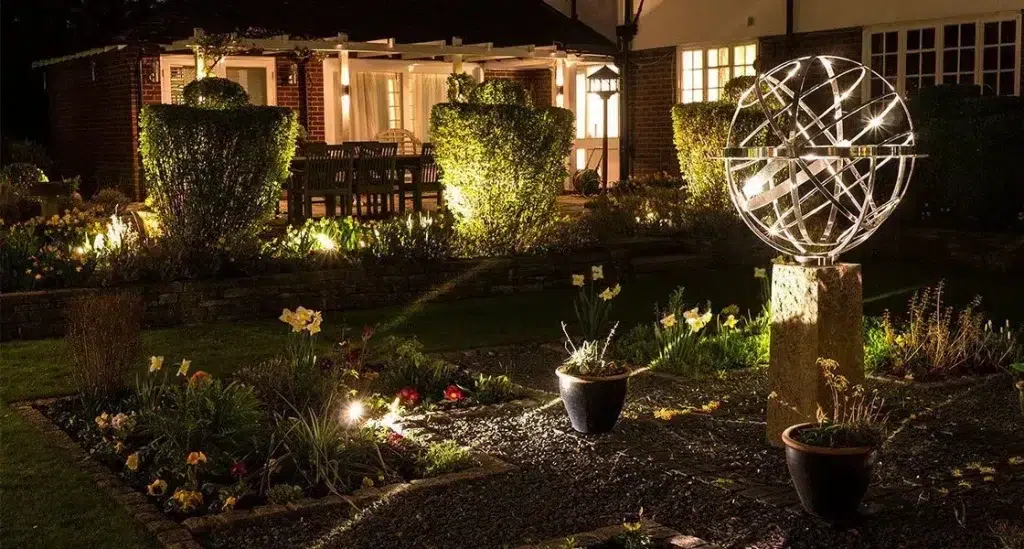
Classic landscape design draws from centuries of European garden traditions, particularly English, French, and Italian formal styles. Traditional landscape designs, as explained by Landcon’s comparison of traditional and modern design, feature formal layouts, symmetrical patterns, and classic elements like manicured hedges and stone pathways.
Key characteristics include:
- Symmetrical layouts with balanced planting on either side of a central axis
- Curved garden beds and flowing pathways made from natural stone, brick, or gravel
- Dense, layered plantings with a mix of trees, shrubs, perennials, and ground covers
- Traditional materials such as brick, flagstone, natural boulders, and cedar or redwood
- Focal points like fountains, statuary, arbors, and ornamental garden structures
- Rich, varied colors from seasonal flowering plants and multi-textured foliage
Classic design works particularly well with colonial, Victorian, craftsman, Tudor, and Mediterranean-style homes. The organic curves and lush plantings soften the architectural lines of these styles and create a sense of established, mature beauty.
Head-to-Head Comparison
| Factor | Modern Landscaping | Classic Landscape Design |
|---|---|---|
| Visual Style | Clean, geometric, minimalist | Lush, symmetrical, layered |
| Best Home Styles | Contemporary, mid-century modern, minimalist | Colonial, Victorian, Craftsman, Tudor |
| Plant Density | Low to moderate | High |
| Hardscape Ratio | High (60-80%) | Moderate (30-50%) |
| Primary Materials | Concrete, steel, composite, gravel | Brick, natural stone, wood, wrought iron |
| Maintenance Level | Low to moderate | Moderate to high |
| Upfront Cost | Higher ($15,000-$50,000+) | Moderate ($10,000-$35,000+) |
| Long-Term Cost | Lower | Higher |
| Outdoor Living | Built-in, integrated | Add-on, secondary |
| Contractor Demand | Specialty skills needed | Widely available |
| Timeless Appeal | Trend-sensitive | Consistently in demand |
Cost Breakdown and Investment Considerations
Willowridge Garden Center’s breakdown of modern landscaping cost trends highlights that modern landscaping pricing is driven by custom fabrication, specialty materials, and skilled labor. Poured concrete with custom finishes, corten steel edging, and LED-integrated hardscaping all carry premium price tags compared to standard brick or natural stone installations.
Modern landscaping cost drivers:
- Custom concrete or porcelain paver installations ($15-$40 per square foot)
- Corten steel planters and edging ($800-$3,000 each)
- Professional low-voltage LED lighting systems ($2,000-$8,000)
- Outdoor kitchen and built-in seating construction ($5,000-$25,000+)
- Specialty plant sourcing (dwarf varieties, architectural specimens)
Classic landscaping cost drivers:
- Natural flagstone or bluestone pathways ($12-$30 per square foot)
- Brick or stone retaining walls ($40-$100 per linear foot)
- Mature tree and shrub installation ($200-$2,000 per plant)
- Irrigation system for dense plantings ($1,500-$4,000)
- Annual maintenance, including pruning, fertilization, and seasonal color ($1,500-$5,000/year)
As Mike’s Evergreen explains in the style comparison, modern landscapes often require less maintenance because of fewer plant varieties, reduced lawn areas, and more hardscaping. This lower maintenance requirement can offset the higher initial investment over a 10 to 15-year period.
Real-World Scenarios
| Scenario | Property Type | Recommended Option | Estimated Cost |
|---|---|---|---|
| Newly built contemporary home with flat rooflines and floor-to-ceiling windows | Suburban new construction, 0.25-acre lot | Modern landscaping | $25,000-$45,000 |
| 1920s craftsman bungalow in an established neighborhood | Historic district, 0.15-acre lot | Classic landscape design | $12,000-$22,000 |
| Renovated mid-century ranch with open floor plan | Post-war suburb, 0.3-acre lot | Modern with hybrid elements | $20,000-$35,000 |
| Large colonial home on a wooded lot seeking curb appeal upgrade | Estate property, 1-acre lot | Classic landscape design | $30,000-$60,000 |
| Urban courtyard behind a townhome or condo | Small urban lot, under 0.1 acres | Modern landscaping | $10,000-$20,000 |
Factors That Influence the Decision
Several practical variables determine which style will perform best for a specific property and homeowner:
- Home architecture: This is the single most important factor. A modern landscape on a Victorian home looks disjointed, just as a classic English garden on a sleek contemporary home feels mismatched. Let the house guide the direction. Seville Landscape’s guidance on matching design style to home architecture reinforces that the property itself should dictate the landscaping direction, not personal preference alone.
- Property size: Modern design works well on small lots where every square foot matters and clean lines create a sense of spaciousness. Classic design benefits from larger properties where layered plantings have room to develop.
- Maintenance willingness: If the homeowner wants a “set it and forget it” yard, modern design with a hardscape-heavy approach and minimal plantings is the better choice. Classic design requires regular pruning, edging, and seasonal attention.
- Budget timeline: Modern landscaping demands more upfront capital. Classic design can be phased in more gradually, adding plantings and features over several seasons.
- Climate and region: Drought-prone areas favor modern design’s use of hardscaping and drought-tolerant specimen plants. Regions with reliable rainfall and four distinct seasons support the lush, layered look of classic design.
- How the space will be used: Families with children may find classic design’s lawn areas more functional. Homeowners who entertain frequently may prefer modern design’s integrated outdoor living features.
Who Each Style Is Best For
Modern Landscaping Is Ideal For
- Owners of contemporary, modern, or mid-century homes
- Homeowners who want low-maintenance outdoor spaces
- Properties where indoor-outdoor flow is a priority
- Urban or small-lot settings where clean lines create visual expansion
- Buyers who value current design trends and are willing to invest accordingly
Modern Landscaping Is NOT Ideal For
- Historic or traditionally styled homes
- Homeowners who enjoy gardening as a hobby
- Properties in neighborhoods with strict architectural guidelines favoring traditional aesthetics
- Budgets under $15,000 for a full yard transformation
Classic Landscape Design Is Ideal For
- Owners of older, colonial, Victorian, craftsman, or Tudor homes
- Homeowners who enjoy gardening and hands-on yard care
- Large properties where layered plantings have room to mature
- Neighborhoods with established, traditional character
- Buyers who want a timeless look that holds property value across decades
Classic Landscape Design Is NOT Ideal For
- Newly built contemporary or modern homes
- Homeowners who travel frequently and cannot maintain dense plantings
- Small urban lots where heavy planting feels cramped
- Drought-prone regions where water-intensive gardens are impractical
Ready to Choose the Right Landscape Design for Your Home
At ALL SEASONS LANDSCAPING, our team has helped homeowners across the region decide between modern and classic landscape design, and we have completed projects across the full spectrum. Whether you are drawn to the clean simplicity of modern hardscaping or the timeless charm of a classic garden, our experienced professionals will evaluate your property, discuss your goals, and recommend the approach that fits your home and lifestyle. We handle every detail from design through installation, so you never have to wonder whether the result will match your vision.
Call us at 225-276-8658 or email [email protected] to get started on a landscape that truly fits your home.
Frequently Asked Questions
Can I combine modern and classic landscape elements?
Yes, hybrid designs are increasingly common. A practical approach is to use modern hardscaping like clean concrete pathways with classic plantings like hydrangeas and boxwoods, or to add modern outdoor lighting to a traditionally styled garden.
Which style adds more value to my home?
Both styles can increase property value when executed well. Classic design tends to have a broader appeal among traditional buyers, while modern design attracts younger buyers and those seeking move-in-ready outdoor living spaces. Matching the style to your home’s architecture matters more than the style itself.
How long does a full landscape installation take?
Most full-yard projects take 2 to 6 weeks, depending on scope. Modern landscaping involving custom concrete and built-in features may take 4 to 8 weeks, while classic designs with extensive planting can often be completed in 3 to 5 weeks.
Does modern landscaping work in cold climates?
Modern landscaping works in cold climates when designed appropriately. Perennial grasses, conifers, and structural hardscaping maintain visual interest through winter. The key is selecting cold-hardy specimen plants and using materials that withstand freeze-thaw cycles.
Is one style more environmentally friendly than the other?
Modern landscaping generally uses less water and fewer chemical inputs due to smaller lawn areas and drought-tolerant plant selections. Classic designs can be adapted for sustainability by incorporating native plants, rain gardens, and efficient irrigation, but inherently require more resources to maintain a lush appearance.
Sources
- Modern vs. Traditional Landscape Design: Find Your Style – Mike’s Evergreen – Comparison of modern and traditional landscape design styles covering maintenance requirements, costs, and aesthetic differences.
- Traditional vs. Modern Landscape Design: Choosing a Direction – Dynascape – In-depth exploration of design philosophy, functionality, and material differences between traditional and modern landscaping approaches.
- Breaking Down Modern Landscaping Cost Trends – Willow Ridge Garden Center – Analysis of modern landscaping pricing drivers including materials, labor, and specialty installation costs.
- Modern vs. Traditional Landscaping Styles: Which Is Right for Your Property – Seville Landscape – Guidance on matching landscape design style to home architecture and property characteristics.
- Elements of Modernist Landscapes, Classic and New – Houzz – Architectural overview of modernist garden principles including spatial design, material use, and plant selection strategies.
- Traditional vs. Modern Landscape Design – Landcon – Explanation of how traditional landscape designs incorporate formal layouts, symmetrical patterns, and classic elements.

- How Does Regular Hedge Trimming Improve Your Landscape’s Overall Appearance? - October 12, 2026
- The Complete Guide to Hedge Trimming, Care, Maintenance, and Healthy Growth - October 6, 2026
- How Can Professional Drainage Services in Central, LA Protect Your Property From Water Damage? - September 11, 2026