For property owners and facility managers in Geismar, LA, upgrading to a smart irrigation system is generally more cost-effective and efficient in the long run compared to traditional systems. Traditional setups operate on rigid, pre-set timers regardless of actual weather conditions, frequently leading to water waste, landscape flooding, and inflated utility bills. In contrast, smart irrigation utilizes real-time local weather data, evapotranspiration rates, and soil moisture sensors to adjust watering schedules dynamically.
While a traditional system carries a lower upfront installation and component cost, a smart system typically pays for itself within two to three years through reduced water consumption and healthier, more resilient landscapes. Because of the unpredictable Gulf Coast weather, smart irrigation stands as the superior strategic choice for commercial properties and residential estates aiming to maximize long-term efficiency and minimize landscape maintenance overhead.
TL;DR
- Smart irrigation systems can reduce outdoor water use by 20% to 50% by automatically adjusting based on local rainfall and evapotranspiration (ET) data.
- Traditional controllers generally cost between $50 and $150 upfront, whereas smart controllers range from $150 to $400+, excluding professional installation and sensor integration.
- Smart systems offer remote management via smartphone applications, allowing property managers to shut off watering during sudden Geismar downpours instantly.
- Traditional systems require manual seasonal adjustments; failure to do so often results in severe overwatering during Louisiana’s humid, wet summers, promoting root rot and fungal diseases.
- Smart controllers are highly effective for properties with diverse hydrozones (turf, shrubs, flower beds), as they automatically adapt to different soil types and sun exposures.
- Upgrading to an EPA WaterSense-labeled smart controller often qualifies property owners for local utility rebates, effectively lowering the barrier to entry.
The Impact of Geismar’s Climate on Irrigation Strategy
Geismar, Louisiana, located in Ascension Parish, experiences a humid subtropical climate. Property owners face a unique set of challenges: blistering summer heat paired with sudden, torrential Gulf Coast thunderstorms. This unpredictable weather makes rigid irrigation schedules highly inefficient.
According to the LSU AgCenter, proper water management is critical in Louisiana to prevent turfgrass diseases caused by excessive moisture. When a traditional system runs during a rainstorm, it not only wastes municipal water but also drowns root systems, particularly in the clay-heavy soils common to the region. Understanding how each system reacts to these environmental variables is the first step in making a sound infrastructure investment.
Traditional Irrigation Systems: The Baseline Approach
Traditional irrigation systems have been the industry standard for decades. They operate via a standalone mechanical or basic digital controller, functioning strictly on a clock-based schedule.
How They Work
You program the controller to water specific zones for a set number of minutes on specific days of the week. Unless manually turned off or connected to a basic, often unreliable rain switch, the system will execute this schedule regardless of environmental conditions.
Strategic Positioning
Traditional systems are positioned as budget-friendly, entry-level solutions. They are best suited for smaller properties where manual oversight is easy, or for temporary landscapes that do not require long-term infrastructure investments. However, as water conservation becomes a larger priority, the Alliance for Water Efficiency notes that clock-timer systems are becoming obsolete for large-scale or commercial applications due to their inherent inefficiencies.
Smart Irrigation Systems: The Data-Driven Solution
Smart irrigation completely removes the guesswork and manual labor from landscape watering. By leveraging Wi-Fi connectivity and advanced sensor technology, these systems treat irrigation as a dynamic, living process.
How They Work
Smart controllers fall into two main categories:
- Weather-Based (ET) Controllers: These use local weather data, temperature, humidity, and solar radiation to calculate evapotranspiration—the rate at which water evaporates from the soil and transpires from plants.
- Soil Moisture Sensor Controllers: These rely on physical probes buried in the root zones of your lawn to measure exact volumetric water content, triggering irrigation only when the soil is dry.
According to the EPA WaterSense program, replacing a standard clock-based controller with a WaterSense-labeled smart controller can save an average home up to 15,000 gallons of water annually.
Visual Suggestion: Line Graph Suggestion: A 5-year projection graph showing “Cumulative Cost of Ownership.” The X-axis represents Years (0-5), and the Y-axis represents Cost ($). The “Traditional System” line starts lower but rises steeply due to water costs, while the “Smart System” line starts higher but flattens out, showing a crossover point at roughly year 2.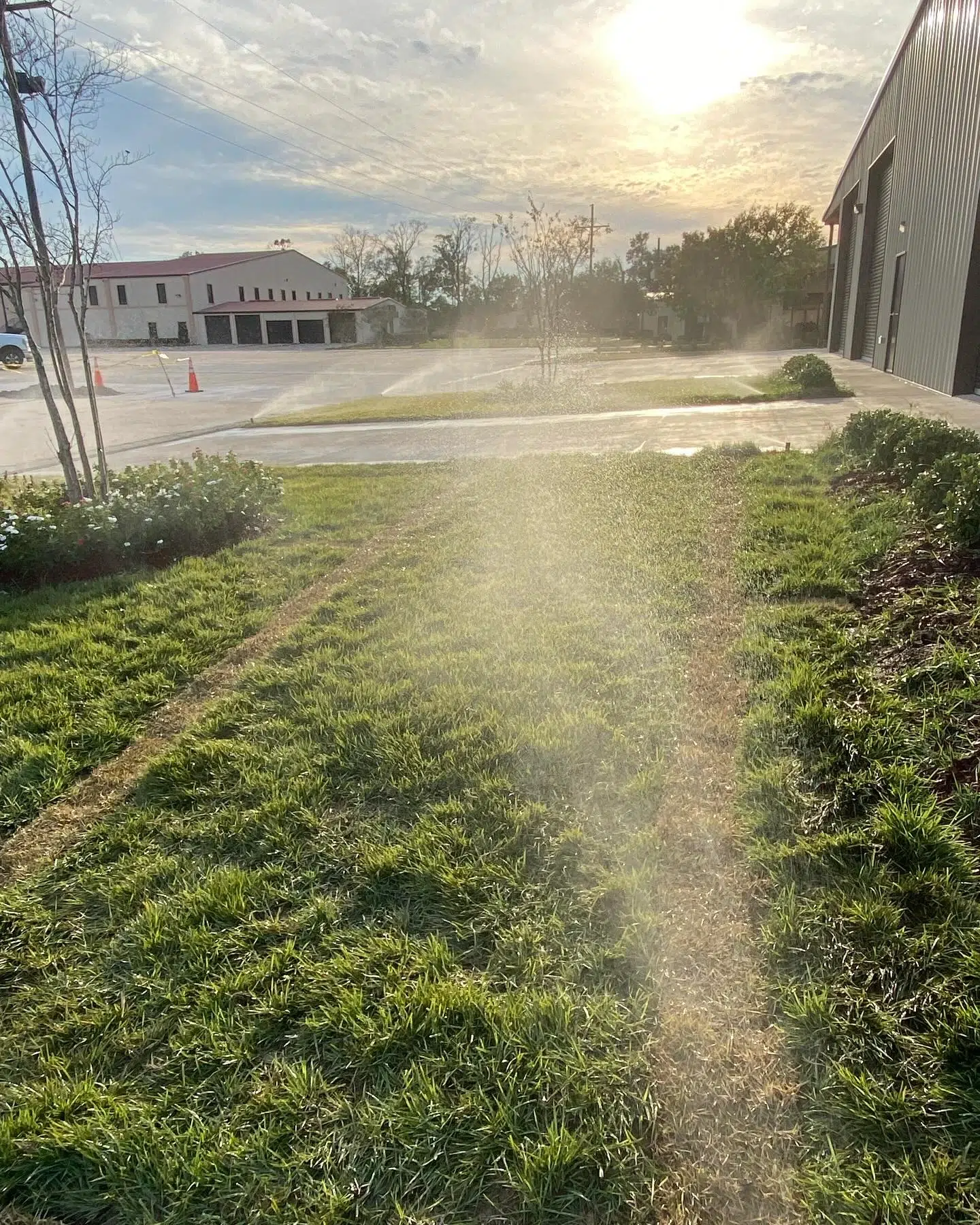
Head-to-Head Comparison: Smart vs. Traditional
To help business owners and contractors make an informed decision, the table below breaks down the core differences between the two technologies.
| Factor | Smart Irrigation System | Traditional Irrigation System |
|---|---|---|
| Upfront Equipment Cost | $150 – $400+ (plus sensors) | $50 – $150 |
| Water Efficiency | High (Adapts to weather/soil) | Low (Runs on fixed timer) |
| Management Style | Automated, remote mobile access | Manual requires on-site adjustment |
| Maintenance Needs | Low (Self-adjusting schedules) | High (Requires seasonal manual tweaking) |
| Landscape Health | Optimal (Prevents over/under watering) | Variable (Prone to root rot in heavy rain) |
| Long-Term ROI | High (Pays for itself in 1-3 years) | Low (Consistent water waste over time) |
Real-World Scenarios in Geismar, LA
Different properties require different strategies. Here is how these systems apply to real-world scenarios in the Geismar area.
| Scenario | Property Type | Recommended Option | Estimated Cost (Controller Upgrade & Setup) |
|---|---|---|---|
| Corporate Office Park | Large Commercial (Multiple zones, high visibility) | Smart System (Weather-based) | $500 – $1,200 |
| Starter Home / Rental Property | Small Residential (Basic turf, low budget) | Traditional System | $150 – $300 |
| High-End Estate | Large Residential (Diverse garden beds, smart home tech) | Smart System (Soil moisture + ET) | $600 – $1,500 |
| HOA Common Areas | Community Green Spaces | Smart System (To reduce HOA utility fees) | $800 – $2,000 |
Visual Suggestion: Bar Chart Suggestion: “Average Monthly Water Usage (Gallons) During Summer in Geismar.” Compare “Traditional (Timer)” vs “Smart (Weather-adjusted)” across June, July, and August, visually highlighting the water saved during historically rainy weeks.
Factors That Influence the Decision
When deciding whether to upgrade to a smart irrigation system or stick with a traditional setup, several variables will dictate the ultimate success of the project:
- Size of the Landscape: The larger the property, the faster the ROI on a smart system due to the sheer volume of water saved.
- Soil Type: Geismar properties with heavy clay soils require precise “cycle and soak” watering to prevent runoff. Smart controllers handle this automatically; traditional controllers struggle with it.
- Local Climate Volatility: The Irrigation Association highly recommends smart systems in coastal and high-humidity environments where afternoon thunderstorms frequently interrupt dry spells.
- Budget Tolerance: If upfront capital is strictly limited, a traditional system may be the only immediate option, though it will cost more in operating expenses over time.
- Property Management Structure: For property managers overseeing multiple commercial sites, the ability to control all irrigation systems remotely from a single dashboard makes smart systems indispensable.
Who This Is For / Who This Is NOT For
Smart Irrigation Systems are IDEAL for:
- Commercial property managers are looking to reduce overhead utility costs.
- Homeowners with large, complex landscapes featuring varied plant types.
- Environmentally conscious businesses are aiming for green certifications or sustainability goals.
- Frequent travelers or off-site owners who need remote access to their property’s systems.
Smart Irrigation Systems are NOT a good fit for:
- Extremely small urban lots where hand-watering is preferred and easy.
- Temporary construction sites or landscapes that will be demolished within a year.
- Property owners with zero access to Wi-Fi networks (unless using purely standalone cellular or sensor-based models).
Upgrade Your Irrigation Strategy Today
All Seasons Landscaping & Lawn Care is your local expert in designing, installing, and managing high-efficiency irrigation systems tailored to Ascension Parish. Partner with us to future-proof your property and keep your landscape thriving.
Contact Us:
Company: All Seasons Landscaping & Lawn Care
Phone: 225-276-8658
Email: [email protected]
FAQs
Can a smart irrigation system connect to my existing sprinkler heads and pipes?
Yes. Upgrading to a smart system usually only requires replacing the main controller panel and installing a few wireless sensors. Your existing PVC pipes, valves, and sprinkler heads can typically remain in place.
How does a smart system know when it rains in Geismar?
Smart controllers connect to your local Wi-Fi to pull real-time weather forecasts from nearby meteorological stations. Many also integrate directly with an on-site rain sensor to halt watering the moment precipitation is detected.
Will a smart irrigation system work if my Wi-Fi goes down?
If your Wi-Fi disconnects, most smart controllers will default to a pre-programmed, traditional backup schedule. Once the internet connection is restored, the system automatically resumes its data-driven weather adjustments.
Are traditional systems cheaper to repair?
Generally, yes. Traditional controller parts are basic mechanical or simple electronic components. However, the slightly higher repair costs for smart sensors are vastly outweighed by the hundreds of dollars saved annually on water bills.
Do I need a professional to install a smart irrigation controller?
While some basic models are marketed as DIY, hiring a professional contractor ensures that your hydrozones, soil types, root depths, and sprinkler precipitation rates are accurately programmed into the app for maximum efficiency.
Sources
- EPA WaterSense: Smart Irrigation Controllers
- Irrigation Association: Smart Technologies
- Alliance for Water Efficiency: Landscape & Irrigation
- LSU AgCenter: Turfgrass and Irrigation Management

- How Can Professional Drainage Services in Central, LA Protect Your Property From Water Damage? - September 11, 2026
- Which Areas of Your Property Benefit Most From Outdoor Lighting for Safety and Curb Appeal? - September 11, 2026
- How Does Professional Outdoor Lighting Transform Your Landscape at Night in Baton Rouge, LA? - September 9, 2026