Creating a beautiful landscape in Village St. George that doesn’t demand excessive water is entirely achievable with the right approach. The key is to select appropriate plants, use smart irrigation, improve the soil, apply mulch correctly, and reduce the amount of traditional turfgrass. These five strategies work together to build a resilient, attractive yard that conserves a significant amount of water, which is increasingly important as residential outdoor water use can account for nearly a third of a household’s total consumption, according to the U.S. Environmental Protection Agency.
This guide offers practical, experience-based steps for creating a water-efficient landscape. The information here comes from years of hands-on work in Southern Louisiana’s unique climate, focusing on methods that deliver both aesthetic appeal and long-term sustainability.
Select Plants Native to the Louisiana Climate
The single most effective way to reduce landscape water needs is by choosing plants adapted to the local environment. Native and Gulf Coast-friendly plants have evolved to thrive in our heat, humidity, and rainfall patterns, meaning they require far less supplemental watering once established.
Why Native Plants Work Best
- Deep Root Systems: Plants like Louisiana Iris and Black-eyed Susans develop extensive root systems that access moisture deep in the soil, making them naturally drought-tolerant.
- Reduced Maintenance: Because they are suited to the local climate, these plants are generally more resistant to local pests and diseases, requiring fewer interventions.
- Support for Local Ecosystems: Native plants provide essential food and habitat for local pollinators, birds, and other wildlife.
A report from the LSU AgCenter points out that incorporating native plants can significantly cut down on the need for irrigation and chemical treatments. Good choices for the Village St. George area include Muhly Grass, Oakleaf Hydrangea, and Sweetbay Magnolia.
Implement Smart Irrigation Techniques
How you water is just as important as how often you water. Traditional sprinkler systems can be inefficient, losing up to 50% of water to evaporation and wind, as noted by the U.S. Department of Energy. Switching to more direct methods ensures water gets to the plant roots where it’s needed most.
Drip Irrigation and Soaker Hoses
Drip systems and soaker hoses deliver water slowly and directly to the soil. This minimizes evaporation and prevents runoff, allowing the soil to absorb the moisture completely. They are perfect for garden beds, trees, and shrubs.
Bonus Tip: Water early in the morning, between 4 a.m. and 10 a.m. This reduces water loss from evaporation and allows plant leaves to dry before evening, which helps prevent fungal diseases common in Louisiana’s humid climate.
Improve Your Soil with Organic Matter
Healthy soil is the foundation of a water-wise garden. The clay-heavy soils common in our area can be improved to both retain moisture better and drain more effectively. Adding organic matter like compost is the best way to do this.
Amended soil acts like a sponge, holding rainwater and releasing it slowly to plant roots. This extends the time between necessary waterings. A good practice is to work a 2- to 3-inch layer of compost into the top 6 to 8 inches of soil before planting.
Use Mulch to Conserve Soil Moisture
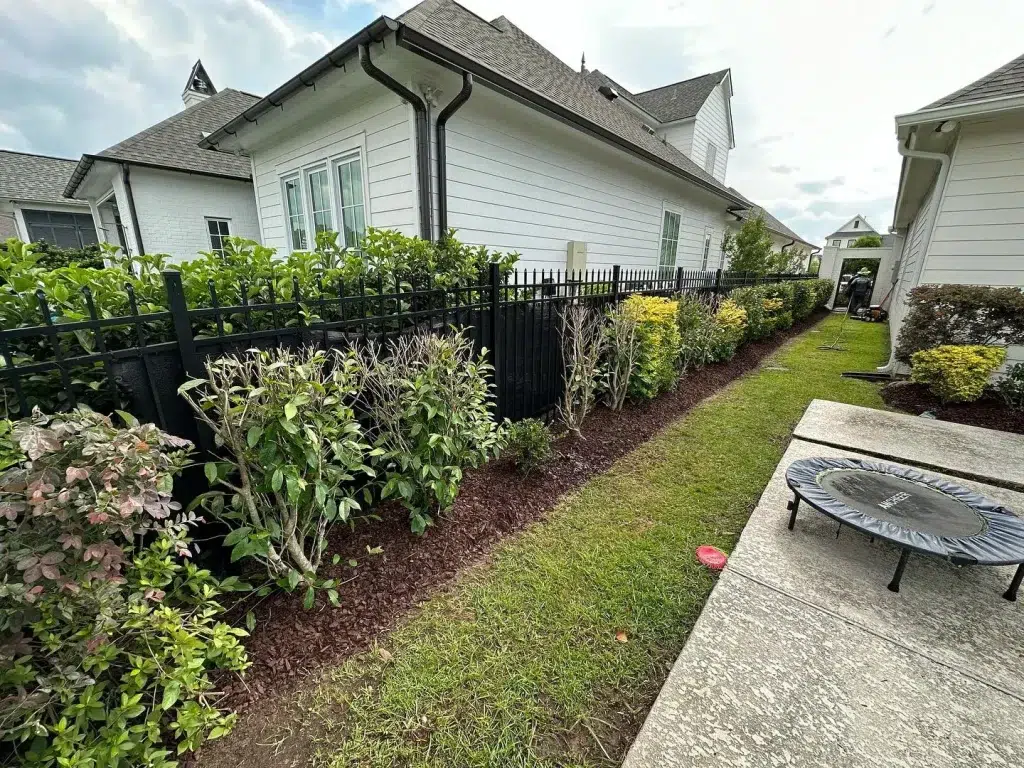
Applying a layer of mulch is a simple step with major benefits for water conservation. Mulch shields the soil from the sun, which dramatically reduces evaporation and keeps the soil cooler.
Effective Mulching Practices
- Apply a 2- to 3-inch layer of organic mulch, such as pine straw, shredded bark, or cypress mulch.
- Keep mulch a few inches away from the base of plants and tree trunks to prevent rot.
- Replenish mulch as it decomposes to maintain its effectiveness.
Bonus Tip: Avoid using inorganic mulches like rock or gravel in sunny areas. They can absorb and radiate heat, increasing soil temperature and the water needs of surrounding plants.
Reduce the Size of Your Lawn
Traditional turfgrass, like St. Augustine, is one of the most water-intensive parts of a typical landscape. Reducing the amount of lawn and replacing it with less thirsty alternatives can lead to substantial water savings.
Consider replacing sections of your lawn with:
- Expanded Garden Beds: Fill these with the native, drought-tolerant plants mentioned earlier.
- Groundcovers: Options like Asiatic Jasmine or Creeping Phlox can create a lush, green look without the high water demand of grass.
- Hardscaping: Patios, walkways, or decks made from permeable materials allow rainwater to soak into the ground instead of running off.
Water Needs Comparison: Lawn vs. Native Plants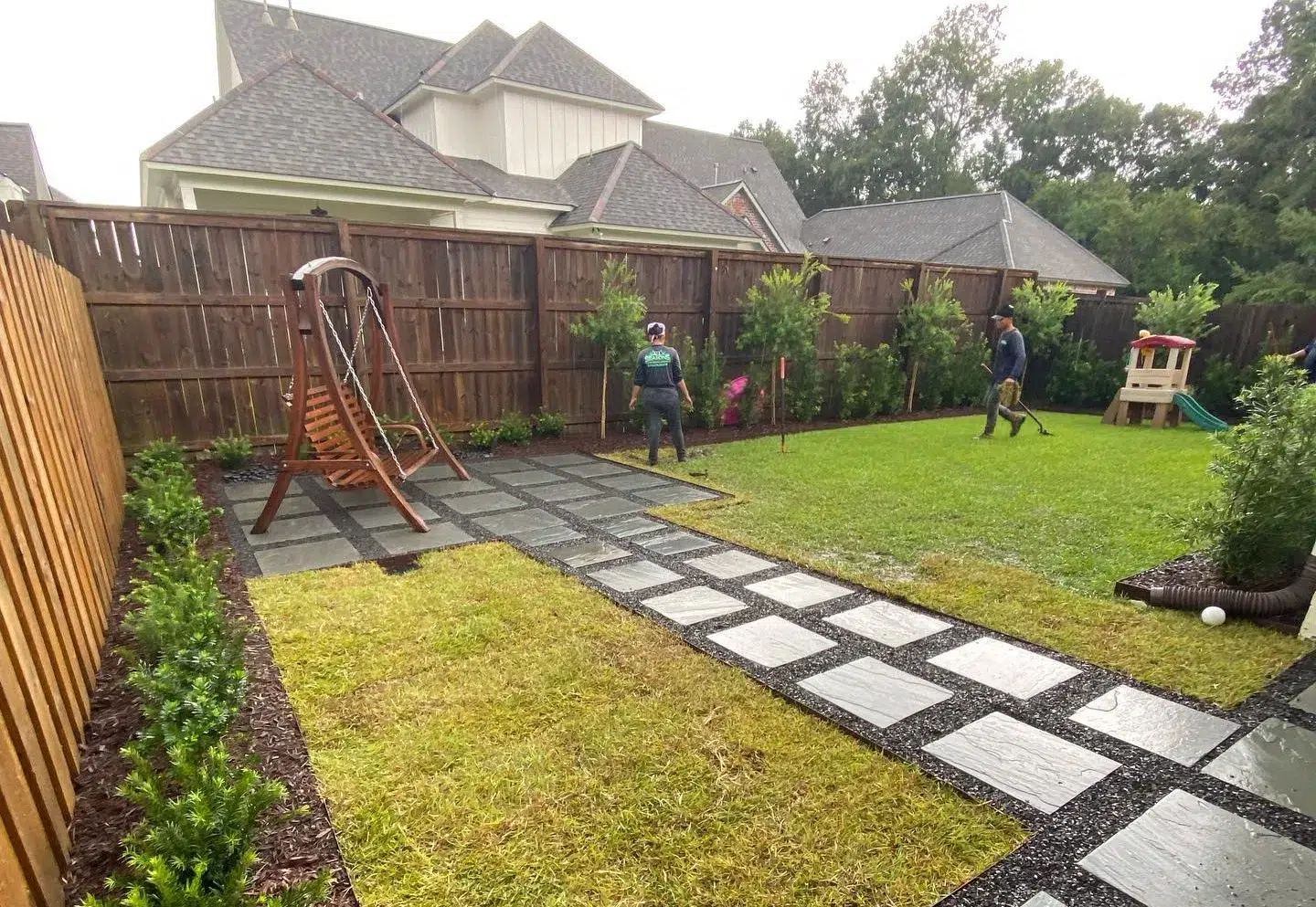
Things to Consider Before Making a Decision
Before you start changing your landscape, take some time to assess your property and goals.
- Sunlight Exposure: Map out which parts of your yard get full sun, partial sun, or full shade. This will determine which water-wise plants will thrive where.
- Soil Type: While much of our area has clay soil, your specific lot might have variations. A simple soil test can tell you what amendments are needed.
- Long-Term Maintenance: Consider how much time you want to spend on yard work. While water-wise landscapes require less watering, they still need periodic weeding and pruning.
- Budget: Determine your budget for plants, materials like mulch and compost, and any potential irrigation system upgrades. A phased approach, converting one section of your yard at a time, can make it more affordable.
Frequently Asked Questions
Do drought-tolerant plants need to be watered at all?
Yes, all new plants, including drought-tolerant ones, need regular watering for the first few months to a year to establish a strong root system. Once established, their water needs will be significantly lower than those of traditional plants.
Will a water-saving garden look sparse or dry?
Not at all. A well-designed landscape using native Louisiana plants can be lush, colorful, and full of life. The key is to choose a variety of plants with different textures, colors, and bloom times.
Is drip irrigation expensive to install?
The initial cost of a drip irrigation system can be higher than that of a traditional sprinkler head, but it often pays for itself over time through water savings. DIY kits are also available, which can be a more budget-friendly option for smaller garden beds.
What is the best mulch for the Village St. George area?
Pine straw and cypress bark are excellent choices. They are readily available, break down slowly to enrich the soil, and are effective at retaining moisture and suppressing weeds.
Can I still have a lawn in a water-wise landscape?
Absolutely. The goal isn’t necessarily to eliminate the lawn but to reduce its size to a manageable, functional area. Consider what you use the lawn for (e.g., a play area for kids) and keep only what you need. A well-maintained but smaller lawn is a good compromise.
How do I know if my plants need water?
Instead of watering on a fixed schedule, check the soil. The best way is to stick your finger about two inches into the soil near the base of the plant. If it feels dry at that depth, it’s time to water.
Are there any native Louisiana grasses I can use for a lawn?
While most native grasses don’t form the dense, uniform turf people expect from a lawn, some, like Buffalograss, can be used in low-traffic areas. They require much less water and fertilizer than species like St. Augustine.
Final Thoughts
Making thoughtful landscaping choices allows you to maintain a beautiful property in Village St. George while conserving our vital water resources. By implementing these strategies, you can create a sustainable outdoor space that is better for the environment and your water bill. A careful assessment of your property and goals is the first step toward a landscape that is both beautiful and resilient.
Get Expert Guidance
Planning a water-wise landscape involves careful consideration of plants, soil, and irrigation. For a professional assessment tailored to your property, contact All Seasons Landscaping & Lawn Care. You can reach the team by phone at 225-276-8658 or by email at [email protected] to discuss your specific needs and develop a sustainable landscaping plan.
Sources
- The U.S. Environmental Protection Agency provides statistics on residential water usage, including outdoor water consumption.
- The LSU AgCenter offers research-based information on the benefits of using native plants in Louisiana landscapes.
- The U.S. Department of Energy details the inefficiencies of traditional sprinkler systems and water loss due to evaporation and wind.

- How Can Professional Drainage Services in Central, LA Protect Your Property From Water Damage? - September 11, 2026
- Which Areas of Your Property Benefit Most From Outdoor Lighting for Safety and Curb Appeal? - September 11, 2026
- How Does Professional Outdoor Lighting Transform Your Landscape at Night in Baton Rouge, LA? - September 9, 2026