Most homeowners’ outdoor lighting mistakes fall into a few predictable categories: overlighting the property, placing fixtures where they cause glare rather than visibility, ignoring code and safety requirements, selecting the wrong color temperature, and failing to plan for control and maintenance. These errors are not just cosmetic; they waste energy, create safety hazards, and often lead to costly rework. The difference between a professional-grade installation and a DIY project that needs constant fixing usually comes down to understanding outdoor lighting techniques, following electrical codes, and applying the right design principles before the first fixture goes in the ground.
TL;DR
- At least 30% of all outdoor lighting in the U.S. is wasted through unshielded fixtures and poor placement, costing billions and releasing millions of tons of CO2 annually
- Glare from poorly aimed fixtures reduces visibility and can actually make your property less safe, not more
- NEC Article 411 governs low-voltage landscape lighting systems, and components must be listed and tested by national safety standards
- Exterior lighting that draws more than 30W requires automatic shutoff and daylight sensors per building code
- Warm color temperatures (2700K to 3000K) produce less light pollution and are less disruptive to wildlife than cool-white LEDs
- Nearly 400 people are electrocuted in the U.S. each year, and improper outdoor wiring contributes to that figure, making GFCI protection non-negotiable
- LED technology can reduce nighttime lighting energy by 80 to 90%, but only when fixtures are properly selected, aimed, and controlled
Mistake 1: Overlighting and Fixture Misplacement
The single most common error we see is the belief that brighter means better. Homeowners install too many fixtures, use bulbs with excessive lumen output, and position lights without considering how beams interact with surfaces and sightlines. The result is a washed-out yard that looks flat under harsh light instead of layered and inviting.
According to DarkSky International, responsible outdoor lighting follows five core principles: light should be useful, targeted, low level, controlled, and warm-colored. When homeowners skip the “low level” and “targeted” parts, they end up with glare that shines into windows, light trespass onto neighboring properties, and illumination that reaches upward into the sky instead of down onto the ground where it is needed.
Glare does not improve security. Research compiled by DarkSky International shows that poorly placed bright lights can actually reduce personal safety because glare makes it harder for your eyes to adjust and see into shadowed areas where hazards might exist.
What Proper Placement Looks Like
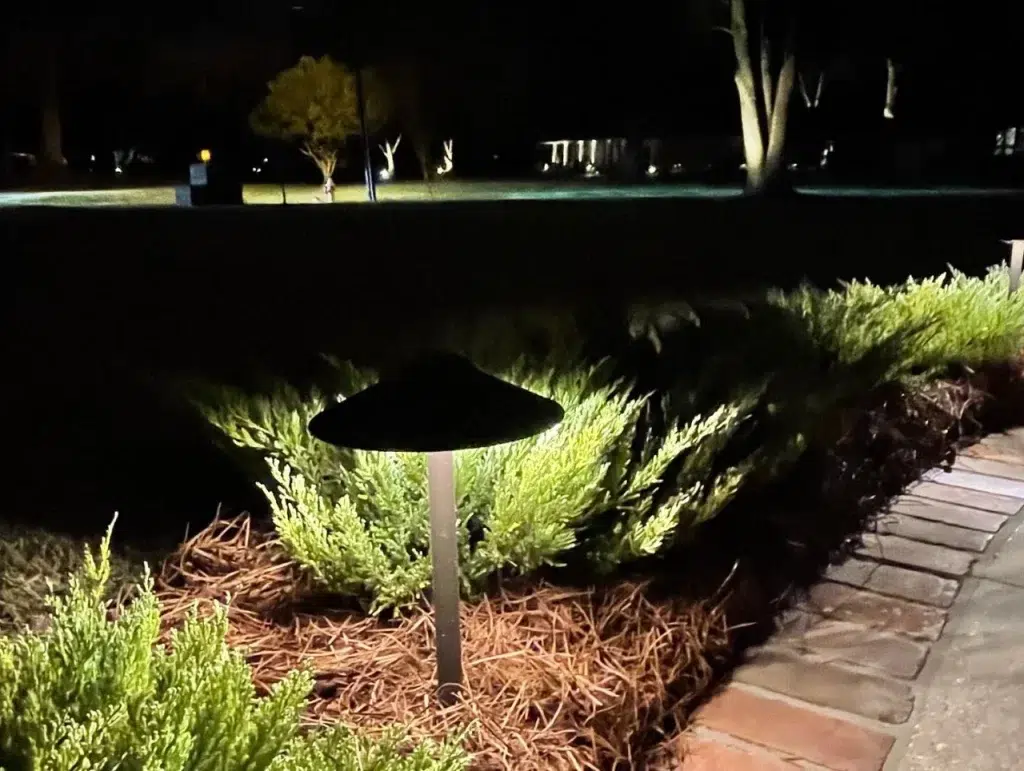
- Path lights should illuminate the ground, not shine into your eyes as you walk
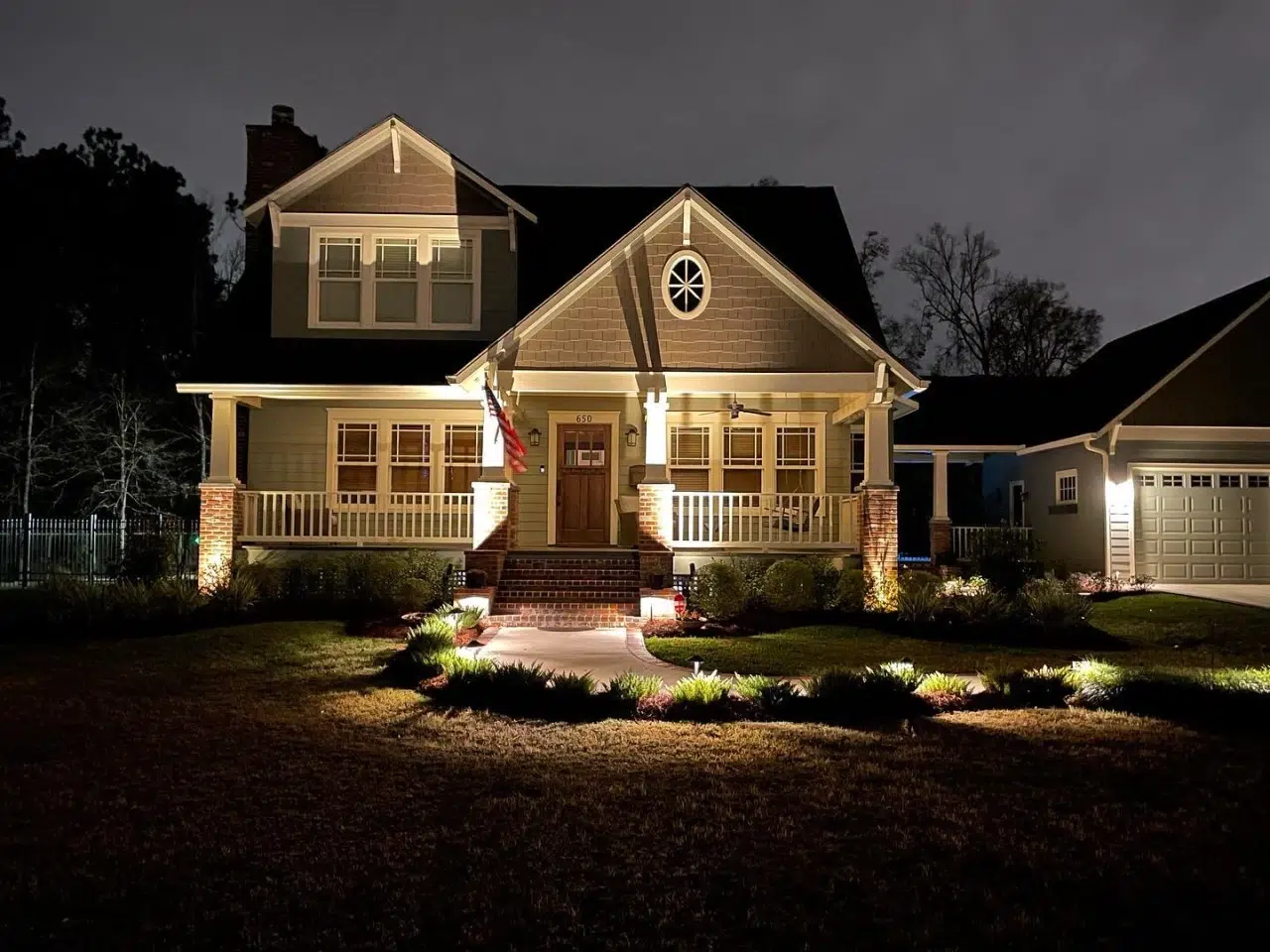
- Uplighting on trees or architectural features should use shielded fixtures to prevent light spill
- Fixtures near property lines should be aimed inward, not outward
- Step and stair lighting belongs in risers or low-profile fixtures, not overhead floodlights
Mistake 2: Ignoring Electrical Code and Safety Requirements
Outdoor electrical work carries real risk. The Electrical Safety Foundation International (ESFI) reports that nearly 400 people are electrocuted in the U.S. each year, and an average of 51,000 electrical home structure fires occur annually. Many of these incidents involve improper wiring, damaged cords, or missing ground-fault protection, all mistakes that show up frequently in DIY outdoor lighting projects.
Building codes are not suggestions. As explained in Fine Homebuilding‘s code analysis, the National Electrical Code (NEC) Article 411 covers low-voltage lighting systems operating at 30 volts AC or less, and all components must be listed by an approved testing agency. That means using certified fixtures, connectors, and transformers instead of generic parts that have not been tested for outdoor use.
Safety Requirements Homeowners Frequently Miss
| Requirement | What the Code Says | Why It Matters |
|---|---|---|
| GFCI protection | Outdoor outlets need ground-fault circuit interrupters | Prevents electrocution if water contacts wiring |
| Wire burial depth | Low-voltage cables must be buried at least 6 inches deep | Protects wires from damage by tools, roots, and foot traffic |
| Listed components | NEC Article 411 requires nationally tested components | Unlisted parts can fail, overheat, or cause fires |
| Pool and spa setbacks | Low-voltage fixtures must be at least 10 feet from water edges | Reduces shock risk near pools, spas, and fountains |
Using indoor extension cords for permanent outdoor fixtures, running cables without conduit in vulnerable areas, and skipping weatherproof connectors are all shortcuts that create fire and shock hazards. ESFI recommends that any permanent electrical work, including outdoor lighting, be performed by a qualified, licensed electrician.
Mistake 3: Wrong Color Temperature and Light Quality
Color temperature measured in Kelvin (K) has a direct effect on how outdoor spaces feel and function. Many homeowners buy the brightest LED bulbs available without checking the Kelvin rating, and end up with cool-white or daylight fixtures (4000K to 6500K) that produce a harsh, bluish cast. This is a mistake on multiple levels.
Cool-white and blue-rich light is linked to disrupted circadian rhythms in humans, disorientation in nocturnal wildlife, and increased sky glow. The U.S. Department of Energy notes that while LED technology offers massive energy savings potential, the careless use of light at night, even with efficient sources, is a growing concern. The DOE references the Five Principles for Responsible Outdoor Lighting, which specifically recommend warmer color temperatures to minimize ecological disruption.
For residential outdoor lighting, fixtures rated at 2700K to 3000K provide a warm, natural-looking glow that is comfortable for outdoor gathering, less disruptive to sleep patterns, and more compatible with residential neighborhoods.
Mistake 4: No Controls, Timers, or Automation
Leaving outdoor lights on all night, every night, is one of the most wasteful mistakes a homeowner can make. Building codes actually address this. As noted in the Fine Homebuilding analysis of the International Energy Conservation Code (IECC), any exterior lighting installation that consumes more than 30 watts of power must include:
- A manual on/off switch that also provides automatic shutoff
- Automatic daylight shutoff so lights are not running during the day
- Manual overrides that reset to automatic operation within 24 hours
Without these controls, homeowners pay for electricity wasted during daylight hours and overnight when the light serves no purpose. Motion sensors, photocells, and smart timers are inexpensive additions that dramatically reduce energy consumption while keeping the property secure.
Mistake 5: Poor Planning and No Zoned Design
Many homeowners buy a box set of matching lights and place them at equal intervals around the yard without considering what they are actually trying to illuminate. This cookie-cutter approach produces uniform but uninspiring results. A well-designed outdoor lighting plan divides the yard into zones based on function:
- Task lighting for paths, steps, and driveways, focused on safety
- Accent lighting for trees, garden beds, and architectural features
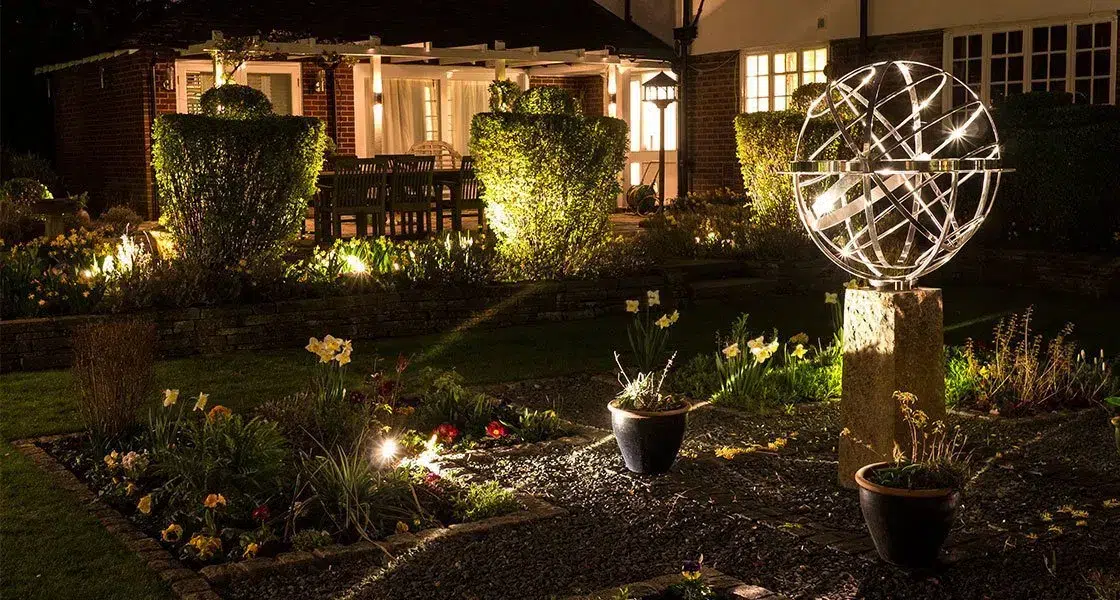
- Ambient lighting for patios and seating areas to create atmosphere
- Security lighting at entries and dark corners, using motion-activated fixtures
Walking the property at night with a flashlight before any fixtures are installed is the best way to identify which areas need light and which should remain dark. This simple exercise, combined with the Five Principles from DarkSky International, prevents overlighting and ensures every fixture earns its place in the design.
Mistake 6: Undersized Wiring and Overloaded Transformers
Low-voltage systems seem simple enough that homeowners often underestimate the electrical planning involved. Daisy-chaining too many fixtures onto a single run, using wire that is too thin for the load, and overloading transformers cause dim, uneven lighting and can shorten equipment life significantly.
A transformer that is running at or near capacity will produce voltage drops, meaning the last fixtures on the run will be noticeably dimmer than the first. Proper design involves calculating total wattage, selecting a transformer with at least 20% headroom, and using the correct wire gauge for the distance involved.
Mistake 7: Choosing Fixtures That Cannot Survive the Elements
Outdoor fixtures face rain, humidity, UV exposure, temperature swings, and contact with sprinklers and irrigation. Homeowners often choose fixtures based on appearance alone, ignoring IP ratings, material durability, and whether connectors are truly weatherproof. Outdoor lighting guidance can help homeowners understand these considerations before selecting fixtures, reducing the risk of corrosion, lens yellowing, and water intrusion into sockets that can turn a weekend project into a recurring maintenance headache.
Fixtures rated for wet locations, with solid brass or marine-grade stainless steel construction, cost more upfront but last years longer than cheap alternatives. The NEC requires that outdoor components be listed for their intended use, and that means rated for exposure to moisture and the elements.
Which Mistakes Matter Most for Your Situation
| Homeowner Situation | Highest-Priority Mistakes to Avoid | Recommended Focus |
|---|---|---|
| New construction | Overlighting, poor zoning | Plan zones before wiring; follow DarkSky principles |
| Retrofitting an existing system | Wrong color temp, no controls | Replace high-K bulbs with warm LEDs, add photocells and timers |
| DIY low-voltage install | Wire sizing, transformer overload | Calculate total wattage first, use proper gauge, include headroom |
| Pool or water feature area | Ignoring setback codes, missing GFCI | Follow NEC Article 411 pool setbacks, use GFCI-protected circuits |
| Security-focused lighting | Glare, overlighting | Use targeted, motion-activated fixtures at low Kelvin |
Signs You Have Chosen the Right Outdoor Lighting Approach
- The installer walks your property at night before designing anything, to see where light is actually needed
- The plan separates task, accent, ambient, and security zones instead of placing fixtures uniformly
- Every fixture selected is listed and rated for wet-location outdoor use by a recognized testing laboratory
- The design includes photocells, timers, or motion sensors so no light runs unnecessarily
- Color temperatures stay in the 2700K to 3000K range for a warm, natural appearance
- Wire runs and transformer sizing are calculated based on total fixture wattage with headroom
- GFCI protection is confirmed on every circuit that supplies outdoor lighting
- The proposal references NEC and local building code requirements, not just product brochures
Get Your Outdoor Lighting Right the First Time
At All Seasons Landscaping, we design and install outdoor lighting systems that follow building codes, protect your family from electrical hazards, and look striking after dark. Our team plans every fixture placement, selects the right color temperature and components, and builds in automation, so your system works efficiently from day one. Whether you are starting from scratch or upgrading an existing setup, we handle the technical details so you do not have to.
Reach us at [email protected] or call 225-276-8658 to get started.
FAQs
Can I install low-voltage outdoor lighting myself without a permit?
Most jurisdictions do not require a building permit for low-voltage systems under 30 volts, but the NEC still applies. Components must be listed by a national testing laboratory, and local codes vary. Check with your building authority before proceeding.
What happens if I use indoor fixtures outside?
No. Indoor fixtures are not rated for moisture, UV exposure, or temperature extremes. Using them outside creates shock and fire hazards and violates code requirements for listed outdoor-rated components.
How many fixtures can I run on one transformer?
Total the wattage of all fixtures and add 20% headroom. For example, if your fixtures draw 100 watts combined, select a transformer rated for at least 120 watts. Overloading causes voltage drops and uneven illumination.
Does outdoor lighting really need to be automatic?
Building code requires automatic shutoff and daylight sensors for exterior lighting systems drawing more than 30 watts. Even below that threshold, controls reduce energy waste and extend bulb life.
Why does color temperature matter for outdoor lighting?
Warmer color temperatures (2700K to 3000K) produce less blue-violet light, which reduces light pollution, is less disruptive to wildlife and sleep patterns, and creates a more natural-looking outdoor environment.
Sources
- DarkSky International – Five Principles for Responsible Outdoor Lighting – Joint publication with the Illuminating Engineering Society establishing five guidelines for proper outdoor lighting: useful, targeted, low level, controlled, and warm-colored.
- DarkSky International – Dark Sky Friendly Outdoor Lighting for Policy Makers – Data on outdoor lighting energy waste in the U.S., including the estimate that 30% of all outdoor lighting is wasted through unshielded fixtures, costing $3.3 billion annually.
- U.S. Department of Energy – Light at Night – Federal research on the impacts of artificial light at night, LED energy savings potential of 80 to 90%, and guidance on responsible outdoor lighting practices.
- Electrical Safety Foundation International – Home Safety – National statistics on electrical fires, electrocutions, and home electrical hazards, including data that nearly 400 Americans are electrocuted annually.
- Fine Homebuilding – Outdoor Lighting Code Requirements – Detailed analysis of NEC Article 411, IRC exterior door and stairway lighting requirements, IECC efficacy standards, and low-voltage system code compliance.

- How Can Professional Drainage Services in Central, LA Protect Your Property From Water Damage? - September 11, 2026
- Which Areas of Your Property Benefit Most From Outdoor Lighting for Safety and Curb Appeal? - September 11, 2026
- How Does Professional Outdoor Lighting Transform Your Landscape at Night in Baton Rouge, LA? - September 9, 2026