A property drainage assessment is the fastest way to find out what a storm actually did to your yard before the damage becomes expensive. Heavy rain doesn’t just leave puddles on the surface. It moves water underground, saturates soil around foundations, and stresses drainage systems in ways that aren’t visible from a quick walk around the property. A trained eye and the right tools catch these problems while they’re still small.
At All Seasons Landscaping & Lawn Care, our drainage services team runs full site drainage condition assessments after major weather events across the Baton Rouge area. This guide breaks down what a proper assessment includes, why post-storm timing matters, and how to know if your property needs one.
TL;DR
- A property drainage assessment checks for hidden water flow issues, soil saturation, and drainage system failures after storms.
- Standing water, soft soil, and slow-draining low spots are the clearest warning signs.
- Louisiana’s clay-heavy soil holds water longer, which makes post-storm inspection more urgent here than in sandier regions.
- Professional assessments use soil probes and moisture meters, tools a visual DIY check can’t replicate.
- The ideal window to schedule an assessment is within 24 to 72 hours after a storm.
Why a Property Drainage Assessment Matters After Storms
Standing water around a foundation, patio, or lawn is rarely just a cosmetic issue. It signals soil instability, rot risk, and hydrostatic pressure building against structures that aren’t designed to hold it back. A drainage assessment performed soon after a storm catches these signs before they turn into foundation repairs or dead turf.
It Catches Subsurface Flow Problems Early
Storms often push water through underground channels that never show up on the surface. Dense clay and sandy loam layers redirect water laterally, and a visual inspection alone won’t reveal that movement. This is where a structural water drainage assessment earns its cost, since probes and moisture readings expose what a walk-around can’t.
It Verifies Your Existing Systems Still Work
Gutters, French drains, and sump pumps clog or shift over time. A performance check during a field drainage assessment confirms whether these systems are still doing their job or quietly failing.
It Protects Landscaping Investments
Pooling water around trees, beds, and turf breaks down soil quality, suffocates root systems, and speeds up erosion. Catching a drainage fault early protects the landscaping and lawn care work already put into a property.
DIY Check vs Professional Property Drainage Assessment
| Factor | DIY Check | Professional Assessment |
| Tools used | Visual inspection, slope guesswork | Soil probes, moisture meters, trench inspection |
| Accuracy | Low | High |
| Subsurface analysis | Not possible | Included |
| Upfront cost | Minimal | Higher upfront, lower long-term repair cost |
| Time to complete | A few hours | 1 to 2 days for a full assessment |
| Long-term effectiveness | Low | High |
Why Louisiana Soil Makes This More Urgent
Southern Louisiana’s soil holds water longer than most regions because of its high clay content and low permeability. Combine that with flat terrain and seasonal rainfall, and it’s easy to end up with slow-draining zones that never fully clear between storms. A post-storm inspection frequently uncovers runoff paths that homeowners never noticed, simply because the water moves underground instead of across the lawn.
Quick tip: Compact clay soils resist fast percolation. Aeration and regrading often outperform surface drainage fixes alone in these conditions.
How to Conduct a Property Drainage Assessment After a Storm
- Wait for it to be safe, then inspect within 24 to 72 hours. Signs of pooling, erosion, and saturation fade quickly once soil starts to dry.
- Walk the perimeter for standing water. Note any spot where water sits for more than a day near the foundation, patio, or low-lying beds.
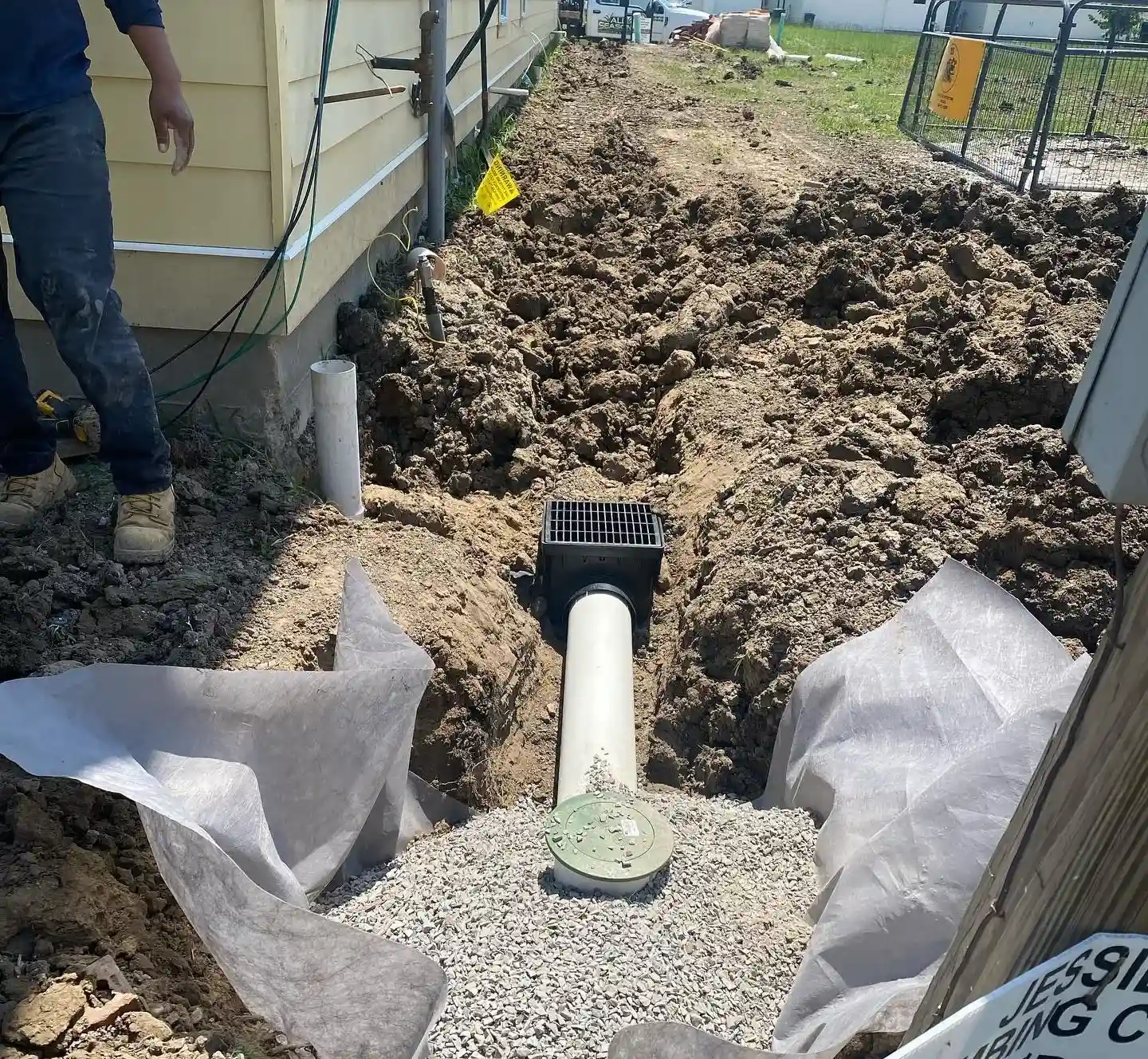
- Check existing drainage components. Inspect gutters, downspout extensions, catch basins, and French drains for blockage or overflow marks.
- Test soil saturation with a probe. A soil probe or moisture meter identifies subsurface saturation that a visual check will miss entirely.
- Document findings and compare to grading. Map where water collects against the property’s slope to spot grading errors causing runoff.
- Schedule repairs based on severity. Address active foundation risk first, then move to landscape drainage and system upgrades.
Common Drainage System Specs
| Component | Function | Standard Capacity | Failure Indicators |
|---|---|---|---|
| French Drain | Collects lateral water flow | 3 to 4 inch pipe, gravel trench | Overflow, soft ground, water surfacing |
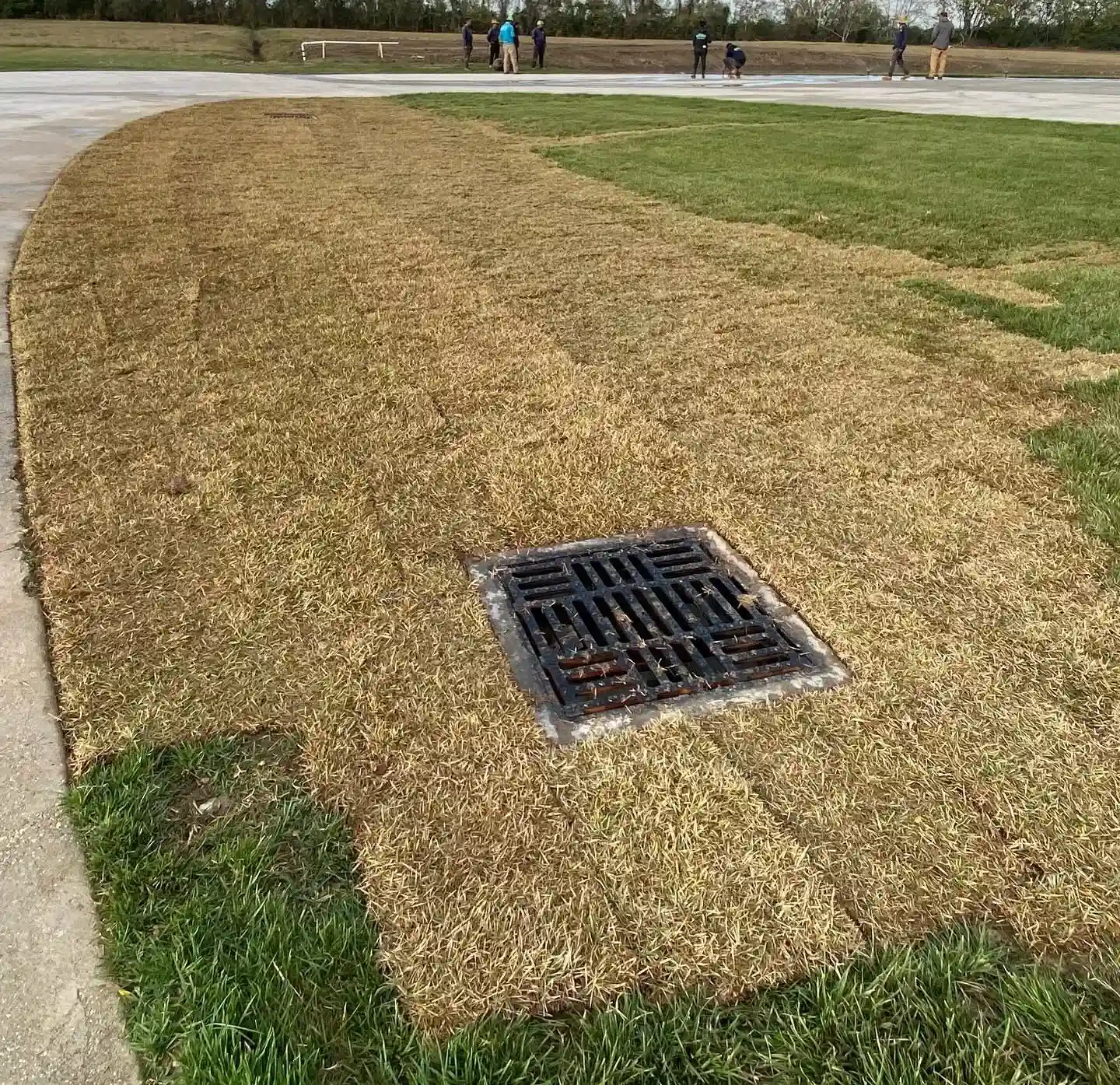
| Catch Basin | Captures water at low points | 9×9 or 12×12 inch inlet, 4 inch outlet | Standing water, leaf blockage |
| Downspout Extension | Redirects roof runoff | Minimum 4 ft from foundation | Pooling near walls |
| Sump Pump | Moves water from low areas | 1/3 to 1/2 HP, 2,000+ GPH output | Frequent cycling, no discharge |
What the Data Says About Drainage Failure
Poor drainage is a bigger driver of property damage than most homeowners realize. According to the EPA, urban stormwater runoff picks up pollutants and can overwhelm impervious surfaces when it isn’t properly managed, which is part of why a functioning drainage system matters well beyond avoiding a wet lawn. On the insurance side, FEMA’s National Flood Insurance Program provides close to $1.3 trillion in coverage to nearly 4.7 million policyholders nationwide, underscoring how widespread flood- and water-related property risk actually is across the country.
For more detail on how stormwater is managed at a broader level, see the EPA’s overview of urbanization and stormwater runoff and FEMA’s flood insurance program.
Things to Consider Before Deciding
- Soil type: clay-based and loamy soils respond differently after a storm, and that changes the right drainage approach.
- Storm history: frequent, intense storms wear down drainage systems faster than isolated events.
- Existing drainage features: older or DIY-installed systems can make water problems worse over time.
- Grading and slope: small grading errors cause outsized runoff issues in low-lying areas.
- Foundation proximity: water sitting near a slab or pier-and-beam structure raises the risk of structural movement.
Quick tip: in flood-prone areas, move up the assessment timeline to within 48 hours of a storm to catch soft soil indicators before they compact and hide.
Services That Support Storm Drainage Needs
- Drainage Services: custom trenching, grading, and subsurface piping to resolve water accumulation.
- Storm Cleanup Services: debris removal and property recovery support right after severe weather.
- Excavation Services: reshaping or modifying ground slope to redirect stormwater away from structures.
- Irrigation System: checks to prevent cross-contamination between stormwater and irrigation lines during repairs.
Frequently Asked Questions
How soon after a storm should a property drainage assessment be scheduled?
Within 24 to 72 hours is ideal, while pooling, erosion, or saturation signs are still visible.
Is one assessment enough, or should it be repeated?
Repeat it after major weather events or whenever the landscape or drainage performance visibly changes.
Do all yards need drainage work after a storm?
Not always. Well-graded, properly irrigated yards can drain naturally. An assessment simply confirms whether an issue actually exists.
Can poor drainage affect plant health?
Yes. Waterlogged roots die off, and low-oxygen soil conditions block nutrient uptake.
What signs point to a failed drainage system during a storm?
Water pooling for more than 24 hours, soil slumping, visible erosion channels, and basement seepage are the clearest indicators.
Can I install a French drain without an assessment first?
Skipping the site-specific analysis raises the odds of placement or depth errors that cause backflow or completely miss the actual water path.
Get an Expert Drainage Assessment
Catching a drainage problem early costs far less than repairing the damage it causes later. If your property took on heavy rain recently, a professional assessment gives you a clear, documented answer instead of a guess.
Request a free quote or call 225-276-8658 to get started.
Related read: How Professional Landscaping Can Transform Your Outdoor Living Space

- The Complete Guide to Hedge Trimming, Care, Maintenance, and Healthy Growth - October 6, 2026
- How Can Professional Drainage Services in Central, LA Protect Your Property From Water Damage? - September 11, 2026
- Which Areas of Your Property Benefit Most From Outdoor Lighting for Safety and Curb Appeal? - September 11, 2026