Professional drainage services provide peace of mind during heavy storms in Gardere, LA by implementing engineered solutions that redirect water away from properties before damage occurs. These systems work continuously during rainfall events, protecting foundations, landscapes, and structures from the devastating effects of standing water and soil saturation. The confidence comes from knowing that even during extreme weather events typical to Louisiana, the property has purpose-built defenses against water infiltration.
This article will explain exactly how drainage systems protect properties during storms, what solutions work best in Gardere’s specific conditions, and what homeowners should consider when planning drainage improvements. With years of experience installing drainage systems throughout Louisiana’s challenging climate, ALL SEASON LANDSCAPING understands the local soil composition, rainfall patterns, and building requirements that make the difference between adequate and exceptional drainage performance.
Understanding Gardere’s Storm Challenges
Gardere faces unique drainage challenges due to its geographic location and soil conditions. The area receives approximately 60 inches of rainfall annually, with the majority falling during intense spring and summer storms. According to the National Weather Service, Louisiana experiences more thunderstorm days than nearly any other state, creating consistent pressure on drainage infrastructure.
The local soil composition presents additional complications. Heavy clay soils common in the Baton Rouge area have poor natural drainage, causing water to pool on the surface rather than absorb quickly. This combination of high rainfall intensity and slow absorption creates perfect conditions for property damage without proper drainage systems in place.
How Drainage Systems Work During Storms
Effective drainage systems operate through basic physics principles combined with strategic placement and sizing. During heavy rainfall, surface water flows toward collection points like catch basins and channel drains. These features connect to underground pipes that use gravity to transport water away from the property, typically discharging into municipal storm systems or appropriate areas of the yard.
The most critical aspect is proper slope – drainage pipes must maintain a consistent downward grade to ensure continuous water flow. Even small dips or level sections can cause water to back up during heavy rain, defeating the entire system’s purpose. Professional installation ensures these technical requirements are met according to local building codes and best practices.
Types of Drainage Solutions for Heavy Rain
Different properties require different drainage approaches based on their specific water problems. Understanding these options helps homeowners make informed decisions about their needs.
Surface Drainage Systems
Surface systems handle water that pools on top of the ground. These include channel drains along driveways, catch basins in low spots, and swales that create shallow channels to direct water flow. Surface drainage is typically the first line of defense against standing water in lawns and paved areas.
Subsurface Drainage Systems
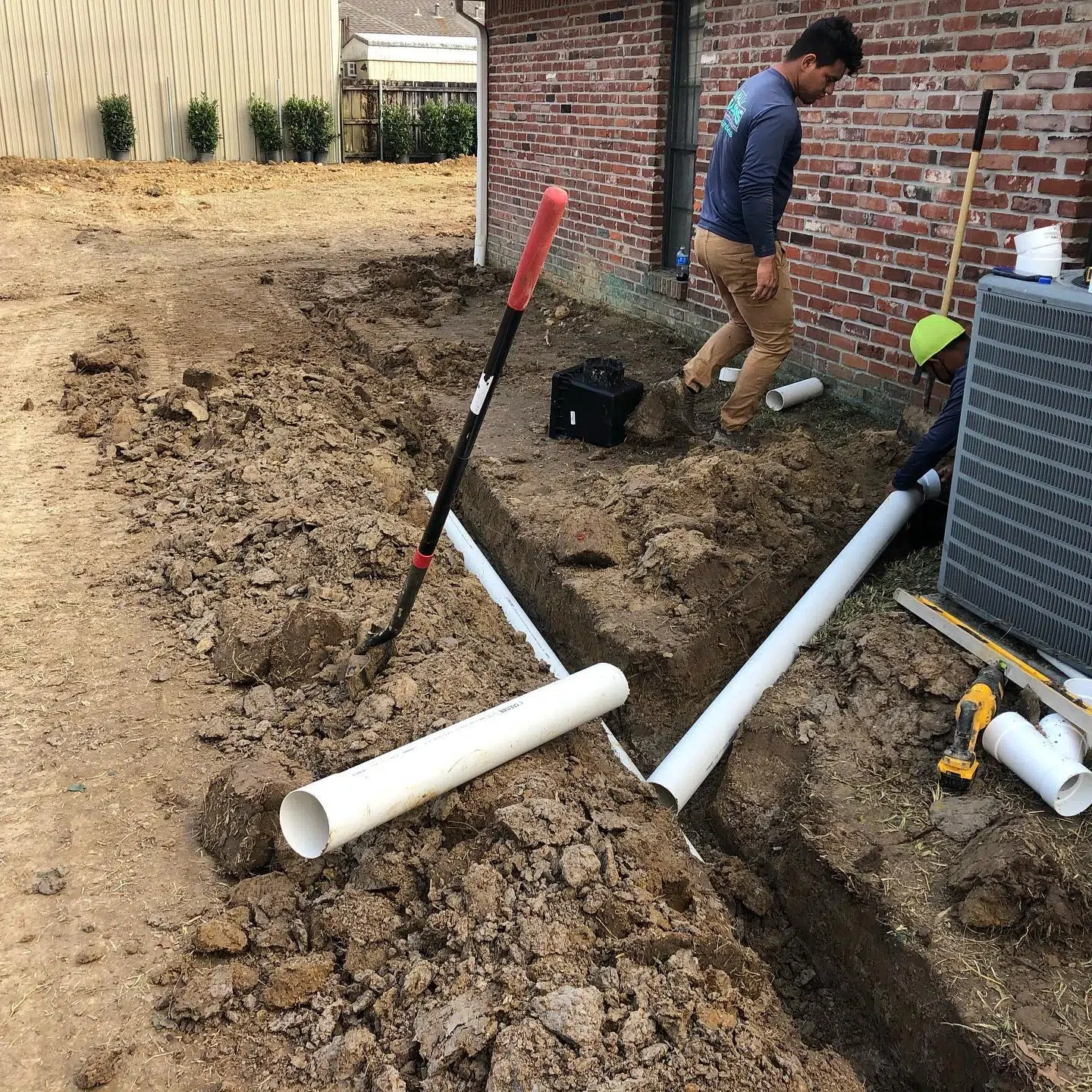
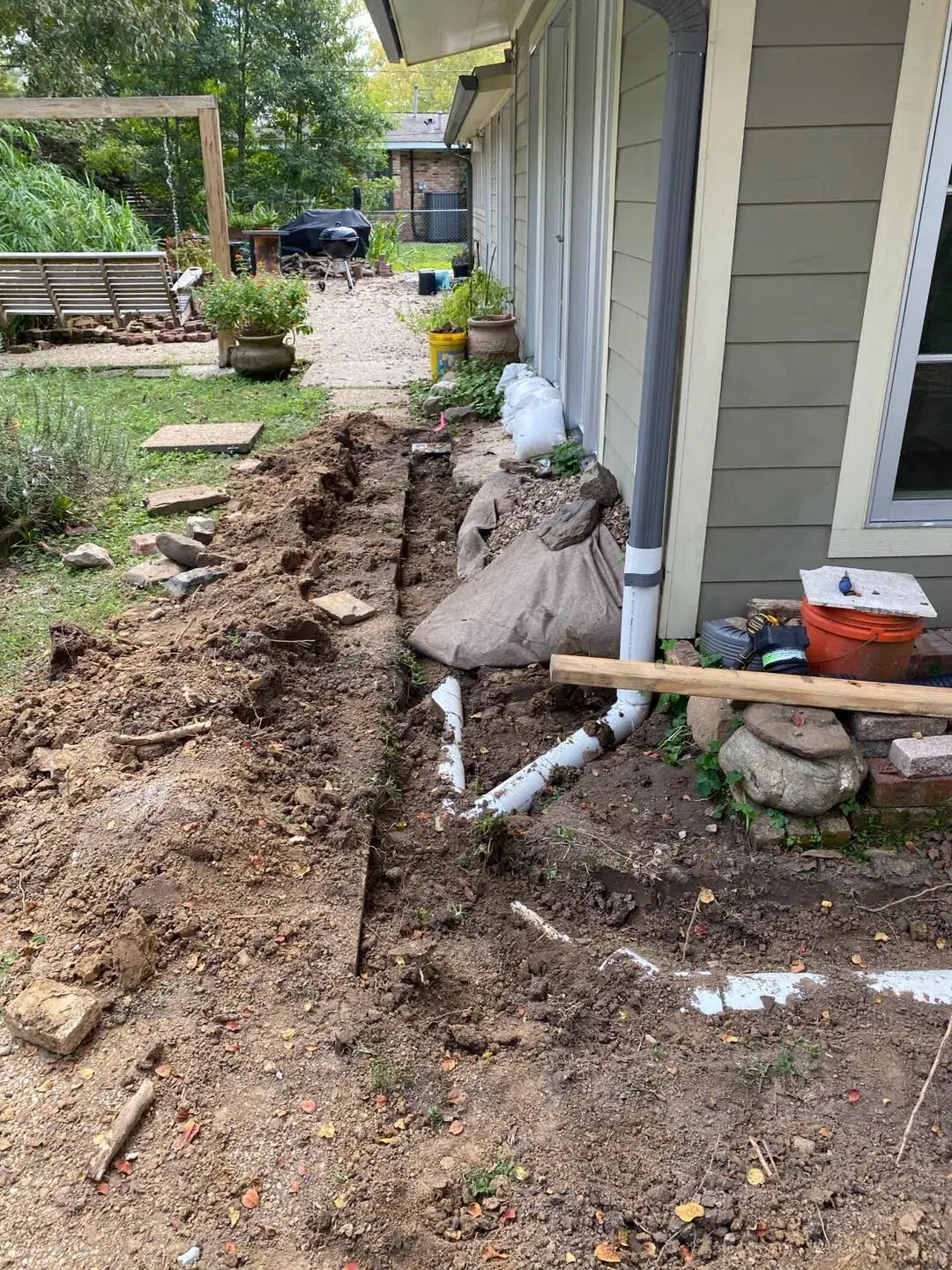
French drains and footing drains operate underground, addressing water that has already soaked into the soil. These systems use perforated pipes surrounded by gravel to collect and redirect subsurface water before it reaches foundations or creates saturated soil conditions. Subsurface drainage is essential for protecting structures and maintaining landscape health.
Combined Drainage Approaches
The most effective systems often integrate both surface and subsurface solutions. This comprehensive approach handles water at multiple stages, from initial rainfall impact to deeper soil saturation. Combined systems provide the most reliable protection during extreme weather events common to Louisiana.
Drainage Solution Comparison
| Solution Type | Best For | Installation Complexity | Maintenance Requirements |
|---|---|---|---|
| French Drain | Foundation protection, saturated soil | High | Low to Moderate |
| Channel Drain | Driveways, patios, hardscapes | Moderate | Low |
| Catch Basin | Low-lying areas, large surface collection | Moderate | Moderate |
| Swale | Large properties, gradual water redirection | Low | High |
Things to Consider Before Making a Decision
Planning a drainage system requires careful evaluation of several factors. First, identify specific water problems on your property. Does water pool in certain areas? Does it approach your foundation during storms? Understanding these patterns helps determine what type of drainage solutions will be most effective.
Soil type significantly impacts drainage performance. Have a professional test your soil composition to determine if clay, sand, or loam dominates your property. This information influences both drainage design and plant selection for areas affected by water management.
Property topography creates natural water flow patterns. Even gentle slopes can direct substantial water volumes during heavy rain. Working with these natural flows rather than against them produces more effective and less expensive drainage solutions.
Benefits Beyond Flood Prevention
While preventing water damage is the primary goal, drainage systems provide additional advantages that enhance property value and enjoyment. Proper water management creates healthier growing conditions for landscape plants, reducing disease and root rot problems common in saturated soils.
Dry, usable outdoor space expands living areas effectively. Yards that previously became unusable after rain can support regular activities and additional landscaping features. This functional improvement significantly increases property enjoyment and marketability.
Foundation protection offers long-term structural benefits. Consistent water diversion reduces hydrostatic pressure against foundation walls, preventing cracks, bowing, and moisture infiltration that leads to expensive repairs and indoor air quality problems.
Bonus Tips From Experience
Install cleanouts every 50-70 feet in drainage lines for future maintenance access. These small vertical pipes make system clearing much simpler when debris accumulates over time.
Consider drainage improvements when undertaking other landscape work. Combining drainage installation with hardscaping or major planting projects reduces overall costs and landscape disruption.
Install a water level indicator in low-lying areas. This simple tool helps monitor drainage performance and identify developing problems before they cause visible damage.
Moving Forward With Drainage Planning
Effective drainage systems provide genuine peace of mind during heavy storms by actively removing water before damage occurs. The combination of proper system design, quality materials, and professional installation creates reliable protection against Louisiana’s challenging weather patterns.
Evaluate your property’s specific water issues, soil conditions, and topography before making drainage decisions. Consider both immediate problems and future needs when planning improvements. Professional assessment often reveals issues and opportunities that homeowners overlook during initial evaluation.
For residents in Gardere, LA experiencing drainage problems during heavy storms, ALL SEASON LANDSCAPING offers comprehensive drainage evaluation and installation services. Contact the team at [email protected] or call 225-276-8658 to schedule a property assessment and discuss drainage solutions tailored to your specific needs and budget.
Frequently Asked Questions
How long do drainage systems typically last?
With proper installation and maintenance, most drainage systems function effectively for 20-30 years. Pipe material quality and installation techniques significantly influence lifespan. Schedule professional inspections every 3-5 years to identify developing issues before system failure occurs.
Will drainage systems work during power outages?
Most residential drainage systems rely on gravity rather than pumps, so they continue functioning during electrical outages. Sump pump systems do require power, so battery backup systems become important for properties relying on pumped solutions.
Can drainage systems be added to existing homes?
Yes, drainage improvements can be retrofitted to existing properties. While this involves some landscape disruption, modern installation techniques minimize damage and allow homeowners to address water problems without major reconstruction.
Do drainage systems increase property value?
Professional drainage installation typically provides positive return on investment. Appraisers and buyers recognize the value of water management, especially in areas prone to heavy rainfall and flooding. Proper drainage eliminates a major concern for potential buyers.
How much maintenance do drainage systems require?
Most drainage systems require minimal maintenance – primarily occasional cleaning of catch basins and inspection of discharge points. Schedule professional service every 2-3 years to remove accumulated debris and ensure optimal performance.
Sources
- National Weather Service – Official weather data for Louisiana including rainfall averages and storm frequency statistics
- Louisiana State University Agriculture Center – Research on Louisiana soil composition and drainage challenges specific to the region
- Baton Rouge Government – Local building requirements and drainage regulations for the Gardere area

- How Does Regular Hedge Trimming Improve Your Landscape’s Overall Appearance? - October 12, 2026
- The Complete Guide to Hedge Trimming, Care, Maintenance, and Healthy Growth - October 6, 2026
- How Can Professional Drainage Services in Central, LA Protect Your Property From Water Damage? - September 11, 2026