Aerate your lawn is the first thing to get right if you want a Baton Rouge lawn that survives the summer rather than just endures it. Louisiana yards take a real beating: near-daily humidity, months of heavy rain, and grass that barely goes fully dormant all cause soil to compact faster here than in most parts of the country. A yard that looks healthy in March can be struggling to breathe by July, with roots choked off from air, water, and nutrients before anything looks wrong above ground. For a broader look at building a resilient yard year-round, our lawn care strategies guide covers mowing, fertilizing, seasonal planning, and aeration.
Getting your lawn aeration schedule wrong in either direction, too rarely or too often, shows up the same way: thin, patchy grass no matter how much you water or fertilize. Your soil type matters most, since clay holds compaction very differently than sand. Foot traffic, grass type, and our long, humid growing season all factor in too. For most Baton Rouge yards, that works out to aerating once a year, with clay-heavy or high-traffic lawns doing better on a twice-a-year schedule.
TL;DR
- Most lawns: aerate once a year
- Clay soil, heavy traffic, or St. Augustine grass: aerate twice a year
- Best window for when to aerate lawn areas: late spring through early summer for warm-season grass
- Signs you’re overdue: standing water, thinning patches, hard-packed soil
- Always fertilize and water consistently right after aerating
Why Lawn Aeration Frequency Matters for Louisiana Grass
Louisiana’s heavy clay soils and long, humid growing season make lawn aeration frequency one of the most important, and most skipped, parts of local lawn care. Aeration perforates the soil with small holes so air, water, and nutrients can actually reach the root zone instead of running off or sitting on top. Compaction is a bigger problem here than in most states, thanks to dense clay and near-year-round rainfall. LSU AgCenter turfgrass specialists note that compaction shows up as thinning grass, more weeds, and an overall stressed-looking lawn, and it’s most common in the fine-textured clay and silt soils that make up much of the Baton Rouge area. Getting ahead of it with a regular lawn aeration schedule is what keeps grass thriving through summer instead of just surviving it.
How Often to Aerate Your Lawn: The Factors That Decide It
There’s no single number that fits every yard. How often to aerate your lawn depends on soil type, foot traffic, grass species, and Baton Rouge’s climate.
Soil Type
- Clay soil (most common locally): dense and prone to compaction. Aerate at least once, ideally twice, a year.
- Sandy soil: drains fast and resists compaction. Aerate every two to three years.
- Loamy soil: a balanced mix of clay, sand, and silt. Once a year is usually enough.
Foot Traffic
- High traffic (kids, pets, frequent outdoor use): aim for twice-a-year aeration.
- Low traffic: annual aeration is typically sufficient.
Grass Type
- Warm-season grasses (Bermuda, Zoysia, St. Augustine, the Louisiana standards): aerate in late spring or early summer, right as they hit active growth.
- Cool-season grasses (Fescue, Ryegrass, less common here): best aerated in early fall.
Climate
Louisiana’s rainfall and heat compact soil faster than drier climates, so plan on at least one aeration pass a year as a baseline lawn aeration schedule. Yards with heavy irrigation or poor drainage often need to sit on the more frequent end of that range.
When to Aerate Lawn Areas in Louisiana
Timing matters almost as much as frequency, since aerating dormant grass does little good.
- Spring: ideal for warm-season grasses like St. Augustine and Bermuda, giving roots access to moisture and nutrients before peak summer growth.
- Fall: best for cool-season grasses, prepping the lawn for winter dormancy and stronger roots.
- Summer: generally not recommended here unless compaction is severe, since heat and humidity can stress grass further.
Signs Your Lawn Needs Aeration
If you’re not sure whether it’s time, look for:
- Water pooling on the surface after rain instead of soaking in
- Thin, patchy, or discolored grass despite regular watering
- Soil that feels hard-packed and resists a screwdriver pushed into it
- Increased weeds, since compacted soil favors weeds over turf
The screwdriver test is a quick way to check this yourself: push one into the soil, and if it’s tough to get more than an inch or two deep, LSU AgCenter’s compaction research points to that as a reliable sign the soil is compacted and due for aeration. If your yard shows two or more of these signs, it’s overdue.
Best Grass Types for South Louisiana Lawns
The grass you choose affects both how it holds up to our climate and its own aeration needs:
- St. Augustine: the most popular local choice, shade-tolerant and humidity-loving, but compacts easily in clay, so it benefits most from annual aeration.
- Bermuda: handles full sun and heavy traffic well, typically needs aeration once a year.
- Zoysia: dense and drought-tolerant, often needs aeration less often than St. Augustine.
- Centipede: low maintenance and suited to acidic soils, though more sensitive to heavy compaction.
If you’re reseeding or starting fresh with new sod after aeration, matching the grass to local soil and humidity matters more than the seed brand.
DIY vs. Professional Aeration
Choosing Equipment
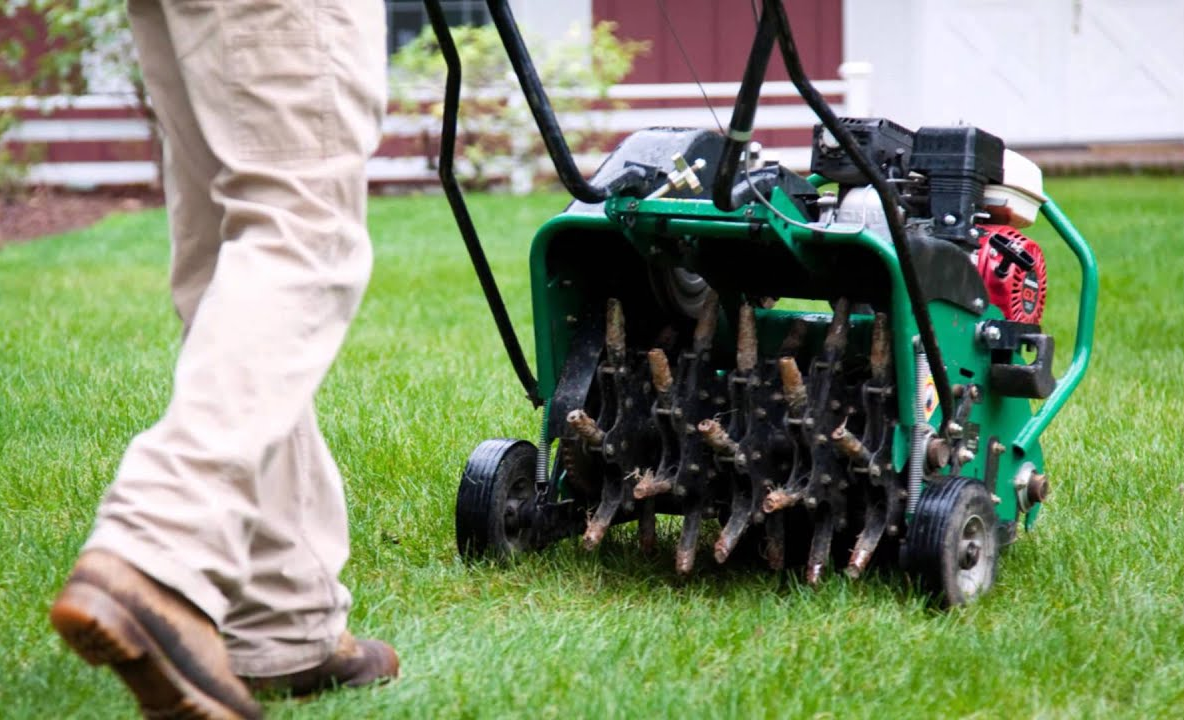
- Core aerators: pull small plugs of soil for deeper, longer-lasting results. The better choice for Louisiana’s dense clay.
- Spike aerators: just push holes into the soil and can worsen compaction over time in heavy clay.
Before You Aerate
- Water the lawn a day ahead to soften compacted clay.
- Mow slightly shorter than usual.
- Mark sprinkler heads and utility lines to avoid damage.
After You Aerate
- Leave soil plugs on the lawn to break down and enrich the soil.
- Apply fertilizer and overseed if needed.
- Keep watering consistently to support recovery.
Renting a core aerator is a reasonable DIY option for a small yard, but for larger properties or lawns with severe compaction, our lawn and landscape maintenance services cover aeration, overseeding, and fertilization in a single visit, tailored to your specific grass and soil.
Long-Term Benefits of a Consistent Lawn Aeration Schedule
Well-aerated lawns:
- Absorb water and nutrients more efficiently, especially in clay soil
- Grow thicker and handle summer heat stress better
- Resist disease, weeds, and pests more effectively
If your yard is showing the signs of poor drainage we cover in our Baywood, LA drainage guide, compacted soil is often the root cause, and aeration is usually the first fix worth trying before more invasive drainage work.
For more on keeping trees and turf healthy together, see our post on professional tree planting benefits.
Get Your Lawn on the Right Schedule
Still not sure how often your specific lawn needs aeration? Our team handles aeration, mowing, overseeding, and fertilization tailored to Louisiana soil and grass types across Baton Rouge, Central, Denham Springs, Gonzales, Prairieville, Walker, and Zachary. Get in touch, and we’ll help you build a plan that fits your yard.
Frequently Asked Questions
How often should you aerate your lawn?
Most Louisiana lawns need aeration once a year. Clay soil, heavy foot traffic, or St. Augustine grass usually call for twice a year.
Do you need to aerate your lawn every year?
Not always. Sandy or loamy soil with light traffic can go two to three years between aerations. Clay soil and high-traffic yards benefit from annual or twice-yearly aeration.
When should you aerate your lawn?
Late spring to early summer for warm-season grasses like St. Augustine and Bermuda. Early fall for cool-season grasses.
Can you aerate your lawn twice a year?
Yes, and it’s often recommended for compacted clay soil or lawns with heavy foot traffic. Space the two sessions roughly six months apart.
Does sandy soil need aeration?
Less often than clay. Sandy soil drains well and resists compaction, so aerating every two to three years is usually enough.
Is it possible to aerate your lawn too much?
Yes. Over-aerating can stress roots and thin the turf. Stick to once or twice a year based on your soil and usage.
What’s the difference between spike and core aeration?
Core aeration removes small soil plugs and reduces compaction more effectively, especially in Louisiana clay. Spike aeration just pokes holes and can compact the surrounding soil over time.
Should you fertilize after aeration?
Yes. Aeration opens the soil so fertilizer, water, and nutrients are absorbed more readily, which speeds up root recovery and growth.
What happens if you don’t aerate your lawn?
Compacted soil leads to weak roots, poor drainage, thinning grass, and higher susceptibility to weeds, disease, and pests.
How long does it take for aeration to work?
You’ll typically see thicker, greener growth within 2 to 4 weeks, with full benefits showing up over the following growing season.
Sources
- LSU AgCenter, Turfgrass Compaction Overview — https://www.lsuagcenter.com/articles/page1744311843917
- LSU AgCenter, Soil Compaction Research — https://www.lsuagcenter.com/profiles/aiverson/articles/page1576875615494

- How Can Professional Drainage Services in Central, LA Protect Your Property From Water Damage? - September 11, 2026
- Which Areas of Your Property Benefit Most From Outdoor Lighting for Safety and Curb Appeal? - September 11, 2026
- How Does Professional Outdoor Lighting Transform Your Landscape at Night in Baton Rouge, LA? - September 9, 2026